


1-Methyl-4-phenyl-1,2,3,6-tetrahydropyridine hydrochloride
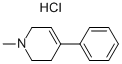
- CAS No.
- 23007-85-4
- Chemical Name:
- 1-Methyl-4-phenyl-1,2,3,6-tetrahydropyridine hydrochloride
- Synonyms
- MPTP;MPTP HYDROCHLORIDE;MPTP HCl;0MPTP hydrochloride;Methyl Hydrochloride;23007-85-4/28289-54-5;NSC 139654 Hydrochloride;Pethidine EP Impurity B HCl;MPTP hydrochloride, 10 mM in DMSO;1-METHYL-4-PHENYL-1 2 3 6-TETRAHYDROPYR&
- CBNumber:
- CB0133791
- Molecular Formula:
- C12H16ClN
- Molecular Weight:
- 209.72
- MDL Number:
- MFCD00012790
- MOL File:
- 23007-85-4.mol
- MSDS File:
- SDS
- TDS File:
- TDS
| Melting point | 249.0 to 254.0 °C |
|---|---|
| storage temp. | Inert atmosphere,Room Temperature |
| solubility | DMSO (Slightly), Methanol (Slightly), Water (Slightly) |
| form | White solid |
| color | white to off-white |
| Water Solubility | water: 100mg/mL |
| BRN | 3707312 |
| Stability | Light Sensitive |
| InChI | InChI=1S/C12H15N.ClH/c1-13-9-7-12(8-10-13)11-5-3-2-4-6-11;/h2-7H,8-10H2,1H3;1H |
| InChIKey | KOWJANGMTAZWDT-UHFFFAOYSA-N |
| SMILES | C1(=CCN(C)CC1)C1C=CC=CC=1.Cl |
| CAS DataBase Reference | 23007-85-4 |
| FDA UNII | 5O1K9K2EZM |
| UNSPSC Code | 12352200 |
| NACRES | NA.77 |
SAFETY
Risk and Safety Statements
| Symbol(GHS) |   GHS06,GHS08 |
|---|---|
| Signal word | Danger |
| Hazard statements | H301-H370 |
| Precautionary statements | P260-P264-P270-P301+P310-P405-P501 |
| target organs | Nervous system |
| Hazard Codes | T |
| Risk Statements | 25-39/23/24/25-36/37/38 |
| Safety Statements | 45-39-26 |
| RIDADR | 2811 |
| WGK Germany | 3 |
| RTECS | UT8358950 |
| HS Code | 2933.39.9200 |
| HazardClass | 6.1(b) |
| PackingGroup | III |
| Storage Class | 6.1C - Combustible, acute toxic Cat.3 toxic compounds or compounds which causing chronic effects |
| Hazard Classifications | Acute Tox. 3 Oral STOT SE 1 |
1-Methyl-4-phenyl-1,2,3,6-tetrahydropyridine hydrochloride price More Price(48)
| Manufacturer | Product number | Product description | CAS number | Packaging | Price | Updated | Buy |
|---|---|---|---|---|---|---|---|
| Sigma-Aldrich | M0896 | 1-Methyl-4-phenyl-1,2,3,6-tetrahydropyridine hydrochloride powder | 23007-85-4 | 10mg | $145 | 2026-04-30 | Buy |
| Sigma-Aldrich | M0896 | 1-Methyl-4-phenyl-1,2,3,6-tetrahydropyridine hydrochloride powder | 23007-85-4 | 100mg | $434 | 2026-04-30 | Buy |
| Sigma-Aldrich | 5.06382 | MPTP Hydrochloride - CAS 23007-85-4 - Calbiochem | 23007-85-4 | 10mg | $200 | 2026-04-30 | Buy |
| TCI Chemical | M2690 | 1-Methyl-4-phenyl-1,2,3,6-tetrahydropyridine Hydrochloride >98.0%(HPLC) | 23007-85-4 | 25mg | $74 | 2026-04-30 | Buy |
| TCI Chemical | M2690 | 1-Methyl-4-phenyl-1,2,3,6-tetrahydropyridine Hydrochloride >98.0%(HPLC) | 23007-85-4 | 100mg | $217 | 2026-04-30 | Buy |
1-Methyl-4-phenyl-1,2,3,6-tetrahydropyridine hydrochloride Chemical Properties, Uses, Production
Chemical Properties
White Solid
Uses
1-Methyl-4-phenyl-1,2,3,6-tetrahydropyridine hydrochloride is a dopaminergic neurotoxin that reportedly causes a severe and irreversible Parkinsonian condition in humans and monkeys.
Uses
MPTP is a neurotoxin used to cause selective destruction of dopaminergic neurons in animal models of parkinsonism. MPTP is metabolized by monoamine oxidase B to produce MPDP+ and MPP+, with MP+ being the active toxic agent. MPP+ induces neurotoxicity primarily by inhibiting complex I of the mitochondrial electron transport chain, resulting in ATP depletion and increased oxidative stress. The key features of different neurotoxic models of Parkinson’s disease, including the MPTP model, have been detailed.[Cayman Chemical]
Biochem/physiol Actions
Dopaminergic neurotoxin.
in vivo
MPTP hydrochloride can be used in animal modeling to create Parkinson's disease models. MPTP replicates naturally occurring neurodegeneration and is useful for studying dopaminergic neuronal degeneration, mitochondrial dysfunction, and neuroinflammation. After injection, MPTP is rapidly metabolized to MPP+, which has a serum half-life of approximately 6 days in sheep.
Administration:
Acute model: 14-20 mg/kg ip 4 times a day, two hours apart
Sub-acute model: 20-30 mg/kg ip once daily for 5 days
2. After administration, we can observe whether the mice have symptoms such as reduced activity, staggering walking, twitching, fried hair, increased urination, etc. This behavior may last for 24-48 hours, after which the mice behave basically normally.
3. MPTP is usually sold as MPTP hydrochloride. The molecular weight of MPTP hydrochloride is 209.7. Therefore, it is recommended to take into account the presence of hydrochloride (HCl) when preparing injectable solutions. HCl has a molecular weight of 35.4 and accounts for 17% of MPTP. Thus, if a 20 mg/kg dose of MPTP is to be prepared, the MPTP hydrochloride dose administered is 20 mg kg* 1.17% = 23.4 mg/kg.
4. If multiple injections are given within 1 day, it is best to alternate the injections on both sides. If injected every day, it should be done at the same time. Before each injection, the mice need to be weighed and the dosage volume should be adjusted.
5. Modeling mice may not show behavioral defects of Parkinson's disease. Mice may show individual differences, and the success rate of modeling is generally difficult to reach 100%. Therefore nigrostriatal damage associated with gliosis should be mainly monitored in MPTP mouse studies.
6. High drug dosage/mice weighing less than 22 g/mixing of drugs from different batches/mice not adapting in advance/animal room being too cold may result in a number of deaths. It is recommended that the number of animals in each group be increased, and adjust to the optimal dose according to experimental conditions.
Other markers: reduction of brain neurotransmitters (DA, DOPAC, 5-HT, HVA, etc.) (detected by HPLC);
Nigrostriatal microglia (IBA1+ cells) and astrocytes (GFAP+ cells) are activated, and the number of α-syn aggregates in the substantia nigra .
Purification Methods
Purify MPTP by recrystallisation from pKEst ~ Me2CO/isoPrOH. The free base has m 40-42o(from heptane), b 99-100o/1.3mm, 128-132o/12mm, (137-142o/0.8mm), n 25 1.5347. The hydrochloride has m 251-252o(from Me2CO/isoPrOH) [Schmidle & Mansfield J Am Chem Soc 78 425 1956, Defeudis Drug Dev Res 15 1 1988, Beilstein 20 III/IV 3240, 20/7 V 121.]
References
[1] Lun-Yi Zang, Hara P Misra. “Inactivation of acetylcholinesterase by 1-methyl-4-phenyl-1,2,3,6-tetrahydropyridine hydrochloride.” Molecular and Cellular Biochemistry 254 1–2 (2003): 131–6.
[2] Gregory L. Willis, Alan D. Robertson. “Recovery from experimental Parkinson’s disease in the 1-methyl-4-phenyl-1,2,3,6-tetrahydropyridine hydrochloride treated marmoset with the melatonin analogue ML-23.” Pharmacology Biochemistry and Behavior 80 1 (2005): Pages 9-26.
[3] Atsushi Fujita. “Connexin 30 deficiency attenuates A2 astrocyte responses and induces severe neurodegeneration in a 1-methyl-4-phenyl-1,2,3,6-tetrahydropyridine hydrochloride Parkinson’s disease animal model.” Journal of Neuroinflammation (2018): 227.
1-Methyl-4-phenyl-1,2,3,6-tetrahydropyridine hydrochloride Preparation Products And Raw materials
Raw materials
Preparation Products
| Supplier | Tel | Country | ProdList | Advantage | |
|---|---|---|---|---|---|
| UHN Shanghai Research & Development Co., Ltd. | 021-58958002 18930822973 | sales@uhnshanghai.com | China | 997 | 58 |
| Cangzhou Enke Pharma-tech Co., Ltd. | 0317-5296180 15533709196 | enkepharma@126.com | China | 2494 | 55 |
| Shanghai Yunpun industrial Co.,Ltd | 21-61726900 15202122459; | sales@yunpun.com | China | 494 | 58 |
| Shanghai Hecheng Medical Technology Co., LTD | 13564747822 | 669027880@qq.com | China | 1123 | 58 |
| Dalian Meilun Biotech Co., Ltd. | 0411-62910999 13889544652 | sales@meilune.com | China | 4765 | 58 |
| SINO High Goal Chemical Technology Co., Ltd. | 021-57646680 18306277365 | guoxin@chembiobanksh.com | China | 2829 | 58 |
| J & K SCIENTIFIC LTD. | 18210857532 18210857532 | jkinfo@jkchemical.com | China | 96815 | 76 |
| 3B Pharmachem (Wuhan) International Co.,Ltd. | 18930552037 | 3bsc@sina.com | China | 15813 | 69 |
| future industrial shanghai co., ltd | 400-0066400 13621662912 | sales@jonln.com | China | 1989 | 65 |
| SelectLab Chemicals GmbH | +49-(0)2383-919350 | info@selectlab.de | Germany | 393 | 55 |
View Latest Price from 1-Methyl-4-phenyl-1,2,3,6-tetrahydropyridine hydrochloride manufacturers
| Image | Update time | Product | Price | Min. Order | Purity | Supply Ability | Manufacturer | |
|---|---|---|---|---|---|---|---|---|
 |
2026-08-30 | MPTP hydrochloride
23007-85-4
|
$30.00-77.00 | 99.63% | 10g | TargetMol Chemicals Inc. | ||
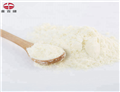 |
2021-07-09 | China 1-Methyl-4-phenyl-1,2,3,6-tetrahydropyridine hydrochloride
23007-85-4
|
$7.00 | 1KG | 98% | 1000 Kilogram/Kilograms per Month | Hebei Xibaijie Biotechnology Co., Ltd. | |
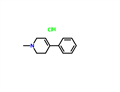 |
2021-07-09 | 1-Methyl-4-phenyl-1,2,3,6-tetrahydropyridine hydrochloride
23007-85-4
|
$7.00 | 1KG | 98% | 1000 Kilogram/Kilograms per Month | Hebei Xibaijie Biotechnology Co., Ltd. |
-
- MPTP hydrochloride
23007-85-4
- $30.00-77.00
- 99.63%
- TargetMol Chemicals Inc.
-
- China 1-Methyl-4-phenyl-1,2,3,6-tetrahydropyridine hydrochloride
23007-85-4
- $7.00
- 98%
- Hebei Xibaijie Biotechnology Co., Ltd.
-
- 1-Methyl-4-phenyl-1,2,3,6-tetrahydropyridine hydrochloride
23007-85-4
- $7.00
- 98%
- Hebei Xibaijie Biotechnology Co., Ltd.
