


Pyrroloquinoline quinone

- CAS No.
- 72909-34-3
- Chemical Name:
- Pyrroloquinoline quinone
- Synonyms
- PQQ;PPQ;METHOXATIN;PYRROLOQUINOLINE;Coenzyme PQQ;1H-Pyrrolo[2,3-f]quinoline-2,7,9-tricarboxylicacid, 4,5-dihydro-4,5-dioxo-;PQQ Cofactor, Pyrroloquinoline quinone, 4,5-Dihydro-4,5-dioxo-1H-pyrrolo[2,3-f]quinoline-2,7,9-tricarboxylic acid;Pyrroloquinolinequinone,4,5-Dihydro-4,5-dioxo-1H-pyrrolo[2,3-f]quinoline-2,7,9-tricChemicalbookarboxylicacid,Methoxatin,PQQ;PQQ98%;PQQ CAS
- CBNumber:
- CB6140290
- Molecular Formula:
- C14H6N2O8
- Molecular Weight:
- 330.21
- MDL Number:
- MFCD00043125
- MOL File:
- 72909-34-3.mol
- MSDS File:
- SDS
- TDS File:
- TDS
| Melting point | 222 - 224°C |
|---|---|
| Boiling point | 1018.6±65.0 °C(Predicted) |
| Density | 1.963±0.06 g/cm3(Predicted) |
| storage temp. | 2-8°C |
| solubility | DMSO (Slightly), Methanol (Slightly) |
| pka | 1.88±0.20(Predicted) |
| form | Solid |
| color | Orange to Red |
| biological source | synthetic |
| BRN | 3596812 |
| Stability | Light and Temperature Sensitive |
| Cosmetics Ingredients Functions |
SKIN CONDITIONING HUMECTANT SKIN PROTECTING ANTIOXIDANT |
| InChI | InChI=1S/C14H6N2O8/c17-10-4-2-6(14(23)24)15-8(4)7-3(12(19)20)1-5(13(21)22)16-9(7)11(10)18/h1-2,15H,(H,19,20)(H,21,22)(H,23,24) |
| InChIKey | MMXZSJMASHPLLR-UHFFFAOYSA-N |
| SMILES | N1C2=C(C3NC(C(O)=O)=CC=3C(=O)C2=O)C(C(O)=O)=CC=1C(O)=O |
| FDA UNII | 47819QGH5L |
| UNSPSC Code | 12352106 |
| NACRES | NA.79 |
SAFETY
Risk and Safety Statements
| Symbol(GHS) |  GHS07 |
|||||||||
|---|---|---|---|---|---|---|---|---|---|---|
| Signal word | Warning | |||||||||
| Hazard statements | H302-H315-H319-H332-H335 | |||||||||
| Precautionary statements | P261-P280-P305+P351+P338 | |||||||||
| PPE | Eyeshields, Gloves, type N95 (US) | |||||||||
| Safety Statements | 22-24/25 | |||||||||
| WGK Germany | 3 | |||||||||
| F | 8 | |||||||||
| HS Code | 29339900 | |||||||||
| Storage Class | 11 - Combustible Solids | |||||||||
| NFPA 704 |
|
Pyrroloquinoline quinone price More Price(73)
| Manufacturer | Product number | Product description | CAS number | Packaging | Price | Updated | Buy |
|---|---|---|---|---|---|---|---|
| Sigma-Aldrich | D7783 | Pyrroloquinoline quinone ≥95.0% (HPLC) | 72909-34-3 | 1mg | $185 | 2026-04-30 | Buy |
| Sigma-Aldrich | D7783 | Pyrroloquinoline quinone ≥95.0% (HPLC) | 72909-34-3 | 5mg | $527 | 2026-04-30 | Buy |
| TCI Chemical | P2781 | Pyrroloquinoline Quinone | 72909-34-3 | 1G | $170 | 2026-04-30 | Buy |
| TCI Chemical | P2781 | Pyrroloquinoline Quinone | 72909-34-3 | 5G | $591 | 2026-04-30 | Buy |
| Cayman Chemical | 20681 | Pyrroloquinoline quinone ≥95% | 72909-34-3 | 1mg | $28 | 2026-04-30 | Buy |
Pyrroloquinoline quinone Chemical Properties, Uses, Production
Description
Pyrroloquinoline quinone (PQQ) is a novel biofactor for which a proposition can be made for physiological importance. PQQ was first recognized as an enzyme cofactor in bacteria. It has recently been tentatively identified as a component of interstellar dust. Thus, PQQ may have been present throughout early biological conception and evolution. PQQ is also a potent plant growth factor. Consequently, for animals and humans, there has been constant exposure to PQQ. In animals, PQQ is reported to participate in a range of biological functions with apparent survival benefits (e.g., improved neonatal growth and reproductive performance). There are also benefits from PQQ supplementation related to cognitive, immune, and antioxidant functions, as well as protection from cardiac and neurological ischemic events. Although PQQ is not currently viewed as a vitamin, its involvement in cell signaling pathways, particularly those important to mitochondriogenesis in experimental animal models, may eventually provide a rationale for defining PQQ as vital to life. For humans, such evidence suggests there may be similar parallels or benefits from improving PQQ status.
Chemical Properties
Orange-Red Solid
Uses
Pyrroloquinoline quinone is an important growth factor for the body and a redox/cofactor found in a a class of enzymes called quinoproteins. It is a cofactor of microbial quinoprotein enzyme, and imidazopyrroline. it regulates the level of free radicals in the body, protects the body; anti-oxidative damage; enhances mitochondrial function; detoxification; disease, etc.
Application
Pyrroloquinoline quinone has been used:
as a component of nanocurcumin formulation (NCF), to study its therapeutic effect on ameliorate hypoxia-induced stress in hypertrophied cardiomyocytes.
as a standard in fluorescence analysis.
to test its efficiency in suppressing restrained oxidative stress and hepatic fibrogenesis in mouse models.
Pyrroloquinoline quinone(PQQ) has been reported to function as a water soluble vitamin/cofactor and as an antioxidant. PQQ disodium salt is proposed for use due to its nutritive value in the United States (U.S.) in foods, such as energy, sport, and isotonic drinks; non-milk based meal replacement beverages; water (bottled, enhanced, fortified); milk-based meal replacement beverages; cereal and granola bars; and energy, meal replacement, and fortified bars. PQQ is also intended for use in dietary supplements.
Definition
ChEBI: Pyrroloquinoline quinone is a pyrroloquinoline having oxo groups at the 4- and 5-positions and carboxy groups at the 2-, 7- and 9-positions. It has a role as a water-soluble vitamin (role), a cofactor, an antioxidant and an anti-inflammatory agent. It is a member of orthoquinones, a tricarboxylic acid and a pyrroloquinoline cofactor. It is a conjugate acid of a pyrroloquinoline quinone(3-).
benefits
Supplementation of Pyrroloquinoline quinone(PQQ) is found to aid in weight loss, improve insulin sensitivity, and help prevent metabolic syndrome. PQQ has shown promising results in increasing insulin sensitivity, potentially aiding in the prevention or management of metabolic disorders.[1]
General Description
PQQ is pyrroloquinoline quinone. It is sometimes called methoxatin, pyrroloquinoline quinone disodium salt, and a longevity vitamin. It is a compound made by bacteria and is found in fruits and vegetables.PQQ in bacteria helps them digest alcohol and sugar, which makes energy. This energy helps them survive and grow. Animals and plants don’t use PQQ the same way that bacteria do, but it is a growth factor that helps plants and animals grow. It also seems to help them tolerate stress.
Biochem/physiol Actions
Pyrroloquinoline Quinone (PQQ) plays a vital role in gluconic acid production and biosynthesis by microbes. It acts as an effective microbial growth stimulant and biological control determinant for plant pathogens. PQQ also acts as an anti-melanogenic agent and is used to treat disorders related to hyper pigmentation. It exhibits diverse role in metabolism and cell signaling pathways. PQQ is used as a potential therapeutic to treat liver fibrosis.
Synthesis
Pyrroloquinoline quinone is prepared by the reaction of
trimethyl 4,5-dihydro-4,5-dioxo-1H-pyrrolo[2,3-f]quinoline-2,7,9-tricarboxylate. The steps are as follows:
With sodium carbonate In water at 30℃; for 24h;
Or with water; potassium carbonate In water at 25 - 80℃; Green chemistry; Industrial scale.
Source
Pyrroloquinoline quinone (PQQ) is a compound commonly found in fruits, vegetables and certain bacteria. These include: tea, papaya, spinach, peppers, kiwi, parsley, celery, fermented soybeans or natto. The concentrations of PQQ in food are shown in the table below:
Purification Methods
Efflorescent yellow-orange needles of PQQ are formed on recrystallising from H2O by addition of Me2CO, or better from a supersaturated aqueous solution, as it forms an acetone adduct. [Forrest et al. Nature 280 843 1979.] It has also been purified by passage through a C-18 reverse phase silica cartridge or a silanized silica gel column in aqueous solution whereby methoxantin remains behind as a red-orange band at the origin. This band is collected and washed thoroughly with dilute aqueous HCl (pH 2) and is then eluted with MeOH/H2O (7:3) and evaporated in vacuo to give the coenzyme as a red solid. It has also been purified by dissolving it in aqueous 0.5M K2CO3 and acidified to pH 2.5 whereby PQQ precipitates as a deep red solid which is collected and dried in vacuo. Methoxantin elutes at 3.55 retention volumes from a C18 _Bondapak column using H2O/MeOH (95:5) + 0.1% AcOH pH 4.5. It has UV max at 247 and 330nm (shoulder at 270nm) in H2O and max at 250 and 340nm in H2O at pH 2.5. With excitation at ex 365nm it has a max emission at 483nm. The 13C NMR has : 113.86, 122.76, 125.97, 127.71, 130.68, 137.60, 144.63, 146.41, 147.62, 161.25, 165.48, 166.45, 173.30 and 180.00ppm. When a solution in 10% aqueous MeCO is adjusted to pH 9 with aqueous NH3 and kept at 25o for 30minutes, the acetone adduct is formed; UV has max at 250, 317 and 360nm (H2O, pH 5.5), and with ex at 360nm it has max fluorescence at max at 465nm; and the 13C NMR [(CD3)2SO, TMS] has : 29.77, 51.06, 74.82, 111.96, 120.75, 121.13, 125.59, 126.88, 135.21, 139.19, 144.92, 161.01, 161.47, 165.17, 168.61, 190.16 and 207.03ppm. It also forms a methanol adduct. When it is reacted with Me2SO4/K2CO3 in dry Me2NCHO at 80o for 4hours, it forms the trimethyl ester which has m 265-267o(dec) [260-263o(dec) also reported] after recrystallisation from hot MeCN (orange crystals) with UV max at 252 and 344nm (H2O) and 251, 321 and 373nm (in MeOH; MeOH adduct ). [Duine et al. Eur J Biochem 108 187 1980, Duine et al. Adv Enzymology 59 169 1987, Corey & Tramontano J Am Chem Soc 103 5599 1981, Gainor & Weinreb J Org Chem 46 4319 1981, Hendrickson & de Vries J Org Chem 17 1148 1982, McKenzie et al. J Chem Soc, Chem Commun 1372 1983.]
References
[1] Tingdong Yan .“Pyrroloquinoline Quinone (PQQ): Its impact on human health and potential benefits.”Current Research in Food Science 9 (2024): Article 100889.


Pyrroloquinoline quinone Preparation Products And Raw materials
| Supplier | Tel | Country | ProdList | Advantage | |
|---|---|---|---|---|---|
| Fujian Comhony Biotechnology Co., Ltd | 0591-83826086 15806417970 | jeffrey.liu@comhony.com | China | 18 | 58 |
| Shenzhen Hygieia Biotechnology Co., Ltd | 0755-0755-27208059 18898723287 | chloe@hygieia.com.cn | China | 64 | 58 |
| Wuxi Cima Science Co.,Ltd | 0510-0510-85188225 18061978815 | info@cimasci.com | China | 18 | 58 |
| Hangzhou Linran Biotechnology Co. LTD | 0571-18067987-92 18067987892;13738142397 | 2543558860@qq.com | China | 137 | 58 |
| WeiTai BioPharmaceutical Co.,Ltd(Hangzhou?) | 13282012786 13282132786 | sales@weitai-pharmaceutical.com | China | 69 | 58 |
| Shandong Yuanlitai Nutratech Co., Ltd, | 18668987081 18980869808 | info@yltnutra.com | China | 19 | 58 |
| Lihe Biotechnology (Shandong) Co., Ltd | 13176691201 15588824841 | lhswsd@126.com | China | 32 | 58 |
| Xi'an Jianglin Biotechnology Co., Ltd | 18292036798; 18292036798 | JLSW00@163.com | China | 87 | 58 |
| Shanghai Boyle Chemical Co., Ltd. | sales@boylechem.com | China | 2915 | 55 | |
| J & K SCIENTIFIC LTD. | 18210857532 18210857532 | jkinfo@jkchemical.com | China | 96815 | 76 |
Related articles
- Pyrroloquinoline quinone:Functions, benefits and Effects of PQQ on health
- Supplementation of PQQ is found to aid in weight loss, improve insulin sensitivity, and help prevent metabolic syndrome.
- Dec 22,2025
- Pyrroloquinoline quinone: Food sources, benefits and side effects
- Pyrroloquinoline quinone (PQQ) is a quinone described as a cofactor for many bacterial dehydrogenases and reported to have eff....
- Mar 24,2025
- Pyrroloquinoline Quinone: A Comprehensive Overview
- Pyrroloquinoline quinone (PQQ) is a compound found ubiquitously in plants, many simple and single cell eukaryotes (e.g., yeast....
- Nov 4,2024
Related Questions
Ask a questionView Latest Price from Pyrroloquinoline quinone manufacturers
| Image | Update time | Product | Price | Min. Order | Purity | Supply Ability | Manufacturer | |
|---|---|---|---|---|---|---|---|---|
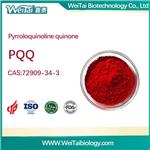 |
2026-09-18 | Pyrroloquinoline quinone (PQQ)
72909-34-3
|
1kg | ≥98%(HPLC) | 2tons | WeiTai BioPharmaceutical Co.,Ltd(Hangzhou) | ||
 |
2026-09-18 | Pyrroloquinoline Quinone
72909-34-3
|
1KG | 99% | 2000KG/MONTH | Jinan Jianfeng Chemical Co., Ltd | ||
 |
2026-09-18 | Pyrroloquinoline quinone
72909-34-3
|
10g | 99%min | 10 KGS | WUHAN FORTUNA CHEMICAL CO., LTD |
-
- Pyrroloquinoline quinone (PQQ)
72909-34-3
- ≥98%(HPLC)
- WeiTai BioPharmaceutical Co.,Ltd(Hangzhou)
-
- Pyrroloquinoline Quinone
72909-34-3
- 99%
- Jinan Jianfeng Chemical Co., Ltd
-
- Pyrroloquinoline quinone
72909-34-3
- 99%min
- WUHAN FORTUNA CHEMICAL CO., LTD
72909-34-3 (Pyrroloquinoline quinone) Related Search:
1of4
