


Diphenhydramine Hydrochloride
- CAS No.
- 147-24-0
- Chemical Name:
- Diphenhydramine Hydrochloride
- Synonyms
- DIPHENHYDRAMINE HCL;BAX;Diphenhydramine HCI;Benylin;Benacine;Ambenyl;Actifed;DIMEDROLUM;BENADRYL HCL;component of Caladryl
- CBNumber:
- CB7709166
- Molecular Formula:
- C17H22ClNO
- Molecular Weight:
- 291.82
- MDL Number:
- MFCD00012479
- MOL File:
- 147-24-0.mol
- MSDS File:
- SDS
- TDS File:
- TDS
| Melting point | 168-172 °C |
|---|---|
| Boiling point | 163-167 °C(Press: 3 Torr) |
| Density | 1.0489 (rough estimate) |
| refractive index | 1.5800 (estimate) |
| Flash point | 9℃ |
| storage temp. | 2-8°C |
| solubility | Very soluble in water, freely soluble in alcohol. |
| form | Crystalline Powder or Adhering Crystals |
| color | White |
| PH | pH(100g/L, 25℃) 4.0~5.5 |
| Water Solubility | 1000 g/L |
| Sensitive | Light Sensitive |
| Merck | 14,3309 |
| Stability | Stable, but slowly darkens upon exposure to light. Incompatible with strong oxidizing agents. |
| Cosmetics Ingredients Functions |
HAIR CONDITIONING SKIN CONDITIONING |
| InChI | 1S/C17H21NO.ClH/c1-18(2)13-14-19-17(15-9-5-3-6-10-15)16-11-7-4-8-12-16;/h3-12,17H,13-14H2,1-2H3;1H |
| InChIKey | PCHPORCSPXIHLZ-UHFFFAOYSA-N |
| SMILES | Cl[H].CN(C)CCOC(c1ccccc1)c2ccccc2 |
| LogP | 3.662 (est) |
| Toxicology and Carcinogenesis | Toxicology and Carcinogenesis Studies of Diphenhydramine Hydrochloride (CASRN 147-24-0) in F344/N Rats and B6C3F1 Mice (Feed Studies) |
| FDA 21 CFR | 310.545; 336.10; 338.10;341.12; 341.14 |
| CAS DataBase Reference | 147-24-0(CAS DataBase Reference) |
| EWG's Food Scores | 1 |
| FDA UNII | TC2D6JAD40 |
| NCI Drug Dictionary | diphenhydramine hydrochloride |
| NIST Chemistry Reference | diphenhydramine hydrochloride(147-24-0) |
| EPA Substance Registry System | Diphenhydramine hydrochloride (147-24-0) |
| UNSPSC Code | 41116107 |
| NACRES | NA.77 |
SAFETY
Risk and Safety Statements
| Symbol(GHS) |  GHS07 |
|||||||||
|---|---|---|---|---|---|---|---|---|---|---|
| Signal word | Warning | |||||||||
| Hazard statements | H302 | |||||||||
| Precautionary statements | P301+P312+P330 | |||||||||
| PPE | dust mask type N95 (US), Eyeshields, Faceshields, Gloves | |||||||||
| Hazard Codes | Xn,T,F | |||||||||
| Risk Statements | 22-39/23/24/25-23/24/25-11 | |||||||||
| Safety Statements | 36-45-36/37-16-7-24/25 | |||||||||
| RIDADR | 2811 | |||||||||
| WGK Germany | 3 | |||||||||
| RTECS | KR7000000 | |||||||||
| HS Code | 29221990 | |||||||||
| Storage Class | 11 - Combustible Solids | |||||||||
| Hazard Classifications | Acute Tox. 4 Oral | |||||||||
| Toxicity | LD50 orally in rats: 500 mg/kg (Gruhzit, Fisken) | |||||||||
| NFPA 704 |
|
Diphenhydramine Hydrochloride price More Price(116)
| Manufacturer | Product number | Product description | CAS number | Packaging | Price | Updated | Buy |
|---|---|---|---|---|---|---|---|
| Sigma-Aldrich | D3630 | Diphenhydramine hydrochloride ≥98% (HPLC) | 147-24-0 | 5g | $51.9 | 2026-04-30 | Buy |
| Sigma-Aldrich | D2600000 | Diphenhydramine hydrochloride European Pharmacopoeia (EP) Reference Standard | 147-24-0 | 100 mg | $175 | 2026-04-30 | Buy |
| Sigma-Aldrich | D-015 | Diphenhydramine hydrochloride solution 1.0?mg/mL in methanol (as free base), ampule of 1?mL, certified reference material, Cerilliant? | 147-24-0 | 1mL | $28.4 | 2026-04-30 | Buy |
| Sigma-Aldrich | BP896 | Diphenhydramine hydrochloride British Pharmacopoeia (BP) Reference Standard | 147-24-0 | 100MG | $287 | 2026-04-30 | Buy |
| Sigma-Aldrich | 1218005 | Diphenhydramine hydrochloride United States Pharmacopeia (USP) Reference Standard | 147-24-0 | 200mg | $455 | 2026-04-30 | Buy |
Diphenhydramine Hydrochloride Chemical Properties, Uses, Production
Description
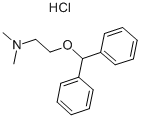
Diphenhydramine hydrochloride is an antihistamine drug having the chemical name 2-(Diphenylmethoxy)- N,N-dimethylethylamine hydrochloride. It occurs as a white, crystalline powder, is freely soluble in water and alcohol and has a molecular weight of 291.82.
The molecular formula is C17H21NO·HCl and the structural formula is as follows:

Diphenhydramine hydrochloride in the parenteral form is a sterile, pyrogen-free solution available in a concentration of 50 mg of diphenhydramine hydrochloride per mL. The solutions for parenteral use have been adjusted to a pH between 5.0 and 6.0 with either sodium hydroxide or hydrochloric acid and contains 0.1 mg/mL benzethonium chloride as a germicidal agent.
Clinical Pharmacology
Diphenhydramine hydrochloride is an antihistamine with anticholinergic (drying) and sedative side effects. Antihistamines appear to compete with histamine for cell receptor sites on effector cells. Diphenhydramine hydrochloride in the injectable form has a rapid onset of action. Diphenhydramine hydrochloride is widely distributed throughout the body, including the CNS. A portion of the drug is excreted unchanged in the urine, while the rest is metabolized via the liver. Detailed information on the pharmacokinetics of Diphenhydramine Hydrochloride Injection is not available.
Indications and Usage
Diphenhydramine hydrochloride in the injectable form is effective in adults and pediatric patients, other than premature infants and neonates, for the following conditions when diphenhydramine hydrochloride in the oral form is impractical.
- antihistaminic: For amelioration of allergic reactions to blood or plasma, in anaphylaxis as an adjunct to epinephrine and other standard measures after the acute symptoms have been controlled, and for other uncomplicated allergic conditions of the immediate type when oral therapy is impossible or contraindicated.
- Motion Sickness: For active treatment of motion sickness.
- Antiparkinsonism: For use in parkinsonism, when oral therapy is impossible or contraindicated, as follows: parkinsonism in the elderly who are unable to tolerate more potent agents; mild cases of parkinsonism in other age groups, and in other cases of parkinsonism in combination with centrally acting anticholinergic agents.
Drug overdose
Antihistamine overdosage reactions may vary from central nervous system depression to stimulation. Stimulation is particularly likely in pediatric patients. Atropine-like signs and symptoms; dry mouth; fixed, dilated pupils; flushing; and gastrointestinal symptoms may also occur. Stimulants should not be used. Vasopressors may be used to treat hypotension.
Contraindications
- Use in Neonates or Premature Infants: This drug should not be used in neonates or premature infants.
- Use in Nursing Mothers: Because of the higher risk of antihistamines for infants generally, and for neonates and prematures in particular, antihistamine therapy is contraindicated in nursing mothers.
- Use as a Local Anesthetic: Because of the risk of local necrosis, this drug should not be used as a local anesthetic.
- Antihistamines are also contraindicated in the following conditions: Hyper sensitivity to diphenhydramine hydrochloride and other antihistamines of similar chemical structure.
Description
Diphenhydramine is most commonly used as a first-generation antihistamine and is globally marketed in various brand formulations (Benadryl®, Unisom®, Tylenol®, Zzzquil®). It competitively blocks H1 receptors, thereby preventing the actions of histamine on bronchial smooth muscle, capillaries, and gastrointestinal (GI) smooth muscle. This prevents histamine-induced bronchoconstriction, vasodilation, increased capillary permeability, and GI smooth muscle spasms. Diphenhydramine exhibits anti-tussive, antiemetic, sedative, anti-allergic, and anticholinergic activities.
Chemical Properties
White or almost white, crystalline powder. odorless and has a bitter, numbing taste. soluble in water and in alcohol.
Originator
Benadryl,Parke Davis,US,1946
Uses
Diphenhydramine is a H1-histamine receptor antagonist with anticholinergic (drying) and sedative side effects. It is categorized as an antihistaminic; sedative, hypnotic, treatment of allergic. It is used to treat allergy and cold symptoms such as sneezing, runny nose, watery eyes, urticaria (hives), skin rash, and pruritus (itchy skin).
Preparation
Diphenhydramine Hydrochloride synthesis is a four-step sequence starting with a Grignard reaction. 
Synthesis of Diphenhydramine Hydrochloride 6.
A) modified synthetic route to diphenhydramine hydrochloride.
B) Sequence of unit operations required for the synthesis. The dotted boxes denote the four stages of the synthesis. DMAE: dimethylaminoethanol.
Organic synthesis in a modular robotic system driven by a chemical programming language
Application
Diphenhydramine hydrochloride is used as an antihistamine and for its antieholinergie (drying) and sedative effects; for allergic conjunctivitis due to foods; for mild, uncomplicated allergic skin manifestations of urticaria and angioedema; for amelioration of allergic reactions to blood or plasma; for dermatographism; in therapy for anaphylaetie reactions adjunctive to epinephrine and other standard measures after the acute manifestations have been controlled; for active and prophylactie treatment of motion sickness; for parkinsonism; an antiemetic; has local anesthetic properties; in preparations for the relief of cough; in the prevention and treatment of radiation sickness, nausea and vomiting; for treatment of allergie cheilitis and stomatitis.
Definition
ChEBI: Diphenhydramine Hydrochloride is the hydrochloride salt form of diphenhydramine, an ethanolamine and first-generation histamine antagonist with anti-allergic activity.
brand name
Benadryl (Parke-Davis).
Therapeutic Function
Antihistaminic
General Description
Diphenhydramine hydrochloride(Benadryl), is an oily, lipid-soluble free base available as the bitter-tasting hydrochloride salt, which is a stable, White or almost-white crystalline powder. Odorless with a bitter numbing taste. soluble in water (1:1), alcohol (1:2) and chloroform (1:2). The salt has a pKa value of 9, and a 1% aqueous solution has a pH of about 5.
Air & Water Reactions
Water soluble. Aqueous solutions are acidic.
Reactivity Profile
N-(2-Diphenylmethoxyethyl)-N,N-dimethylamine hydrochloride gives acidic solutions in water. Neutralizes bases. May react with strong oxidizing and strong reducing agents. May catalyze organic reactions. Slowly darkens on exposure to light.
Health Hazard
Potentially. If taken in large quantities, diphenhydramine can cause severe agitation and confusion, fever, skin flushing, problems with vision, dry mouth, dry eyes, and inability to sweat. Overdoses can lead to high heart rates, abnormal heart rhythms, seizures, and death.
If given to elderly patients, diphenhydramine can cause confusion and agitation. Because of this, diphenhydramine is not recommended in elderly patients for insomnia or treatment for the common cold; though it should still be given in cases of allergic reaction.
Biological Activity
Diphenhydramine (DPH) is a first generation antihistamine that is a potent antagonist of the histamine H1 receptor (Ki = 11.7 nM using human recombinant receptors). DPH readily crosses the blood-brain barrier and produces diverse cognitive and psychomotor effects. DPH also antagonizes muscarinic cholinergic receptors (Kis = 100 to 260 nM for M1-M5), increasing the range of central nervous system effects and applications.
Contact allergens
This antihistaminic drug with sedative properties is mainly sold over the counter. It can be used both topically (treatment of pruritis) and orally for its antiallergic, antiemetic, sedative, and anticough properties. Allergic or photoallergic contact dermatitis and fixeddrug eruption seem to be rare.
Biochem/physiol Actions
Diphenhydramine hydrochloride (DPH) is an antihistaminic agent that relieves symptoms of hypersensitive reactions. It exhibits antimuscarinic and marked sedative effects. DPH is also used to prevent nausea, vomiting and vertigo of various causes. In addition, it acts as a potential therapeutic for insomnia.
Safety Profile
Poison by ingestion, subcutaneous, intravenous, and intraperitoneal routes. Human systemic effects by ingestion or skin contact: arrhythmias, ataxia, blood pressure elevation, convulsions, distorted perceptions, eye effects, and hallucinations. Experimental teratogenic and reproductive effects. Questionable carcinogen with experimental tumorigenic data. When heated to decomposition it emits very toxic fumes of NO, and HCl. See also ESTERS and ETHERS.
Synthesis

58-73-1

147-24-0
The general procedure for synthesizing 2-(phenylmethoxy)-N,N-dimethylethylamine hydrochloride using benzylamine as a starting material was as follows: first, benzylamine was prepared according to the method described in any one of embodiments 6-9. Subsequently, the prepared benzylamine was dissolved in a 5.0 mol/L ethanol solution. Next, dry hydrogen chloride gas was passed into the solution until saturation and stirred continuously for 1 hour at room temperature. Finally, the solvent was removed by distillation under reduced pressure to obtain the target product benzylamine hydrochloride.
Veterinary Drugs and Treatments
In veterinary medicine, diphenhydramine is used principally for its antihistaminic effects, but also for other pharmacologic actions. Its sedative effects can be of benefit in treating the agitation (pruritus, etc.) associated with allergic responses. It has also been used for treatment and prevention of motion sickness and as an antiemetic in small animals. It has been suggested for use as adjunctive treatment of aseptic laminitis in cattle and it may be useful as an adjunctive treatment for feline pancreatitis. For other suggested uses, refer to the Dosage section below.
storage
Desiccate at RT
Toxics Screening Level
The CORRECTED Screening Level for DIPHENHYDRAMINE HCL (CAS # 147-24-0) has been set at 50 μg/m3 (annual average) based on the particulate standard.
References
[1] Patent: CN107673945, 2018, A. Location in patent: Paragraph 0028; 0029; 0030; 0031
Diphenhydramine Hydrochloride Preparation Products And Raw materials
Raw materials
Preparation Products
| Supplier | Tel | Country | ProdList | Advantage | |
|---|---|---|---|---|---|
| Wuhan Wiseman Bioengineering Co.,Ltd | 13419526507 13419526507 | 13419526507@163.com | China | 2631 | 58 |
| Jinan Rouse Industry Co., Ltd. | 0531-0531-82929600 18615510361 | sale@rousechem.com | China | 175 | 58 |
| Guangzhou Belka Biological Technology Co., Ltd. | +86-18665676617 | China | 952 | 58 | |
| Wuhan Biocar Pharmacy Co.,Ltd | 15377519203 | 2094286327@qq.com | China | 284 | 58 |
| Wuhan Juchengyuan Biotechnology Co., Ltd | 400-027-6007 18062142210 | 804180422@qq.com | China | 145 | 58 |
| Wuhan Biocar Pharmacy CO.,Ltd. | 86-027-86589876 15377519203 | 2094286327@qq.com | China | 548 | 58 |
| Shanghai Dongyue Biochem Co.,Ltd. | 021-64109415转822 13512134376 | amyzhang@dybiochem.com | China | 34 | 58 |
| Shenyang Kelaishen Chemical Products Co., Ltd. | 15840211838; 15840211838 | 15840211838@163.com | China | 14 | 58 |
| J & K SCIENTIFIC LTD. | 18210857532 18210857532 | jkinfo@jkchemical.com | China | 96815 | 76 |
| Meryer (Shanghai) Chemical Technology Co., Ltd. | 4006356688 18621169109 | market03@meryer.com | China | 40202 | 62 |
Related articles
- Side effects of Diphenhydramine Hydrochloride
- Diphenhydramine Hydrochloride is the hydrochloride form of diphenhydramine, an ethanolamine and first-generation histamine ant....
- Jan 3,2025
- Diphenhydramine Hydrochloride: Overview, Clinical Applications and Side Effects
- Diphenhydramine Hydrochloride, a versatile medication, treats allergies, coughs, and more. Side effects vary; caution and moni....
- May 22,2024
Related Questions
Ask a questionView Latest Price from Diphenhydramine Hydrochloride manufacturers
| Image | Update time | Product | Price | Min. Order | Purity | Supply Ability | Manufacturer | |
|---|---|---|---|---|---|---|---|---|
 |
2026-10-13 | Diphenhydramine Hydrochloride
147-24-0
|
$800.00-1000.00 | 1kg | 99% | 5000 | HEBEI SHENGSUAN CHEMICAL INDUSTRY CO.,LTD | |
 |
2026-10-13 | Diphenhydramine hydrochloride
147-24-0
|
0.99 | RongNa Biotechnology Co.,Ltd | ||||
 |
2026-10-13 | Diphenhydramine Hydrochloride
147-24-0
|
$1.00 | 1KG | 99.8% | 10000000 KG | Tianjin Shunzhicheng Technology Co., Ltd. |
-
- Diphenhydramine Hydrochloride
147-24-0
- $800.00-1000.00
- 99%
- HEBEI SHENGSUAN CHEMICAL INDUSTRY CO.,LTD
-
- Diphenhydramine hydrochloride
147-24-0
- 0.99
- RongNa Biotechnology Co.,Ltd
-
- Diphenhydramine Hydrochloride
147-24-0
- $1.00
- 99.8%
- Tianjin Shunzhicheng Technology Co., Ltd.
147-24-0 (Diphenhydramine Hydrochloride) Related Search:
1of4
