ポリ(ビスフェノールAカルボナート) 化学特性,用途語,生産方法
解説
炭酸エステルすなわちカーボネート-OCOO-の構造をもつ重合体の総称.しかし,工業的にはビスフェノールA[2,2'-ビス(4-ヒドロキシフェニル)プロパン]とホスゲン(またはその対応物)からつくられるものが主体である.耐熱性,機械的特性に優れている.
応用
ポリカーボネートの応用範囲は広く自動車産業での使用から始まり家電製品建築材料医療機器に至るまでその用途は多岐にわたります自動車業界ではヘッドライトカバーやダッシュボードなど耐衝撃性と透明性が要求される部品に利用されています家電製品ではスマートフォンやパソコンの透明な部品耐衝撃性が求められる部品に使われることが多いです
効能
血小板補充薬
化学的特性
ポリカーボネートPCは高い透明性優れた耐衝撃性そして驚異的な耐熱性を持つ熱可塑性プラスチックの一種です化学式はC16H14O3nで表されビスフェノールABPAから製造されることが最も一般的ですこの材料はその優れた物理的特性のため自動車産業電子機器建築材料そして日常生活で広く使用されています
化学的特性
Polycarbonate is a polyester in which dihydric (or polyhydric) phenols are joined through carbonate linkages. The general-purpose type of polycarbonate is based on 2,2-bis(4'-hydroxybenzene)propane (bisphenol A) and has the general structure:
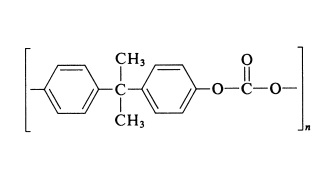
Polycarbonates are the toughest of all thermoplastics. They are window-clear, amazingly strong and rigid, autoclavable, and nontoxic. They have a brittleness temperature of 135℃.
使用
Polycarbonates are plastics widely used in modern industry having good temperature and impact resistance. This plastic is particularly good to work with more conventional definition techniques (injection molding, extrusion into tubes or cylinders and thermoforming). It is also used when optical transparency is needed, having more than 80% transmission up to the 1560-nm range (short wave infrared range). It has moderated chemical resistance properties, being chemically resistant to diluted acids and alcohols. It is poorly resistant against ketones, halogens, and concentrated acids. The major disadvantage associated with polycarbonates is the low glass transition temperature (Tg> 40°C), but it is still largely used as low-cost material in microfluidic systems and also as a sacrificial layer.
定義
A
thermoplastic polymer consisting of polyesters
of carbonic acid and dihydroxy compounds.
They are tough and transparent,
used for making soft-drink bottles and
electrical connectors.
製造方法
To a solution of 2,2-bis-(4- hydroxyphenyl)propane 909 (0.68 g, 3 mmol) in dichloromethane (10 mL) was added triethylamine (0.60 g, 6 mmol), followed by a solution of triphosgene (0.30 g,1 mmol) in dichloromethane (10 mL). The mixture was stirred for 8 h at room temperature, washed with water (3×) and with aq. sodium hydrogen carbonate solution (3×), and dried over sodium sulfate. The solvent was removed in vacuo and the resulting colorless powder was dried under high vacuum; yield 0.74 g.
安全性
ポリカーボネートはその耐久性と多様な用途により広く利用されていますが環境への影響も懸念されています特にビスフェノールABPAの使用は人体への潜在的な健康影響が指摘されていますこれに対応するためBPAフリーのポリカーボネートやより環境に優しい代替材料の開発が進められています
一般的な説明
Service temperature, max.135°C
生産方法
ポリカーボネートの製造には主に二つの方法があります一つ目はフェノールとアセトンからビスフェノールAを合成しその後フェノール基とカルボン酸クロリドとを反応させる方法ですこのプロセスは高い純度と品質を要求される製品に適しています二つ目は溶融ポリコンデンセーション法と呼ばれ直接ビスフェノールAとジフェニルカーボネートを反応させる方法ですこの方法は比較的安価であり大量生産に適しています
化学性质
ポリカーボネートの最大の特長は非常に高い耐衝撃性を持っている点ですガラスの約250倍アクリル樹脂の約30倍の強度を持ち衝撃による破損のリスクを大幅に減少させますまた40℃から120℃の温度範囲で使用できる高い耐熱性を有しており多湿や多雨の環境でもその性能を維持します
ポリ(ビスフェノールAカルボナート) 上流と下流の製品情報
原材料
準備製品