- cis-13-Docosenoamide
-

-
2026-10-21
- CAS:112-84-5
- Min. Order: 1kg/Bag
- Purity: ≥98%
- Supply Ability: 50 T/Month
- Erucamide
-
- $100.00
-
2026-10-21
- CAS:112-84-5
- Min. Order: 1kg
- Purity: 99%
- Supply Ability: 5000
- Erucamide
-

- $1000.00
-
2026-10-21
- CAS:112-84-5
- Min. Order: 1kg
- Purity: 99%
- Supply Ability: 5000
|
| | Erucamide Basic information |
| Product Name: | Erucamide | | Synonyms: | 13-Docosenamide,(Z)-;Armid E;AKAWAX E-MICROBEADS;13-Docosenamide, (13Z)-;CIS-13-DOCOSENOICACIDAMIDE;Erucamid erucyl amide;(13Z)-13-Docosenamide;Erucylamide, tech., 90% | | CAS: | 112-84-5 | | MF: | C22H43NO | | MW: | 337.58 | | EINECS: | 204-009-2 | | Product Categories: | Amides;Chiral Compounds;112-84-5 | | Mol File: | 112-84-5.mol |  |
| | Erucamide Chemical Properties |
| Melting point | 75-85 °C
79-81 °C (lit.) | | Boiling point | 473.86°C (rough estimate) | | density | 0.9417 (rough estimate) | | vapor pressure | 0-0Pa at 25℃ | | refractive index | 1.5614 (estimate) | | Fp | 230 °C | | storage temp. | -20°C | | solubility | Soluble in DMSO (up to at lease 40 mg/ml) or in Water (up to at least 25 mg/ml with warming) | | form | solid | | pka | 16.61±0.40(Predicted) | | color | Off-white | | Water Solubility | PRACTICALLY INSOLUBLE | | Henry's Law Constant | 3.5×100 mol/(m3Pa) at 25℃, HSDB (2015) | | Stability: | Stable. Incompatible with strong oxidizing agents. | | Cosmetics Ingredients Functions | VISCOSITY CONTROLLING
OPACIFYING | | InChI | 1S/C22H43NO/c1-2-3-4-5-6-7-8-9-10-11-12-13-14-15-16-17-18-19-20-21-22(23)24/h9-10H,2-8,11-21H2,1H3,(H2,23,24)/b10-9- | | InChIKey | UAUDZVJPLUQNMU-KTKRTIGZSA-N | | SMILES | [H]\C(CCCCCCCC)=C(/[H])CCCCCCCCCCCC(N)=O | | LogP | 8 | | CAS DataBase Reference | 112-84-5(CAS DataBase Reference) | | NIST Chemistry Reference | 13-Docosenamide, (z)-(112-84-5) | | EPA Substance Registry System | 13-Docosenamide, (13Z)- (112-84-5) |
| | Erucamide Usage And Synthesis |
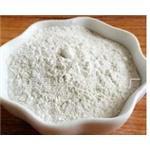
| Description | Erucamide is also known as 13-Docosenamide or Erucylamide. It is in the form of white flakes or beads. It is soluble in isopropanol, slightly soluble in alcohol and acetone.1 In industry, cis-13-docosenoamide is used in the formulations of anti-adhesive agents, lubricants, and lubricant additives to reduce their friction coefficient and to make films easier to handle.2 It is used as a standard to determine fatty acid amides in polyethylene packaging film by GC/MS.3 | | Chemical Properties | Erucamide is a fatty acid amide derived from erucic acid, which is found in vegetable oil. It is a odorless waxy solid that can dissolve in isopropanol and has low solubility in alcohol and acetone. It is also combustible. Its molecular structure consists of a long unsaturated C22 chain and a polar amine group, which gives it strong surface polarity, a high melting point, and good thermal stability. Because of these properties, it finds extensive applications in industries such as plastics, rubber, printing, and machinery. | | Uses | Erucamide is primarily used as a polymer additive, with plastic additive 21 is a plasticizer; used in preparation of natural mineral modified degradable polymer flame-retardant composite material. | | Preparation | Erucamide is prepared by reaction of erucic acid with anhydrous ammonia. The reaction of erucic acid with anhydrous ammonia is as follows: C22H42O2 + NH3 → C22H43NO2. | | Definition | Erucamide is a primary fatty amide resulting from the formal condensation of the carboxy group of erucic acid with ammonia. It is commonly used as a slip additive in the plastic manufacturing industry. It has a role as a human metabolite, a rat metabolite, a mammalian metabolite, a plant metabolite and an EC 3.1.1.7 (acetylcholinesterase) inhibitor. It is functionally related to an erucic acid. | | General Description | Erucamide is a migratory additive that is commonly placed in polyolefin films to reduce their coefficient of friction (COF), a good attribute for high speed packaging operations. | | Biological Activity | 13-Docosenamide is the amide of docosenoic acid. It was first identified in the cerebrospinal fluid of sleep-deprived cats. It has also been detected in the cerebrospinal fluid of rats and humans. 13-Docosenamide causes reduced mobility and slightly lessened awareness in rats, whereas 9-octadecenamide induces physiological sleep. | | References | [1] MIAO-MIAO LI . Antidepressant and anxiolytic-like behavioral effects of erucamide, a bioactive fatty acid amide, involving the hypothalamus–pituitary–adrenal axis in mice[J]. Neuroscience Letters, 2017, 640: Pages 6-12. DOI:10.1016/j.neulet.2016.12.072.
[2] LIEROP B V, CASTLE L, FEIGENBAUM A, et al. Spectra for the Identification of Additives in Food Packaging[C]. 1998: 0. DOI:10.1007/978-94-011-5222-8.
[3] https://pubchem.ncbi.nlm.nih.gov/compound/Erucylamide#section=Use-and-Manufacturing
[4] https://www.sigmaaldrich.com/catalog/product/aldrich/280577lang=de®ion=DE
[5] I. QUIJADA-GARRIDO. Desorption of Erucamide Vapor in Vacuum from Erucamide/Isotactic Polypropylene Films 1[J]. Macromolecules, 1996, 29 27: 8791-8797. DOI:10.1021/ma961065i. |
| | Erucamide Preparation Products And Raw materials |
|