- Unii-U2Y5ofn795
-
-
2019-12-25
- CAS:649735-63-7
- Min. Order: 1KG
- Purity: 95%-99%
- Supply Ability: 1kg; 100kg; 1000kg
|
| | Brivanib alaninate Basic information |
| | Brivanib alaninate Chemical Properties |
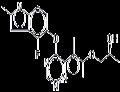
| density | 1.42±0.1 g/cm3(Predicted) | | storage temp. | Store at -20°C | | solubility | ≥22.05 mg/mL in DMSO; insoluble in H2O; ≥10.03 mg/mL in EtOH | | form | Yellow powder. | | pka | 16.08±0.30(Predicted) | | color | White to brown | | InChIKey | LTEJRLHKIYCEOX-OCCSQVGLSA-N | | SMILES | C(O[C@H](C)COC1=CN2C(=C1C)C(OC1C=CC3=C(C=1F)C=C(C)N3)=NC=N2)(=O)[C@H](C)N |
| | Brivanib alaninate Usage And Synthesis |
| Uses | A novel prodrug of dual vascular endothelial growth factor receptor-2 and fibroblast growth factor receptor-1 kinase inhibitor. | | Uses | BMS-582664 is an oral VEGFR/FGFR inhibitor for VEGFR2, Flk1, VEGFR1 and FGFR1 with IC50 of 25 nM, 89 nM, 380 nM and 148 nM, respectively. | | Definition | ChEBI: Brivanib alaninate is a carboxylic ester resulting from the formal condensation of the carboxy group of L-alanine with the hydroxy group of brivanib. It is a prodrug of brivanib (BMS-540215), a potent oral dual inhibitor of VEGFR-2 and FGFR-1 (IC50 of 25 nM and 148 nM, respectively) and was in development for the treatment of hepatocellular and colon carcinomas. It has a role as an antineoplastic agent, an EC 2.7.10.1 (receptor protein-tyrosine kinase) inhibitor, a prodrug, an apoptosis inducer, a fibroblast growth factor receptor antagonist and an angiogenesis inhibitor. It is a pyrrolotriazine, an aromatic ether, a fluoroindole, a diether, a carboxylic ester and a L-alanine derivative. It is functionally related to a brivanib. | | in vivo | Brivanib displays antitumor activities in H3396 xenograft in athymic mice. At a dose of 60 and 90 mg/kg (p.o.), brivanib completely inhibits the tumor growth, with TGI of 85% and 97%, respectively[1]. Moreover, brivanib significantly suppresses tumor growth in Hepatocellular carcinoma (HCC) xenografts, which due to the decrease in phosphorylation of VEGFR2. The results show that the tumor weights in 06-0606 xenograft mice are 55% and 13%, compared with the controls at a dose of 50 mg/kg and 100 mg/kg. Brivanib is suggested to be efficient in treatment of HCC[2]. Brivanib (50 mg/kg, p.o.) attenuates liver fibrosis and stellate cell activation induced by BDL in mice. Brivanib inhibits growth factor and growth factor receptor mRNA expression in sham control animals but shows variable effects in bile duct ligated animals[3]. | | target | VEGFR2 | | IC 50 | VEGFR2: 25 nM (IC50) |
| | Brivanib alaninate Preparation Products And Raw materials |
|