|
|
| | Aclerastide Basic information |
| Product Name: | Aclerastide | | Synonyms: | Aclerastide;DSC 127;DSC127;DSC-127;NorLeu-3-A(1-7);NorLeu-3A(1-7);1-7-Angiotensin II, 3-L-norleucine-5-L-isoleucine- | | CAS: | 227803-63-6 | | MF: | C42H64N12O11 | | MW: | 913.03136 | | EINECS: | | | Product Categories: | | | Mol File: | 227803-63-6.mol | 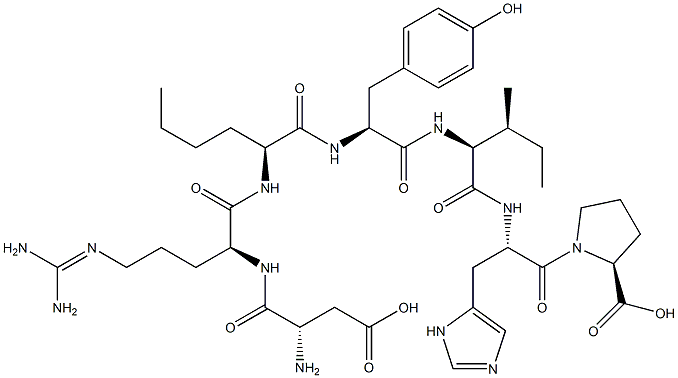 |
| | Aclerastide Chemical Properties |
| density | 1.45±0.1 g/cm3(Predicted) | | pka | 3.29±0.20(Predicted) | | form | Solid | | color | White to off-white | | Sequence | Asp-Arg-{Nle}-Tyr-Ile-His-Pro |
| | Aclerastide Usage And Synthesis |
| Uses | Aclerastide is a peptide analog of angiotensin II, and a potential treatment for diabetic foot ulcers. | | in vivo | Aclerastide (0.1 mg/wound; day for 5 days) shows superior efficacy in the db/db mouse model of wound healing[1].
Aclerastide (topically administered; 100 μL; once a day; for 14 days) elevates levels of reactive oxygen species and of active MMP-9[2]. | Animal Model: | db/db mice[2] | | Dosage: | 100 μL | | Administration: | Topically administered, once a day, for 14 days | | Result: | Upregulated reactive oxygen species during inflammation.
Increased the levels of the detrimental active MMP-9 in diabetic wounds.
|
|
| | Aclerastide Preparation Products And Raw materials |
|