- PROTEASE
-

- $8.00
-
2026-09-02
- CAS:9001-92-7
- Min. Order: 1kg
- Purity: 99%
- PROTEASE
-
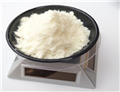
- $10.00
-
2026-03-20
- CAS:9001-92-7
- Min. Order: 100KG
- Purity: 99%
- Supply Ability: 100 mt
- PROTEASE
-
-
2025-12-24
- CAS:9001-92-7
- Min. Order: 1KG
- Purity: 99.0%
- Supply Ability: 1000 tons
|
| | PROTEASE Basic information |
| | PROTEASE Chemical Properties |
| storage temp. | 2-8°C | | solubility | H2O: 5-20 mg/mL | | form | powder | | color | white | | biological source | Streptomyces griseus | | Water Solubility | water: soluble 10-20g/L | | Specific Activity | ≥5units/mg solid | | Cosmetics Ingredients Functions | SKIN CONDITIONING | | EPA Substance Registry System | Proteinase (9001-92-7) |
| Hazard Codes | Xn | | Risk Statements | 37/38-41-42-36/37/38 | | Safety Statements | 23-24-26-36/37/39-36/37-22-45 | | WGK Germany | 3 | | RTECS | UK9595000 | | F | 3-10 | | TSCA | TSCA listed | | HS Code | 35079010 | | Storage Class | 11 - Combustible Solids | | Hazard Classifications | Resp. Sens. 1 | | Toxicity | LD50 ipr-mus: 45 mg/kg CYLPDN 4,214,83 |
| | PROTEASE Usage And Synthesis |
| Chemical Properties | Nearly white to light brownish yellow amorphous powder or liquid. Soluble in water, aqueous solutions are generally pale yellow. Almost insoluble in ethanol, chloroform and ether. The main function is to hydrolyze proteins into low molecular peptones, ureas, peptides and amino acids. Natural products exist in animals, plants and microorganisms, etc., industrial applications to molds produce the main. Produced by Aspergillus oryzae at pH 6.0, the optimal temperature is 45-50 ℃. Those produced by Aspergillus niger (Asp. niger 3350) and Bacillus cereus (B. cereus) are also known as Acid-Resistant Protease (Acid-ResistantProteinase), with an optimum pH of 2.5 and an optimum temperature of 45℃. It is strongly activated by copper or manganese ions at a concentration of 2×10⁻³mol, and inhibited by silver and mercury ions. | | Uses | Protease from Rhizopus spp. Has been used in a study to assess the amino acid sequences near the amino termini using automated Edman degradation. It has also been used in a study to investigate inactivation of the enzyme by reaction with diazoacetyl-DL-norleucine methyl ester in the presence of cupric acetate. | | Uses | Protease is an enzyme used to break down proteins by hydrolyzing peptide bonds. Protease is used to degrade proteins, to study protease inhibitors and to study thermal inactivation kinetics. Product P4630 is from bovine pancreas. Protease from bovine pancrease (type I) has been used for the extraction of hemicellulose. | | Uses | Proteinase is an enzyme used to break down proteins by hydrolyzing peptide bonds. Proteinase is used to degrade proteins, to study proteinase inhibitors and to study thermal inactivation kinetics. Proteinase is used in nucleic acid isolation procedures in incubations. It is used to study proteinase-activated receptors, such as the transducers of proteinase-mediated signaling in inflammation and the immune response. Product P4032 is from Aspergillus melleus and has been used to non-specifically degraded xylanase from Streptomyces halstedii. | | General Description | Proteases belong to the group of hydrolases and exist as acid, neutral, and alkaline proteases. | | Biochem/physiol Actions | Proteases catabolize proteins by hydrolysis of peptide bonds. They have many applications such as in detergents, bioremediation processes, pharmaceutical industry, and food industries. Proteases are associated with nitrogen mineralization in the soil. They also serve as a supplement in swine and poultry diets. | | Safety Profile | A poison by intraperitoneal route.When heated to decomposition it emits acrid smoke andirritating vapors. | | Toxics Screening Level | The initial threshold screening level (ITSL) for Proteinase is 0.0006 μg/m3 (1-hour averaging time). |
| | PROTEASE Preparation Products And Raw materials |
|