


Does β-Nicotinamide Adenine Dinucleotide (NAD+) Decline with Age? New Research Sparks Debate in Anti-Aging
Oct 8,2026
β-Nicotinamide adenine dinucleotide (abbreviated as NAD+ or β-NAD) is a ubiquitous coenzyme synthesized from niacin or tryptophan that plays a critical role in cellular metabolism and redox reactions. NAD+ has long been hailed as a "star molecule" in the field of anti-aging. Numerous animal experiments and some human studies suggest that NAD+ levels in tissues and blood gradually decline with age; consequently, supplementing with NAD+ precursors—such as nicotinamide riboside (NR) and nicotinamide mononucleotide (NMN)—is viewed as a potential strategy to delay aging and enhance metabolic resilience.

However, a recently published large-scale human study directly challenges this core hypothesis. The study indicates that whole-blood NAD+ levels in humans do not decline with age, nor are they altered by lifestyle interventions [1].
In a systematic analysis involving seven independent human cohorts and a total of over 300 individuals, the results showed the following: in a cross-sectional aging cohort, there was no significant difference in whole-blood NAD+ levels between individuals under 30 (n=20) and those over 60 (n=20). In the age-stratified CardioHT cohort (n=26), neither NAD+ nor its related metabolites showed a significant association with age. Even under extreme physiological conditions—such as in a cohort of elite athletes (ELITE, n=23)—NAD+ levels were virtually identical to those of a young control group. Furthermore, in a longevity cohort (LLS, n=70) comprising elderly individuals aged 63–87, NAD+ levels remained highly stable across the entire age range.
Exercise and Nutritional Interventions
Lifestyle interventions also appear unable to alter whole-blood NAD+ levels. In the TEAMS cohort involving frail older adults, neither a 3-month resistance training program (n=31) nor a combination of training and a high-protein diet (n=34) altered participants' whole-blood NAD⁺ concentrations. Similarly, in the 6-month MEJNES2019 intervention trial, NAD⁺ levels remained unchanged across both the nutritional supplementation group (n=9) and the multimodal intervention group combining exercise with supplementation (n=15).
However, when nicotinamide riboside (NR) supplements were administered, whole-blood NAD⁺ levels rose significantly, as expected. In a cohort of monozygotic twins (n=24) receiving a 5-month NR intervention with escalating dosages, subjects showed a marked increase in whole-blood NAD⁺ levels. This demonstrates that the measurement method itself is sensitive and effective; the lack of change was not due to an inability to detect the molecule, but rather because NAD⁺ levels are genuinely insensitive to age and lifestyle changes.
Why did previous studies "appear" to show a decline?
The discrepancy stems from differences in sample processing. Research has shown that freezing whole-blood samples leads to significant NAD⁺ degradation, a loss that is exacerbated by repeated freeze-thaw cycles. Dried blood spot samples also exhibited significant degradation, whereas preservation methods involving methanol pretreatment effectively maintained NAD⁺ levels. This suggests that the "age-related decline" observed in some earlier studies may not reflect actual biological changes but rather measurement artifacts resulting from sample storage and processing.
Can whole-blood NAD⁺ still serve as a biomarker for aging?
RThe researchers explicitly stated that whole-blood NAD⁺ levels are unlikely to serve as a sensitive biomarker reflecting systemic ageing or the efficacy of lifestyle interventions. They also cautioned that, as NAD⁺ is primarily found within cells, its concentration in plasma is 50–100 times lower than in whole blood—and may even fall below the limit of quantification—making whole blood a more reliable testing matrix. Although the sample sizes were moderate and the studies were all cross-sectional or pre-post intervention designs, there was a high degree of consistency across cohorts. In particular, the stark contrast with the significant increases observed following NR supplementation speaks for itself.
Summary
It is important to note that this study does not negate the critical role of NAD⁺ in cellular metabolism and the biology of aging, nor does it suggest that NAD⁺ supplementation is without value. However, it strongly indicates that, in humans, circulating NAD⁺ levels do not constitute a simple biomarker that naturally declines with age and is easily modulated by lifestyle. This suggests that future assessments of the relationship between NAD⁺ metabolism and aging may require more precise measurements of tissue-specific NAD⁺, dynamic flux, and redox balance, rather than relying solely on static whole-blood concentrations.
References
[1] Trętowicz, M. M., Scantlebery, A. M. L., Schomakers, B. V., Eroğlu, K. D., van Weeghel, M., Spek, V., Vinten, K. T., Legon, L., Coskun, E., Millan-Domingo, F., Olaso-Gonzalez, G., Gomez-Cabrera, M. C., Montoro-García, S., Noguera-Navarro, C., van Kuilenburg, A. B. P., Moco, S., van Hattum, J. C., Jørstad, H. T., Benali, M., … Houtkooper, R. H. (2026). Human whole-blood NAD+ levels do not vary with age or lifestyle interventions. Nature Metabolism, 8 6, 1282–1290. https://doi.org/10.1038/s42255-026-01537-5
- Related articles
- Related Questions
- Oxidation and reduction of β-Nicotinamide adenine dinucleotide (NAD+) Jun 7,2024
β-Nicotinamide adenine dinucleotide (NAD+) is an electron carrier as it carries electrons from hydride from one region of the cell to another.
- Side effects of NAD+ oral or injectable therapy Apr 17,2024
NAD+ is present in every cell in the body, and is essential for the production of cellular energy and the maintenance of cellular health.
- NAD+:Introduction;Biosynthesis;Metabolism in aging and disease Nov 16,2023
NAD+ metabolism has been linked to a variety of age-related diseases, mainly tumours, metabolic diseases, neurodegenerative diseases, and aging.

Retatrutide (CAS: 2381089-83-2), also known as LY3437943, is a triple agonist that targets three key metabolic regulatory receptors: GLP-1R, GIPR, and GCGR.....
Oct 8,2026Drugs
Chlorphenesin (CAS: 104-29-0) is a synthetic chlorophenol derivative. It appears as an odorless white powder with a bitter taste.....
Oct 8,2026Antimicrobial agent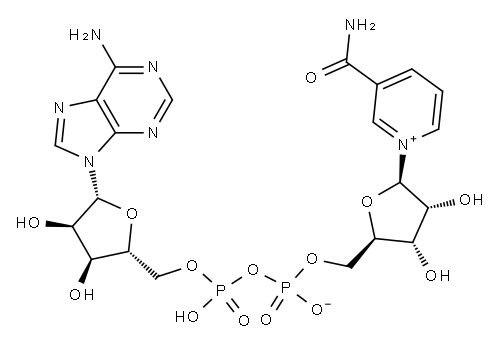
You may like
- Glutaric acid: Uses and Biosynthesis
Nov 11,2026
- What is Metergoline?
Nov 10,2026
- [LEU5]-enkephalin: Endogenous Opioid Peptide Research
Nov 6,2026
β-Nicotinamide adenine dinucleotide manufacturers
- β-Nicotinamide adenine dinucleotide
-

- $99.00
- 2026-11-16
- CAS:53-84-9
- Min. Order: 1Kg
- Purity: 98%
- Supply Ability: 20Ton
- β-Nicotinamide adenine dinucleotide
-
- $99.00
- 2026-11-16
- CAS:53-84-9
- Min. Order: 1Kg
- Purity: 98%
- Supply Ability: 20Ton
- Nad
-

- $10.00
- 2026-11-16
- CAS:
- Min. Order: 10VIAL
- Purity: 99.9
- Supply Ability: 20000