


Panthenol

- CAS No.
- 16485-10-2
- Chemical Name:
- Panthenol
- Synonyms
- DL-PANTHENOL;PANTOTHENOL;DL-PANTHENOL POWDER;pantenol;DL-PANTOTHENOL;DL-Panthenol 99%;d panthenol powder;anthenol;pantenolo;PANTHENOL
- CBNumber:
- CB3274109
- Molecular Formula:
- C9H19NO4
- Molecular Weight:
- 205.25
- MDL Number:
- MFCD00002944
- MOL File:
- 16485-10-2.mol
- MSDS File:
- SDS
- TDS File:
- TDS
| Melting point | 66-69 °C (lit.) |
|---|---|
| alpha | 0°(c=5, H2O) |
| Boiling point | 118-120 °C(Press: 0.02 Torr) |
| Density | 1.166±0.06 g/cm3(Predicted) |
| vapor pressure | 0.004Pa at 25℃ |
| storage temp. | Inert atmosphere,Room Temperature |
| solubility | Acetonitrile (Slightly), DMSO (Slightly), Methanol (Slightly) |
| pka | 13.03±0.20(Predicted) |
| form | Solid |
| color | White to Off-White |
| Water Solubility | Soluble in water, ethanol, ether, chloroform, and propylene glycol. |
| Sensitive | Hygroscopic |
| Merck | 14,2947 |
| BRN | 1724945 |
| Cosmetics Ingredients Functions |
HAIR CONDITIONING ANTISTATIC SKIN CONDITIONING |
| Cosmetic Ingredient Review (CIR) | Panthenol (16485-10-2) |
| InChI | 1S/C9H19NO4/c1-9(2,6-12)7(13)8(14)10-4-3-5-11/h7,11-13H,3-6H2,1-2H3,(H,10,14) |
| InChIKey | SNPLKNRPJHDVJA-UHFFFAOYSA-N |
| SMILES | CC(C)(CO)C(O)C(=O)NCCCO |
| LogP | -1.02 at 22℃ |
| CAS DataBase Reference | 16485-10-2(CAS DataBase Reference) |
| FDA 21 CFR | 310.545 |
| EWG's Food Scores | 1 |
| FDA UNII | WV9CM0O67Z |
| EPA Substance Registry System | Butanamide, 2,4-dihydroxy-N-(3-hydroxypropyl)-3,3-dimethyl- (16485-10-2) |
| Cosmetics Info | Panthenol |
| UNSPSC Code | 41116107 |
| NACRES | NA.24 |
SAFETY
Risk and Safety Statements
| Symbol(GHS) |  GHS07 |
|||||||||
|---|---|---|---|---|---|---|---|---|---|---|
| Signal word | Warning | |||||||||
| Hazard statements | H315-H319-H335 | |||||||||
| Precautionary statements | P261-P305+P351+P338 | |||||||||
| PPE | Eyeshields, Gloves, type N95 (US) | |||||||||
| Hazard Codes | Xn | |||||||||
| Risk Statements | 36/37/38-48-41-37/38-20/21/22 | |||||||||
| Safety Statements | 26-37-45-36/37/39-22 | |||||||||
| WGK Germany | 3 | |||||||||
| RTECS | ES4316500 | |||||||||
| F | 3 | |||||||||
| TSCA | TSCA listed | |||||||||
| HS Code | 29362400 | |||||||||
| Storage Class | 11 - Combustible Solids | |||||||||
| Toxicity | mouse,LD50,intraperitoneal,10100mg/kg (10100mg/kg),Farmaco, Edizione Scientifica. Vol. 14, Pg. 43, 1959. | |||||||||
| REACH Registrations | Active | |||||||||
| NFPA 704 |
|
Panthenol price More Price(43)
| Manufacturer | Product number | Product description | CAS number | Packaging | Price | Updated | Buy |
|---|---|---|---|---|---|---|---|
| Sigma-Aldrich | 295787 | DL-Panthenol 99% | 16485-10-2 | 100g | $93.2 | 2026-04-30 | Buy |
| Sigma-Aldrich | 1494501 | Panthenol, racemic United States Pharmacopeia (USP) Reference Standard | 16485-10-2 | 200mg | $431 | 2026-04-30 | Buy |
| TCI Chemical | P1318 | DL-Panthenol >98.0%(N) | 16485-10-2 | 25g | $55 | 2026-04-30 | Buy |
| TCI Chemical | P1318 | DL-Panthenol >98.0%(N) | 16485-10-2 | 500g | $364 | 2026-04-30 | Buy |
| Biosynth | FD170517 | DL-Panthenol | 16485-10-2 | 50g | $900 | 2026-06-04 | Buy |
Panthenol Chemical Properties, Uses, Production
General Description
Panthenol (also called pantothenol) is the alcohol analog of pantothenic acid (vitamin B5), and is thus a provitamin of B5. In organisms it is quickly oxidized to pantothenic acid. It is a viscous transparent liquid at room temperature. Panthenol is used as a moisturizer and to improve wound healing in pharmaceutical and cosmetic products.
Panthenol is a multi-functional active ingredient that would be useful in most skin care formulations. Its efficacy has been substantiated in numerous peer-reviewed journals. The biologically active form of Panthenol, D-panthenol (EU), is the stable alcohol analogue of vitamin B5, pantothenic acid (EU), and is quickly converted to vitamin B5 (pantothenate) in the body. Pantothenic acid is present in all living cells and acts as an essential nutritional component due to its role in the formation of acetyl-co-enzyme A in the early stages of metabolism. The main role of acetyl-co-enzyme A is to provide activated acetic acid into the citric acid cycle (Krebs Cycle). This produces carbon dioxide, water, and energy. Co-enzyme A also transfers to other molecules such as Nacetyl-glucosamine (EU) and acetylcholine (EU) to help in the production of steroids and the synthesis of fatty acids. Coenzyme A also helps the body detoxify foreign substances.
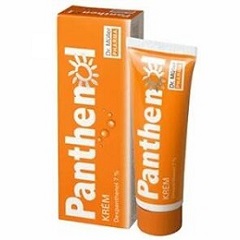
Uses
Panthenol, the active form of panthenol, is enzymatically cleaved to form pantothenic acid (Vitamin B5), which is an essential component of Coenzyme A that acts as a cofactor in many enzymatic reactions that are important for protein metabolism in the epithelium.
Due to its good penetration and high local concentrations, dexpanthanol is used in many topical products, such as ointments and lotions for treatment of dermatological conditions to relieve itching or promote healing. Dermatological effects of the topical use of dexpanthenol include increased fibroblast proliferation and accelerated re-epithelialization in wound healing. Furthermore, it acts as a topical protectant, moisturizer, and has demonstrated anti-inflammatory properties. The vitamin ingredient Panthenol is valued in skin and hair care applications for its moisturizing properties. It has anti-inflammatory effects and soothes irritated and sensitive skin. For hair care application it is known for its humectant properties and its ability to improve the resistance of hair to mechanical stress.
Mechanism of action
Pantothenic acid is a precursor of coenzyme A, which serves as a cofactor for a variety of enzyme-catalyzed reactions involving transfer of acetyl groups. The final step in the synthesis of
acetylcholine consists of the choline acetylase transfer of acetyl group from acetylcoenzyme A to choline. Acetylcholine is the neurohumoral transmitter in the parasympathetic system and as such
maintains the normal functions of the intestine. Decrease in acetylcholine content would result in decreased peristalsis and in extreme cases adynamic ileus.
Panthenol is well absorbed into the skin and quickly converted into Pantothenic acid by oxidation. Pantothenic acid is distributed into the cells and is converted to Acetyl Coenzyme-A (Acetyl CoA)
in the cells of the epidermis. Human being require Vitamin B5 to synthesize Acetyl CoA which is an essential mediator to many biochemical reactions that sustain life (maintenance and repair of all
cells) and which breaks down fats, carbohydrates and proteins for carbon dioxide, water, and energy generation. Furthermore, it synthesis fatty acids and sphingolipids, for stratum corneum lipid
layers and cell membrane integrity & fluidity.
Side effects
Panthenol is generally well tolerated. In rare cases, skin irritation and contact allergies have been reported. Generally, topical panthenol formulations were well tolerated with minimal risk of skin irritation or sensitization.
Uses
vitamin B5 precursor, radioprotectant, antimalarial
Uses
panthenol (pro-vitamin B5) acts as a penetrating moisturizer. Panthenol appears to stimulate cellular proliferation and aid in tissue repair. Studies indicate that when topically applied, panthenol penetrates the skin and gets converted into pantothenic acid, a B complex vitamin. Such action could possibly influence the skin’s natural resources of pantothenic acid. It imparts a nonirritant, non-sensitizing, moisturizing, and conditioning feel and promotes normal keratinization and wound-healing. Panthenol protects the skin against sunburn, provides relief for existing sunburn, and enhances the natural tanning process. Panthenol’s humectant character enables it to hold water in the product or attract water from the environment, resulting in a moisturizing effect. It enhances skin suppleness, and claims are that it also acts as an anti-inflammatory agent. It is considered a non-comedogenic raw material.
Uses
DL-Panthenol is used in the topical treatment of skin disorders, such as minor irritations and skin burns. Also used in the strengthening and treatment of hair.
Application
Panthenol is used as a moisturizer, soothing and softening agent.
- Skin care: It improves hydration and elasticity of the skin, reduces itching and inflammation of the skin, improves skin elasticity, and accelerates the rate of healing of wounds. In topical creams, it is found to be in a concentration of 1-5%.
- Hair care: It binds to the hair shaft readily, so, it is a common component of commercial shampoos and hair conditioners (in concentrations of 0.1-1%). It coats the hair and seals its surface, lubricating the hair shaft and giving it a shiny appearance. It can also help protect your hair from styling or environmental damage by locking in moisture.
General Description
Panthenol is an alcohol derivative of pantothenic acid, a component of the B complex vitamins and an essential component of a normally functioning epithelium. Panthenol exists in two optically active forms, both of which are used in pharmaceutical preparations. While pantothenic acid is optically active, only the dextrorotatory form is biologically active. Dexpanthenol, the active form of panthenol, is enzymatically cleaved to form pantothenic acid (Vitamin B5), which is an essential component of Coenzyme A that acts as a cofactor in many enzymatic reactions that are important for protein metabolism in the epithelium.
Flammability and Explosibility
Non flammable
Synthesis
Panthenol [D(+)-panthenol, α,γ-dihydroxy-N-(3-hydroxypropyl)-β,β-dimethylbutyramide] is synthesized by condensation of D-pantolactone (II) with 3-aminopropyl alcohol (III) in a medium of the lowest aliphatic alcohol: 3-aminopropyl alcohol (4.61 g, 0.062 mol, ca. 5% excess) was added to a solution of D-pantolactone (7.61 g, 0.058 mol) in ethanol (30 ml) and stirred at 78–80°C for 2 h (second-order reaction); after cooling to 20°C, KU-23 sulfonate-type cation-exchange resin (1.5 g) was added and stirred for 30 min to remove residual amino alcohol, the resin was filtered off and washed with ethanol (15 ml), and the combined filtrate was evaporated to dryness at 60–65°C to give chromatographically pure D-panthenol in 98.6% yield. Optimization studies showed that with equimolar reactants, 90.17% of 3-aminopropanol reacted after 2 h at 70°C in methanol and 94.7% of panthenol formed after 2 h at 80°C in ethanol; with a 5% excess of 3-aminopropanol, 99.6% D-panthenol was formed after 2 h at 80°C [1].
References
[1] KOZLOVA, G. S., EROKHINA, T. I., & GUNAR, V. I. (1977). ChemInform Abstract: SYNTHESIS OF D(+)-PANTHENOL. ChemInform, 8 38. https://doi.org/10.1002/chin.197738363
Panthenol Preparation Products And Raw materials
Raw materials
Preparation Products
| Supplier | Tel | Country | ProdList | Advantage | |
|---|---|---|---|---|---|
| Brother Enterprises Holding Co., Ltd. | 0573-87006360 | pharm@brother.com.cn | China | 21 | 58 |
| J & K SCIENTIFIC LTD. | 18210857532 18210857532 | jkinfo@jkchemical.com | China | 96815 | 76 |
| Jiangsu Huayu Chemical Co., Ltd. | 25-83241163 | sales@elegantnutri.com | China | 55 | 55 |
| Meryer (Shanghai) Chemical Technology Co., Ltd. | 4006356688 18621169109 | market03@meryer.com | China | 40202 | 62 |
| 3B Pharmachem (Wuhan) International Co.,Ltd. | 18930552037 | 3bsc@sina.com | China | 15813 | 69 |
| Alfa Aesar | 400-6106006 | saleschina@alfa-asia.com | China | 30103 | 84 |
| TCI (Shanghai) Development Co., Ltd. | 021-67121386 | Sales-CN@TCIchemicals.com | China | 24512 | 81 |
| Beijing HwrkChemical Technology Co., Ltd | 89508211 18501085097 | sales.bj@hwrkchemical.com | China | 9407 | 55 |
| Energy Chemical | 400-0056266 | sales8178@energy-chemical.com | China | 44850 | 61 |
| Jia Xing Isenchem Co.,Ltd | 0573-85285100 18627885956 | isenchem@163.com | China | 9389 | 66 |
Related articles
- Panthenol: Applications in Skin, Wound Healing and Hair Care
- Panthenol (sometimes referred to as pro-vitamin B5) is a popular humectant in personal care products due to its ability to att....
- Jun 6,2025
- The application of Dexpanthenol
- Dexpanthenol (International Nomenclature of Cosmetic Ingredients (INCI) name panthenol) is the alcohol corresponding to pantot....
- Jul 15,2022
- Why is Panthenol used in Cosmetics?
- Pantothenic acid is a precursor of coenzyme A, which serves as a cofactor for a variety of enzyme-catalyzed reactions involvin....
- Jul 6,2020
Related Questions
Ask a questionView Latest Price from Panthenol manufacturers
| Image | Update time | Product | Price | Min. Order | Purity | Supply Ability | Manufacturer | |
|---|---|---|---|---|---|---|---|---|
 |
2026-09-17 | Panthenol
16485-10-2
|
0.99 | RongNa Biotechnology Co.,Ltd | ||||
 |
2026-09-17 | Panthenol
16485-10-2
|
$300.00-500.00 | 99% | 5000 | HEBEI SHENGSUAN CHEMICAL INDUSTRY CO.,LTD | ||
 |
2026-09-17 | Panthenol
16485-10-2
|
1KG | 98%min | 30tons/month | WUHAN FORTUNA CHEMICAL CO., LTD |
16485-10-2 (Panthenol) Related Search:
1of4
