


Diisobutylamine

- CAS No.
- 110-96-3
- Chemical Name:
- Diisobutylamine
- Synonyms
- DIBA;(i-C4H9)2NH;Diisobutylamin;AURORA KA-7633;DIISOBUTYLAMINE;amine,diisobutyl;Di-n-isobutylaMine;Diisobutylamine,99%;diisobutylamine diba;LABOTEST-BB LTBB000475
- CBNumber:
- CB4279808
- Molecular Formula:
- C8H19N
- Molecular Weight:
- 129.24
- MDL Number:
- MFCD00008930
- MOL File:
- 110-96-3.mol
- MSDS File:
- SDS
| Melting point | -77 °C (lit.) |
|---|---|
| Boiling point | 137-139 °C (lit.) |
| Density | 0.74 g/mL at 25 °C (lit.) |
| refractive index |
n |
| Flash point | 85 °F |
| storage temp. | Flammables area |
| solubility | insoluble to slightly soluble in water; soluble in ethanol, methanol, ethyl ether, ethyl acetate, acetone, benzene, aromatic and aliphatic hydrocarbons, fixed oils, mineral oil, oleic and stearic acids |
| pka | 11.07±0.28(Predicted) |
| form | Liquid |
| color | Clear |
| Odor | amine odor |
| Water Solubility | 5 g/L (20 ºC) |
| Sensitive | Air Sensitive |
| BRN | 1209251 |
| Henry's Law Constant | 1.8×10⁻² mol/(m3Pa) at 25℃, Duchowicz et al. (2020) |
| Dielectric constant | 2.7(22℃) |
| InChI | 1S/C8H19N/c1-7(2)5-9-6-8(3)4/h7-9H,5-6H2,1-4H3 |
| InChIKey | NJBCRXCAPCODGX-UHFFFAOYSA-N |
| SMILES | CC(C)CNCC(C)C |
| LogP | 2.383 (est) |
| CAS DataBase Reference | 110-96-3(CAS DataBase Reference) |
| FDA UNII | T18Y0A819S |
| NIST Chemistry Reference | 1-Propanamine, 2-methyl-N-(2-methylpropyl)-(110-96-3) |
| EPA Substance Registry System | Diisobutylamine (110-96-3) |
| UNSPSC Code | 12352100 |
| NACRES | NA.22 |
SAFETY
Risk and Safety Statements
| Symbol(GHS) |    GHS02,GHS05,GHS06 |
|||||||||
|---|---|---|---|---|---|---|---|---|---|---|
| Signal word | Danger | |||||||||
| Hazard statements | H310+H330-H301-H314-H226 | |||||||||
| Precautionary statements | P501-P270-P262-P240-P260-P210-P233-P243-P241-P242-P271-P264-P280-P284-P370+P378-P361+P364-P303+P361+P353-P301+P330+P331-P301+P310+P330-P304+P340+P310-P305+P351+P338+P310-P403+P233-P403+P235-P405 | |||||||||
| PPE | Faceshields, Gloves, Goggles, type ABEK (EN14387) respirator filter | |||||||||
| Hazard Codes | C | |||||||||
| Risk Statements | 10-22-34-52/53 | |||||||||
| Safety Statements | 26-36/37/39-45-25-16-61 | |||||||||
| RIDADR | UN 2361 | |||||||||
| WGK Germany | 1 | |||||||||
| RTECS | TX1750000 | |||||||||
| F | 34 | |||||||||
| TSCA | TSCA listed | |||||||||
| HazardClass | 3 | |||||||||
| PackingGroup | III | |||||||||
| HS Code | 29211990 | |||||||||
| Storage Class | 3 - Flammable liquids | |||||||||
| Hazard Classifications | Acute Tox. 3 Oral Aquatic Chronic 3 Eye Dam. 1 Flam. Liq. 3 Skin Corr. 1B |
|||||||||
| Hazardous Substances Data | 110-96-3(Hazardous Substances Data) | |||||||||
| REACH Registrations | Active | |||||||||
| Limited Quantities | 5.0 L (1.3 gallons) (liquid) | |||||||||
| Excepted Quantities | Max Inner Pack (30g or 30ml) and Max Outer Pack (1Kg or 1L) | |||||||||
| NFPA 704 |
|
Diisobutylamine price More Price(20)
| Manufacturer | Product number | Product description | CAS number | Packaging | Price | Updated | Buy |
|---|---|---|---|---|---|---|---|
| Sigma-Aldrich | 135186 | Diisobutylamine 99% | 110-96-3 | 250ml | $43.5 | 2026-04-30 | Buy |
| Sigma-Aldrich | 135186 | Diisobutylamine 99% | 110-96-3 | 1l | $134 | 2026-04-30 | Buy |
| TCI Chemical | D0614 | Diisobutylamine | 110-96-3 | 25mL | $19 | 2026-04-30 | Buy |
| TCI Chemical | D0614 | Diisobutylamine | 110-96-3 | 500mL | $41 | 2026-04-30 | Buy |
| TRC | TRC-D446538-250MG | Diisobutylamine | 110-96-3 | 250mg | $64 | 2026-06-03 | Buy |
Diisobutylamine Chemical Properties, Uses, Production
Chemical Properties
The chemical reactivity of diisobutylamine is similar to other aliphatic amines and is governed by the unshared electron pair on the nitrogen atom. It is a strong base tending to form salts with acids. As with other secondary amines, diisobutylamine can be nitrosated, especially under acidic conditions, by nitrite ion or by nitrogen oxides from the air to form the carcinogenic and mutagenic N-nitrosodiisobutylamine (Olah et al 1975).
Uses
Diisobutylamine was used to study the effect of achiral amine on hydrogenation of ethyl pyruvate over cinchonidine-Pt/Al2O3 catalyst system. Diisobutylamine is the principal starting material for the herbicide Butylate (Zeneca).
Production Methods
Diisobutylamine can be produced by the reaction of ammonia and butanol over a
dehydration catalyst at high temperature and pressure (Hawley 1977). Alternatively,
ammonia, butanol, and hydrogen can be passed over a dehydrogenation
catalyst. In 1976, 18,000 tons of diisobutylamine were produced (Schweizer et al
1978). Diisobutylamine is also naturally present in foods and soil.
As with other secondary amines, diisobutylamine can be nitrosated to form the
highly toxic (Olah 1975) N-nitrosodiisobutylamine (Guttenplan 1987; Vlasenko et
al 1981; Spiegeholder et al 1978). Thus, nitrosation of commercial preparations of
diisobutylamine occurs on standing, presumably by reaction with nitrogen oxides
in the air (Spiegelhalder et al 1978) and N-nitrosodiisobutylamine has been found
in various fishery products (Kawabata et al 1974) and other foods (Osborne 1972;
Telling 1972).
General Description
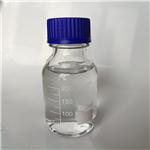
Diisobutylamine appears as a clear colorless liquid with an ammonia-like odor. Insoluble in water and less dense than water. Hence floats on water. Vapors heavier than air. Toxic oxides of nitrogen produced during combustion.
Air & Water Reactions
Highly flammable. Sensitive to heat and air. Insoluble in water.
Reactivity Profile
Diisobutylamine can react vigorously with oxidizing materials . Neutralizes acids in exothermic reactions to form salts plus water. May be incompatible with isocyanates, halogenated organics, peroxides, phenols (acidic), epoxides, anhydrides, and acid halides. Flammable gaseous hydrogen may be generated in combination with strong reducing agents, such as hydrides.
Health Hazard
Inhalation of high concentrations of vapor will cause irritation of the respiratory tract and the lungs. Contact with liquid may result in severe skin and eye irritation. Exposure to concentrated vapors may result in corneal edema. Poisonous if swallowed.
Health Hazard
Diisobutylamine is a relatively strong base and is therefore irritating to the eyes, respiratory tract, and skin. Inhalation of vapors can result in pulmonary edema following prolonged exposure. Ingestion of liquid can cause severe burning of the esophagus.
Industrial uses
Diisobutylamine is used as a chemical intermediate in the manufacture of several agricultural and pharmaceutical products.
Safety Profile
Poison by ingestion. A dangerous fire hazard when exposed to heator flame; can react vigorously with oxidizing materials. To fight fire, use alcohol foam, CO2, dry chemical. When heated to decomposition it emits toxic fumes of Nox
Metabolism
There is little information available on the metabolism of diisobutylamine.


Diisobutylamine Preparation Products And Raw materials
| Supplier | Tel | Country | ProdList | Advantage | |
|---|---|---|---|---|---|
| Shanghai LanRun Chemical Co., Ltd. | 021-69515658 ; 69515628 13701998368; | longrunchem@163.com | China | 3776 | 50 |
| Meryer (Shanghai) Chemical Technology Co., Ltd. | 4006356688 18621169109 | market03@meryer.com | China | 40202 | 62 |
| Alfa Aesar | 400-6106006 | saleschina@alfa-asia.com | China | 30103 | 84 |
| TCI (Shanghai) Development Co., Ltd. | 021-67121386 | Sales-CN@TCIchemicals.com | China | 24512 | 81 |
| Energy Chemical | 400-0056266 | sales8178@energy-chemical.com | China | 44850 | 61 |
| JinYan Chemicals(ShangHai) Co.,Ltd. | 13817811078 | sales@jingyan-chemical.com | China | 9963 | 60 |
| Shanghai Hanhong Scientific Co.,Ltd. | 021-54306202 13764082696 | info@hanhongsci.com | China | 42917 | 64 |
| Shandong Xiya Chemical Co., Ltd | 13355009207 13355009207 | 3007715519@qq.com | China | 18722 | 57 |
| Syntechem Co.,Ltd | info@syntechem.com | China | 12973 | 57 | |
| Sichuan Kulinan Technology Co., Ltd | 400-1166-196 18981987031 | cdhxsj@163.com | China | 11674 | 57 |
View Latest Price from Diisobutylamine manufacturers
| Image | Update time | Product | Price | Min. Order | Purity | Supply Ability | Manufacturer | |
|---|---|---|---|---|---|---|---|---|
 |
2026-08-20 | Diisobutylamine
110-96-3
|
$1.10 | 1g | 99.00% | 100 Tons Min | Dideu Industries Group Limited | |
 |
2026-03-20 | Diisobutylamine
110-96-3
|
1KG | 99% | 20 mt | Hebei Chuanghai Biotechnology Co., Ltd | ||
 |
2023-08-02 | Diisobutylamine
110-96-3
|
$50.00 | 1kg | 99.9% | 10000MT | Henan Bao Enluo International TradeCo.,LTD |
-
- Diisobutylamine
110-96-3
- $1.10
- 99.00%
- Dideu Industries Group Limited
-
- Diisobutylamine
110-96-3
- 99%
- Hebei Chuanghai Biotechnology Co., Ltd
-
- Diisobutylamine
110-96-3
- $50.00
- 99.9%
- Henan Bao Enluo International TradeCo.,LTD
