


Stavudine

- CAS No.
- 3056-17-5
- Chemical Name:
- Stavudine
- Synonyms
- sanilvudine;1-(2,3-Dideoxy-beta-D-glycero-2-pentenofuranosyl)thymine;D4T;ZERIT;Stavir;Avostav;Virostav;STAVUDINE;BMY-27857;NSC 163661
- CBNumber:
- CB4450928
- Molecular Formula:
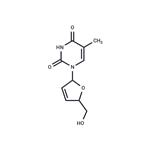
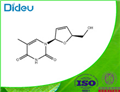
- C10H12N2O4
- Molecular Weight:
- 224.21
- MDL Number:
- MFCD00132921
- MOL File:
- 3056-17-5.mol
- MSDS File:
- SDS
- TDS File:
- TDS
| Melting point | 159-160°C |
|---|---|
| alpha | D25 -39.4° (c = 0.701 in water); D20 -46.1° (c = 0.7 in water) |
| Density | 1.374±0.06 g/cm3(Predicted) |
| refractive index | -46 ° (C=0.69, H2O) |
| storage temp. | -20°C |
| solubility | Soluble in water, sparingly soluble in ethanol (96 per cent), slightly soluble in methylene chloride. It shows polymorphism (5.9). |
| pka | 9.47±0.10(Predicted) |
| form | Solid |
| color | White |
| optical activity | Consistent with structure |
| Water Solubility | 5-10 g/100 mL at 21 ºC |
| Henry's Law Constant | 4.3×10⁹ mol/(m3Pa) at 25℃, HSDB (2015) |
| BCS Class | 1,3 |
| Stability | Stable. Combustible. Incompatible with strong oxidizing agents. |
| InChI | 1S/C10H12N2O4/c1-6-4-12(10(15)11-9(6)14)8-3-2-7(5-13)16-8/h2-4,7-8,13H,5H2,1H3,(H,11,14,15)/t7-,8+/m0/s1 |
| InChIKey | XNKLLVCARDGLGL-JGVFFNPUSA-N |
| SMILES | CC1=CN([C@@H]2O[C@H](CO)C=C2)C(=O)NC1=O |
| CAS DataBase Reference | 3056-17-5(CAS DataBase Reference) |
| NCI Dictionary of Cancer Terms | stavudine |
| FDA UNII | BO9LE4QFZF |
| NCI Drug Dictionary | stavudine |
| ATC code | J05AF04 |
| EPA Substance Registry System | Thymidine, 2',3'-didehydro-3'-deoxy- (3056-17-5) |
| UNSPSC Code | 41116107 |
| NACRES | NA.77 |
SAFETY
Risk and Safety Statements
| Symbol(GHS) |  GHS08 |
|---|---|
| Signal word | Warning |
| Hazard statements | H341 |
| Precautionary statements | P201-P202-P280-P308+P313-P405-P501 |
| PPE | Eyeshields, Gloves, type N95 (US) |
| Hazard Codes | Xi |
| Risk Statements | 36/37/38 |
| Safety Statements | 26-36 |
| WGK Germany | 2 |
| RTECS | XP2075000 |
| HS Code | 29349990 |
| Storage Class | 11 - Combustible Solids |
| Hazardous Substances Data | 3056-17-5(Hazardous Substances Data) |
| Toxicity | LD50 oral in rat: 4gm/kg |
Stavudine price More Price(113)
| Manufacturer | Product number | Product description | CAS number | Packaging | Price | Updated | Buy |
|---|---|---|---|---|---|---|---|
| Sigma-Aldrich | Y0000421 | Stavudine for system suitability European Pharmacopoeia (EP) Reference Standard | 3056-17-5 | 10 mg | $127 | 2026-04-30 | Buy |
| Sigma-Aldrich | Y0000408 | Stavudine European Pharmacopoeia (EP) Reference Standard | 3056-17-5 | 100 mg | $254 | 2026-04-30 | Buy |
| Sigma-Aldrich | D1413 | 2′,3′-Didehydro-3′-deoxythymidine ≥98% (TLC) | 3056-17-5 | 10mg | $91.8 | 2026-04-30 | Buy |
| Sigma-Aldrich | PHR3447 | Stavudine certified reference material, pharmaceutical secondary standard | 3056-17-5 | 500MG | $186 | 2026-04-30 | Buy |
| Sigma-Aldrich | 1620209 | Stavudine United States Pharmacopeia (USP) Reference Standard | 3056-17-5 | 250mg | $682 | 2026-04-30 | Buy |
Stavudine Chemical Properties,Uses,Production
Description
Stavudine, a dideoxynucleoside analog of thymidine, has been introduced in the U.S.A. for the treatment of late-stage AIDS patients who are refractory to other AIDS treatments. Similar as other currently available agents for AIDS treatment such as zidovudine (AZT), didanosine, and zalcitabine, the anti-HIV activity of these 2'3'- dideoxynucleosides is ascribed to the inhibitory effect of their corresponding 5'- triphosphates against the HlVsncoded RNAdependent DNA polymerase (reverse transcriptase). While some of these drugs have rapid development of drug resistance, stavudine is active against AZT-resistant HIV strains. It has a favorable pharmacokinetic profile with more complete and less variable oral absorption than AZT and didanosine and has a bioavailability of 80-90%.
Chemical Properties
Colourless solid
Originator
Bristol-Myers Squibb (U.S.A.)
Uses
angiotensin 1 receptor antagonist
Uses
Stavudine (Zidovudine EP Impurity A) is used as an antiviral. A reverse transcriptase inhibitor.
Definition
ChEBI: A nucleoside analogue obtained by formal dehydration across positions 2 and 3 of thymidine. An inhibitor of HIV-1 reverse transcriptase
Indications
Stavudine (d4T, Zerit) is a thymidine nucleoside analogue that is active against HIV-1 and HIV-2. It is approved for the therapy of HIV infection as part of a multidrug regimen and is also used for postexposure prophylaxis.
Manufacturing Process
A 3 liter, 3 necked round-bottomed flask was equipped with an overhead
stirrer and paddle, a 500 ml dropping funnel and a Claisen adapter containing
a drying tube and a thermometer. Thymidine (200 g, 0.82 M) and pyridine
(750 ml) were added to the flask. The mixture was stirred and warmed with a
water bath (20 min) to give a clear solution. The solution was then cooled in
an ice bath to 0°-3°C and the dropping funnel was charged with
methanesulfonyl chloride (206.5 g, 1.08 M). The methanesulfonyl chloride was
then added dropwise over 40 min with no noticeable exotherm. The solution
was stirred at 0°C for 1 h and then stored at 5°C for 18 h. The light brown
mixture was then poured onto rapidly stirred water (3 L) containing ice
(approx. 500 g). The desired product crystallised immediately. After stirring
for 0.5 h, the product was collected by filtration and washed several times
with water (3 times 100 ml). The white solid was then dried under vacuum overnight (322 g, 98% yield). The product was recrystallised from hot acetone
to give 267 g of the 3',5'-di-O-(methanesulfonyl)thymidine as white solid
(81% yield), melting point 169°-171°C (lit. 170°-171°C).
3',5'-Di-O-(methanesulfonyl)thymidine (248 g, 0.62 M) was added in portions
to a stirred solution of sodium hydroxide (74.7 g, 1.87 M) in water (1.6 L). On
addition the reaction mixture became a yellow-orange solution. This stirred
solution was then heated to reflux for 2 h. Once the reaction mixture had
cooled to room temperature, 6 N hydrochloric acid (100 ml) was added. The
reaction mixture was concentrated in vacuo by removing 1.3 L of water. The
resulting slurry was cooled in an ice bath for 2 h. The solid was then filtered
and washed sparingly with ice water, and then vacuum dried to constant
weight (103.7 g, 74%). The 1-(3,5-anhydro-2-deoxy-β-D-threopentofuranosyl)
thymine, melting point 188°-190°C (lit. 190°-193°C) was used
without further purification.
2 Methods of preparation of 1-(2,3-dideoxy-β-D-glycero-pent-2-
enofuranosyl)thymine
1. To a 3-necked, 1 L round-bottomed flask equipped with a mechanical
stirrer, thermometer and nitrogen inlet was added dry DMSO (400 ml) and
oxetane (90.0 g, 0.402 M). To this solution was added 97% KOtBu (74 g,
0.643M) in 1.5 g portions over 25 min. The temperature was maintained
between 18° and 22°C by means of an external ice bath. After the addition
was complete the reaction was stirred for a further 1 h and no further rise in
temperature was observed and TLC indicated that the reaction was
approximately 90% complete. The reaction was stirred at 21°C for 16 h, after
which time TLC indicated that the reaction was complete. The viscous solution
was poured onto cold (4°C) toluene (3 L), resulting in a beige colored
precipitate. The temperature of the mixture rose to 7°C upon addition of the
DMSO solution. The mixture was occasionally swirled over 20 min, then
filtered on a 18.5 cm Buchner funnel. The collected yellowish solid was
washed twice with cold toluene and allowed to dry under suction for 1 h. The
solid was dissolved in 300 ml of water, whereupon two layers formed. The
mixture was placed in a separatory funnel and the upper layer (containing
residual toluene) was discarded. The aqueous layer was placed in a 1 L beaker
equipped with a pH probe, magnetic stirring bar and thermometer. The
temperature was cooled to 10°C by the use of an external ice bath.
Concentrated HCl was added dropwise to the stirred solution at a rate in
which the temperature was kept below 15°C. After the addition of HCl (50.5
ml, 0.61 M) the pH = 70.1 and a precipitate began to form. To this thick
mixture was added potassium chloride (70 g) and stirring was continued at
5°C for 1 h. The precipitate was collected and sucked dry for 2 h, then air
dried for 16 h. The solid was crushed up and slurried in hot acetone (500 m)
and filtered. The residue in the filter paper was rinsed with hot acetone (2
times 200 ml), then slurried again with hot acetone (300 ml), filtered, and
washed once more with hot acetone (2 times 100 ml). The combined filtrate
was concentrated to dryness to give 51.3 g (57%) of the 1-(2,3-dideoxy-β-Dglycero-
pent-2-enofuranosyl)thymine (d4T) as an off-white solid, melting point
165°-166°C.
2. Tetrabutylammonium fluoride (0.22 mL, 0.22 mM, 1.0 M) was added to a
suspension of the 1-(3,5-anhydro-2-deoxy-beta;-D-threopentofuranosyl)
thymine (25 mg, 0.11 mM) in dry THF (3 ml). The mixture was heated to reflux for 18 h, at which time the reaction appeared to be
complete. After cooling, the solvents were removed in vacuo and the residue
was dissolved in CH2Cl2/MeOH/NH4OH (90:10:1). Purification was performed
on a 20 mm flash chromatography column, eluting with CH2Cl2/MeOH/NH4OH
(90:10:1). Concentration of the fractions containing the product afforded 18
mg (72%) of the dideoxy-β-D-glycero-pent-2-enofuranosyl)thymine (d4T).
brand name
Zerit (Bristol-Myers Squibb).
Therapeutic Function
Antiviral
Antimicrobial activity
Stavudine is active against HIV-1, HIV-2 and HTLV-1.
Acquired resistance
Resistance to stavudine is identical to that seen for zidovudine. Mutations at positions 41, 67 and 70, and positions 210, 215 and 219 (the ‘thymidine analog mutations’) of the reverse transcriptase genes are associated with diminished antiretroviral efficacy.
General Description
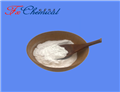
White crystalline solid or powder. Odorless.
General Description
Stavudine, 2'3'-didehydro-2'-deoxythymidine (D4T, Zerit), isan unsaturated pyrimidine nucleoside that is related to thymidine.The drug inhibits the replication of HIV by a mechanismsimilar to that of its close congener, AZT.Stavudine is bioactivatedby cellular enzymes to a triphosphate.
Stavudine is available as capsules for oral administration.The drug is acid stable and well absorbed (about 90%) followingoral administration. Stavudine has a short half-life(1–2 hours) in plasma and is excreted largely unchanged(85%–90%) in the urine.As with ddC, the primary doselimitingeffect is peripheral neuropathy.
Stavudine isrecommended for the treatment of adults with advancedHIV infection who are intolerant of other approved therapiesor who have experienced clinical or immunological deteriorationwhile receiving these therapies.
Air & Water Reactions
Water soluble.
Reactivity Profile
Stavudine is sensitive to heat. Incompatible with strong oxidizing agents .
Hazard
Moderately toxic by ingestion.
Fire Hazard
Literature sources indicate that Stavudine is combustible.
Pharmaceutical Applications
An analog of thymidine formulated for oral administration.
Biochem/physiol Actions
2′,3′-Didehydro-3′-deoxythymidine is a nucleoside analog, which inhibits HIV replicationin vitro. Stavudine has the ability to enter the cells by non-facilitated diffusion. It possesses inhibitory activity against moloney murine leukemia virus, friend murine leukemia virus and simian immunodeficiency virus.
Pharmacokinetics
Oral absorption: 86%
Cmax 40 mg twice daily: 0.54 mg/L
Plasma half-life: 1.4 h
Volume of distribution: 0.66 L/kg
Plasma protein binding: <5%
Absorption and distribution
It is rapidly absorbed with or without food. CNS penetration is moderate. The estimated semen:plasma ratio is >1. It is secreted into breast milk.
Metabolism and excretion
The metabolic fate in humans has not been elucidated. Renal elimination accounts for approximately 40% of overall clearance at a rate almost twice that of endogenous creatinine, indicating glomerular filtration and active tubular secretion. Clearance decreases as creatinine clearance decreases and the dosage should be adjusted in patients with reduced renal function. Pharmacokinetics are not significantly altered in patients with hepatic impairment.
Clinical Use
Treatment of HIV infection in adults and children
Side effects
Toxicity includes peripheral neuropathy, lactic acidosis, hepatomegaly with steatosis and liver failure, lipoatrophy and pancreatitis. Combination therapy with didanosine results in higher frequency of these toxicities, and fatalities have been reported in pregnant women. The use of the two drugs in combination is no longer recommended. It competes with zidovudine for the same intracellular phosphorylating enzymes and co-administration is contraindicated.
Side effects
The adverse effects with which stavudine is most frequently associated are headache, diarrhea, skin rash, nausea, vomiting, insomnia, anorexia, myalgia, and weakness. Peripheral neuropathy consisting of numbness, tingling, or pain in the hands or feet is also common with higher doses of the drug. Significant elevation of hepatic enzymes may be seen in approximately 10 to 15% of patients. Lactic acidosis occurs more frequently with stavudine than with other NRTIs. Viral resistance to stavudine may develop, and cross-resistance to zidovudine and didanosine may occur.
Drug interactions
Potentially hazardous interactions with other drugs
Antivirals: zidovudine may inhibit intracellular
activation - avoid; increased risk of side effects with
didanosine - avoid; increased risk of toxicity with
ribavirin.
Cytotoxics: effects possibly inhibited by doxorubicin;
increased risk of toxicity with hydroxycarbamide -
avoid.
Orlistat: absorption of stavudine possibly reduced
Metabolism
Stavudine is metabolised intracellularly to the active antiviral triphosphate. Following an oral 80-mg dose of [14C]-stavudine to healthy subjects, approximately 95% and 3% of the total radioactivity was recovered in urine and faeces, respectively. Approximately 70% of the orally administered stavudine dose was excreted as unchanged drug in urine. However, in HIV-infected patients, 42% (range: 13-87%) of the dose is excreted unchanged in the urine, by active tubular secretion and glomerular filtration.
Precautions
Stavudine possesses several clinically significant interactionswith other drugs. Although hydroxyurea enhancesthe antiviral activity of stavudine and didanosine,combination therapy that includes stavudine anddidanosine, with or without hydroxyurea, increases therisk of pancreatitis. Combinations of stavudine and didanosineshould not be given to pregnant women becauseof the increased risk of metabolic acidosis.Zidovudine inhibits the phosphorylation of stavudine;thus, this combination should be avoided.
References
1. routledge c, bromidge sm, moss sf et al. characterization of sb-271046: a potent, selective and orally active 5-ht (6) receptor antagonist. br j pharmacol. 2000 aug; 130(7):1606-12.2. marcos b, chuang tt, gil-bea fj, ramirez mj. effects of 5-ht6 receptor antagonism and cholinesterase inhibition in models of cognitive impairment in the rat. br j pharmacol. 2008 oct;155(3):434-40.


Stavudine Preparation Products And Raw materials
Raw materials
1of4
Preparation Products
| Supplier | Tel | Country | ProdList | Advantage | |
|---|---|---|---|---|---|
| J & K SCIENTIFIC LTD. | 18210857532 18210857532 | jkinfo@jkchemical.com | China | 96815 | 76 |
| Meryer (Shanghai) Chemical Technology Co., Ltd. | 4006356688 18621169109 | market03@meryer.com | China | 40202 | 62 |
| 3B Pharmachem (Wuhan) International Co.,Ltd. | 18930552037 | 3bsc@sina.com | China | 15813 | 69 |
| Chembest Research Laboratories Limited | 021-20908456 | sales@BioChemBest.com | China | 5996 | 61 |
| TCI (Shanghai) Development Co., Ltd. | 021-67121386 | Sales-CN@TCIchemicals.com | China | 24512 | 81 |
| Energy Chemical | 400-0056266 | sales8178@energy-chemical.com | China | 44850 | 61 |
| Capot Chemical Co., Ltd | +86 (0) 571 85 58 67 18 | China | 18187 | 66 | |
| Pure Chemistry Scientific Inc. | 001-857-928-2050 or 1-888-588-9418 | sales@chemreagents.com | United States | 10174 | 62 |
| VDM Biochemicals | 0330-2528181 | sales@vdmbio.com | United States | 510 | 64 |
| LGM Pharma | 1-(800)-881-8210 | inquiries@lgmpharma.com | United States | 2110 | 70 |
Related articles
- Can Stavudine be used in pregnant patients?
- Stavudine is an anti-AIDS drug that is widely used in some countries to prevent HIV transmission from a pregnant woman to her ....
- Dec 16,2024
- A potent inhibitor of HIV reverse transcriptase---Stavudine
- The nucleoside analog stavudine (2u,3u-didehydro-2u3u-deoxythymidine, d4T) is a potent inhibitor of HIV reverse transcriptase ....
- Apr 15,2022
View Lastest Price from Stavudine manufacturers
| Image | Update time | Product | Price | Min. Order | Purity | Supply Ability | Manufacturer | |
|---|---|---|---|---|---|---|---|---|
 |
2026-09-11 | Stavudine
3056-17-5
|
1KG | 98%-102%; USP | 500KGS | WUHAN FORTUNA CHEMICAL CO., LTD | ||
 |
2026-08-29 | Stavudine
3056-17-5
|
$47.00-97.00 | 99.89% | 10g | TargetMol Chemicals Inc. | ||
 |
2026-08-20 | Stavudine USP/EP/BP
3056-17-5
|
$1.10 | 1g | 99.9% | 100 Tons Min | Dideu Industries Group Limited |
-
- Stavudine
3056-17-5
- 98%-102%; USP
- WUHAN FORTUNA CHEMICAL CO., LTD
-
- Stavudine
3056-17-5
- $47.00-97.00
- 99.89%
- TargetMol Chemicals Inc.
-
- Stavudine USP/EP/BP
3056-17-5
- $1.10
- 99.9%
- Dideu Industries Group Limited
3056-17-5(Stavudine)Related Search:
1of4
