- Cuprous iodide
-

- $10.00
-
2026-03-20
- CAS:1335-23-5
- Min. Order: 1KG
- Purity: 99%
- Supply Ability: 10 mt
- Cuprous iodide
-
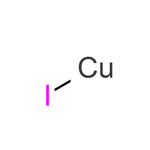
-
2022-09-23
- CAS:1335-23-5
- Min. Order: 1kg
- Purity: 99%
- Supply Ability: 1000kg
- Cuprous iodide
-

- $15.00
-
2021-07-10
- CAS:1335-23-5
- Min. Order: 1KG
- Purity: 99%+ HPLC
|
| | Cuprous iodide Chemical Properties |
| | Cuprous iodide Usage And Synthesis |
| Preparation | 1. Cuprous iodide is obtained by reacting copper sulfate with potassium iodide under weakly acidic conditions. A slightly excess of potassium iodide solution containing a small amount of sulfur dioxide is added to a copper sulfate solution, and sulfur dioxide gas is passed through to precipitate a white precipitate. The precipitate is filtered out and washed with water containing a small amount of sulfur dioxide, then with ethanol and ether. After thorough suction filtration, the precipitate is thoroughly cleaned under vacuum to remove the ether. To remove firmly adhering water, it is best to slowly heat the precipitate from 110°C to 400°C under vacuum. 2. In a 400 mL beaker, 150 mL of water and 25 g (0.1 mol) of copper sulfate pentahydrate are dissolved to prepare a first solution. Then, 16.6 g (0.10 mol) of potassium iodide and 25 g of sodium thiosulfate pentahydrate are dissolved in 100 mL of water to prepare a second solution. The second solution is added to the first solution with rapid stirring, and a white, dense precipitate of cuprous iodide is observed to form. After settling for 15 minutes, the product was filtered through a medium-porosity sintered sand funnel and washed several times with water, ethanol, and ether (20 ml each time). The product was crushed and dried in a vacuum desiccator containing sulfuric acid for several days, or placed overnight at 100°C in a phosphorus pentoxide vacuum drying gun. One gram of product was dissolved in concentrated nitric acid and filtered through a sintered sand funnel to remove iodine. The product was washed with water, and the yellow filtrate and washings were combined. The solution was then diluted with water, and the copper content was measured to be 33.1%, with a calculated value of 33.4%. The chemical reaction equation for the preparation of cuprous iodide is: 2CuSO4 + 2KI + 2Na2S2O3 = 2CuI + K2SO4 + Na2SO4 + Na2S4O6. | | Uses | 1. Cuprous iodide has a wide range of applications, including as an organic synthesis catalyst, resin modifier, artificial rainmaking agent, anode tube covering, and iodine source in iodized salts. In the presence of 1,2- or 1,3-diamine ligands, cuprous iodide can catalyze the conversion of brominated aromatics, brominated heterocyclic compounds, and vinyl bromides to their corresponding iodides. The reaction is generally carried out in dioxane solvent, using sodium iodide as the iodizing agent. Aromatic iodides are generally more reactive than their corresponding chlorides and iodides; therefore, cuprous iodide can catalyze a series of coupling reactions involving haloalkanes, such as the Heck reaction, Stille reaction, Suzuki reaction, and Ullmann reaction. 2-Bromo-1-octen-3-ol and 1-nonyne undergo a coupling reaction in the presence of dichlorobis(triphenylphosphine)palladium(II), cuprous chloride, and diethylamine to produce 7-methylene-8-hexadec-6-ol.
2. It is used as an organic reaction catalyst, anode tube covering, and also as an animal feed additive.
3. It acts as a catalyst in many reactions involving Grignard reagents, and cuprous iodide is also used in the dry Wiff rearrangement reaction. | | Cuprous halide | Cuprous Iodide and cuprous chloride, cuprous bromide are three common cuprous halides, three are white solid, the photonasty of cuprous iodide is worse than CuBr and CuCl, in light decomposition and precipitation of iodine. In nature, it exists in marshite. Cuprous chloride and cuprous bromide can be produced by the reaction of the corresponding acidic solution of divalent copper salt with copper. Cuprous Iodide was prepared by adding Cu2 + into potassium iodide solution.
Cuprous iodide and Magnesium bromide or lithium phenyl in ether can produce copper phenyl.
The reaction of methyl lithium with cuprous iodide at-15 ℃ or by the reaction of copper nitrate and tetramethyl lead in ethanol at-60 ~-40 ℃ can produce methyl copper.
Grignard reagent reacts with cuprous halide to produce cuprous hydrocarbyl, cuprous halide may be cuprous iodide, cuprous bromide, cuprous chloride.
The above information is edited by the chemicalbook of Yan Yanyong.
|
| | Cuprous iodide Preparation Products And Raw materials |
|