Benzenemethanaminium, 3,3'-azobis[N,N,N-trimethyl-, diiodide (9CI) manufacturers
- BisQ
-

- $1520.00
-
2026-04-21
- CAS:73711-18-9
- Purity:
- Supply Ability: 10g
|
| | Benzenemethanaminium, 3,3'-azobis[N,N,N-trimethyl-, diiodide (9CI) Basic information |
| Product Name: | Benzenemethanaminium, 3,3'-azobis[N,N,N-trimethyl-, diiodide (9CI) | | Synonyms: | Benzenemethanaminium, 3,3'-azobis[N,N,N-trimethyl-, diiodide (9CI) | | CAS: | 73711-18-9 | | MF: | C20H30IN4+ | | MW: | 453.39 | | EINECS: | | | Product Categories: | | | Mol File: | 73711-18-9.mol | 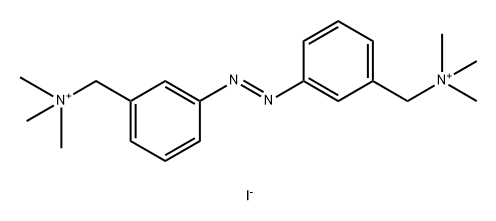 |
| | Benzenemethanaminium, 3,3'-azobis[N,N,N-trimethyl-, diiodide (9CI) Chemical Properties |
| | Benzenemethanaminium, 3,3'-azobis[N,N,N-trimethyl-, diiodide (9CI) Usage And Synthesis |
| Description | BisQ is a photochromic agonist for the muscle-type nAChR. | | Uses | Bis-Q is an acetylcholine (ACh) agonist that targets voltage-clamped muscle fibers of the fish Xenomystus nigris. Bis-Q exists in two forms: cis-Bis-Q (non-agonist) and trans-Bis-Q (agonist). Photoisomerization converts cis-Bis-Q to trans-Bis-Q, which induces agonist-induced currents. Channels activated by trans-Bis-Q and ACh have similar conductances and open times. Flashes increase the ratio of trans-Bis-Q to cis-Bis-Q until light equilibrium is reached. Further flashes transiently increase agonist-induced currents, indicating binding of trans-Bis-Q to desensitized receptors. Higher concentrations of cis-Bis-Q produce larger agonist-induced currents that decay exponentially.[1]. | | References | [1] Activation and desensitization of acetylcholine receptors in fish muscle with a photoisomerizable agonist. |
| | Benzenemethanaminium, 3,3'-azobis[N,N,N-trimethyl-, diiodide (9CI) Preparation Products And Raw materials |
|