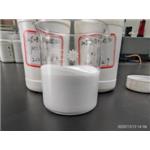
- Cyprodinil
-
-
2026-07-14
- CAS:121552-61-2
- Min. Order: 100KG
- Purity: 98
- Supply Ability: 200TONS
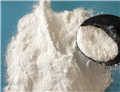
- Cyprodinil
-
- $45.00
-
2020-11-16
- CAS:121552-61-2
- Min. Order: 10Kg/Bag
- Purity: 99%
- Supply Ability: 20 Tons
- Cyprodinil
-

- $1.00
-
2019-07-06
- CAS:121552-61-2
- Min. Order: 1kg
- Purity: 99%
|
| | Cyprodinil Basic information |
| Product Name: | Cyprodinil | | Synonyms: | CYPRODINIL;CYPRODINIL PESTANAL, 250 MG;2-Pyrimidinamine, 4-cyclopropyl-6-methyl-N-phenyl-;chorus;4-Cyclopropyl-6-methyl-N-phenyl-2-pyrimidinamine;Cyprodinil Standard;Hsdb 7019;Cyprodinil 500mg [121552-61-2] | | CAS: | 121552-61-2 | | MF: | C14H15N3 | | MW: | 225.29 | | EINECS: | | | Product Categories: | Pesticides intermediate | | Mol File: | 121552-61-2.mol |  |
| | Cyprodinil Chemical Properties |
| Melting point | 75.9° | | Boiling point | 406.0±48.0 °C(Predicted) | | density | 1.21 g/cm3 | | vapor pressure | 5.1 x l0-4 Pa (25 °C) | | storage temp. | 0-6°C | | solubility | Chloroform: Slightly Soluble | | pka | 4.44 (base) | | Water Solubility | 20 mg l-1 (pH 5), 13 mg l-1 (pH 7),
15 mg l-1 (pH 9) 25 °C | | form | Solid | | color | White to off-white | | BRN | 7813601 | | Henry's Law Constant | 1.2×10² mol/(m3Pa) at 25℃, Duchowicz et al. (2020) | | Major Application | agriculture
environmental | | InChI | InChI=1S/C14H15N3/c1-10-9-13(11-7-8-11)17-14(15-10)16-12-5-3-2-4-6-12/h2-6,9,11H,7-8H2,1H3,(H,15,16,17) | | InChIKey | HAORKNGNJCEJBX-UHFFFAOYSA-N | | SMILES | C1(NC2=CC=CC=C2)=NC(C)=CC(C2CC2)=N1 | | LogP | 4.000 | | EPA Substance Registry System | Cyprodinil (121552-61-2) |
| Hazard Codes | Xi | | Risk Statements | 36/38-43 | | Safety Statements | 26-36 | | RIDADR | UN 3077 | | WGK Germany | 2 | | Storage Class | 11 - Combustible Solids | | Hazard Classifications | Aquatic Acute 1
Aquatic Chronic 1
Skin Sens. 1 | | Hazardous Substances Data | 121552-61-2(Hazardous Substances Data) | | Toxicity | LD50 orally or dermally in rats: >2000 mg/kg (Heye) |
| | Cyprodinil Usage And Synthesis |
| Description | Cyprodinil is a systemic, broad-spectrum fungicide. It has a moderate aqueous solubility, is unlikely to leach to groundwater and is volatile. In soils it is moderately persistent but may be persistent in water systems depending on local conditions. It is moderately toxic to mammals and there is some concern that it may bioaccumulate. Whilst it is a recognised irritant no serious human health concerns have been identified. It is moderately toxic to birds, most aquatic organisms and earthworms. It is not considered toxic to honeybees. | | Chemical Properties | White to Off-White Solid | | Chemical Properties | White crystalline solid or beige powder | | Uses | Cyprodinil is a broad-spectrum fungicide of the class of pyrimidinamines. It is commonly used for protection of cereal crops and fruits against fungal infections. | | Uses | Agricultural fungicide. | | Uses | Cyprodinil is a systemic fungicide which controls a wide range
of fungal diseases in cereals, grapes, pome fruits, stone fruits, berries,
vegetables, field crops and ornamentals caused by Septoria, Botrytis,
Monilinia, Rhynchosporium, etc. | | Production Methods | The production of cyprodinil involves constructing a pyrimidine ring system and attaching it to a substituted phenyl group via a propyl linker. Key intermediates include 2-cyanophenyl derivatives and aminopyrimidines, which undergo alkylation and condensation reactions under controlled conditions to yield the active compound. | | Definition | ChEBI: A member of the class of aminopyrimidine that is N-phenylpyrimidin-2-amine carrying additional cyclopropyl and methyl substituents at positions 4 and 6 respectively. A broad spectrum fungicide used to control a range of pathogens includi
g Tapesia yallundae, Botrytis spp., Alternaria spp. and Rhynchospium secalis. Whilst it is a recognised irritant no serious human health concerns have been identified. It is moderately toxic to birds as w
ll as most aquatic organisms and earthworms, but it is not considered toxic to honeybees. | | Agricultural Uses | Fungicide: Cyprodinil is applied to the foliage of almonds, grapes, stone fruit crops, and pome fruit crops to control plant diseases. Target fungi for cyprodinil include scab and brown rot blossom | | Trade name | CGA 219417® technical; CHORUS®; SWITCH®; UNIX®; VANGUARD® | | Mechanism of action | Systemic, absorbed through foliage. Inhibits amino acid biosynthesis. | | Potential Exposure | Cyprodinil is an anilino pyrimidine
fungicide applied to the foliage of almonds, grapes, stone
fruit crops, and pome fruit crops to control plant diseases.
Target fungi for cyprodinil include scab and brown rot
blossom | | Metabolic pathway | After single oral administration of 14C-cyprodinil to rats,
cyprodinil is rapidly eliminated principally in the urine.
The pattern of the metabolic profile in the urine exhibits
a significant sex-related difference with respect to the
major metabolite. Males and females both produce N-4-
(hydroxyphenyl)-4-cyclopropyl-5-hydroxy-6-
methylpyrimidin-2-yl-amine. Female rats conjugate this
dihydroxy metabolite with sulfate exclusively at the 5-
hydroxypyrimidinyl moiety, while males form equal
amounts of the monosulfate and disulfate conjugates.
Ten cultures of 12 collected microorganisms produce a
monohydroxylated metabolite and the filamentous
fungus, Beauveria bassiana ATCC 7159, produces a
methoxylated glycoside of the monohydroxylated
metabolite. Dihydroxylated metabolites and a molecular
cleavage product, 4-cyclopropyl-6-methyl-2-
pyrimidinylamine, are detected in certain cultures. | | Shipping | UN3082 Environmentally hazardous substances,
liquid, n.o.s., Hazard class: 9; Labels: 9-Miscellaneous haz-
ardous material, Technical Name Required. UN3077
Environmentally hazardous substances, solid, n.o.s., Hazard
class: 9; Labels: 9-Miscellaneous hazardous material,
Technical Name Required. | | Degradation | Cyprodinil (1) is stable to hydrolytic degradation in pH 5-9 buffer solutions
at 25 °C with a DT50 >1 year. Cyprodinil degrades rapidly in water
when exposed to UV light (DT50 ca. 14 days) (PM). | | Incompatibilities | If this chemical gets into the eyes, remove any
contact lenses at once and irrigate immediately for at least
15 minutes, occasionally lifting upper and lower lids. Seek
medical attention immediately. If this chemical contacts the
skin, remove contaminated clothing and wash immediately
with soap and water. Seek medical attention immediately.
If this chemical has been inhaled, remove from exposure,
begin rescue breathing (using universal precautions) if
breathing has stopped, and CPR if heart action has stopped.
Transfer promptly to a medical facility. When this chemical
has been swallowed, get medical attention. Give large
quantities of water and induce vomiting. Do not make an
unconscious person vomit. Do not induce vomiting when
formulations containing petroleum solvents are ingested. | | Waste Disposal | Recycle any unused portion
of the material for its approved use or return it to the manu-
facturer or supplier. Ultimate disposal of the chemical must
consider: the material’s impact on air quality; potential
migration in soil or water; effects on animal, aquatic, and
plant life; and conformance with environmental and public
health regulations. | | Pesticide Type | Fungicide |
| | Cyprodinil Preparation Products And Raw materials |
|