- 3-Chlorobenzylamine
-
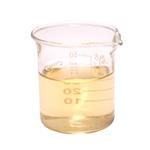
-
2025-06-20
- CAS:4152-90-3
- Min. Order: 1kg
- Purity: 99%
- Supply Ability: 100tons
- 3-Chlorobenzylamine
-
- $1.00
-
2020-01-09
- CAS:4152-90-3
- Min. Order: 1KG
- Purity: 85.0-99.8%
- Supply Ability: 20tons
|
| | 3-Chlorobenzylamine Basic information |
| | 3-Chlorobenzylamine Chemical Properties |
| Melting point | 97-98 °C | | Boiling point | 110-112 °C/17 mmHg (lit.) | | density | 1.159 g/mL at 25 °C (lit.) | | refractive index | n20/D 1.559(lit.) | | Fp | 209 °F | | storage temp. | Keep in dark place,Inert atmosphere,Room temperature | | pka | 8.77±0.10(Predicted) | | form | Liquid | | Specific Gravity | 1.159 | | color | Clear colorless to faint yellow | | Sensitive | Air Sensitive | | BRN | 774509 | | InChI | 1S/C7H8ClN/c8-7-3-1-2-6(4-7)5-9/h1-4H,5,9H2 | | InChIKey | BJFPYGGTDAYECS-UHFFFAOYSA-N | | SMILES | NCc1cccc(Cl)c1 | | CAS DataBase Reference | 4152-90-3(CAS DataBase Reference) | | NIST Chemistry Reference | Benzenemethanamine, 3-chloro-(4152-90-3) | | EPA Substance Registry System | Benzenemethanamine, 3-chloro- (4152-90-3) |
| Hazard Codes | C,Xi | | Risk Statements | 34-20/21/22-36/37/38 | | Safety Statements | 26-36/37/39-45-36 | | RIDADR | UN 2735 8/PG 2 | | WGK Germany | 3 | | Hazard Note | Corrosive | | TSCA | TSCA listed | | HazardClass | 8 | | PackingGroup | III | | HS Code | 29214990 | | Storage Class | 8A - Combustible corrosive hazardous materials | | Hazard Classifications | Eye Dam. 1
Skin Corr. 1B |
| | 3-Chlorobenzylamine Usage And Synthesis |
| Chemical Properties | clear colorless to faint yellow liquid | | Uses | 3-Chlorobenzylamine is used as pharmaceutical, pesticide and dye intermediates. It is used in the synthesis of 3-Chlorobenzamide and N-(3-Chlorobenzyl)-4-(2-indolyl)-2-pyrimidinamine. | | General Description | 3-Chlorobenzylamine undergoes reductive amination during dihydroquinolone synthesis. It is used in the synthesis of N- (3-chlorobenzyl) toluene-p-sulphonamide. | | Synthesis | The general procedure for the synthesis of 3-chlorobenzylamine from 3-chlorobenzonitrile was as follows: in a 25 mL round-bottomed flask, CuNP/WS catalyst was added to a mixed solution containing 5 mL of double-distilled water and 1 mmol of 3-chlorobenzonitrile. Subsequently, 4 mmol NaBH4 was added to the reaction mixture in 4 portions and stirred at room temperature for an appropriate time. The reaction process was monitored by thin layer chromatography (TLC) using ethyl acetate/hexane (1:5) as eluent. After completion of the reaction, the reaction mixture was filtered and the catalyst was rinsed twice with dichloromethane. The organic phase was washed with distilled water, dried over anhydrous MgSO4 and finally the solvent was evaporated under vacuum to give the target product 3-chlorobenzylamine. | | References | [1] Journal of Organic Chemistry, 2012, vol. 77, # 1, p. 221 - 228
[2] ChemSusChem, 2017, vol. 10, # 5, p. 842 - 846
[3] Journal of the American Chemical Society, 2017, vol. 139, # 38, p. 13554 - 13561
[4] Journal of Medicinal Chemistry, 2017, vol. 60, # 19, p. 7965 - 7983
[5] Inorganic and Nano-Metal Chemistry, 2018, vol. 48, # 3, p. 176 - 181 |
| | 3-Chlorobenzylamine Preparation Products And Raw materials |
|