- Ethalfluralin
-
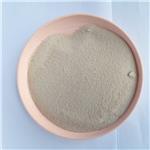
-
2025-06-27
- CAS:55283-68-6
- Min. Order: 1KG
- Purity: 99%
- Supply Ability: 500000kg
- Ethalfluralin
-

- $10.00
-
2025-06-20
- CAS:55283-68-6
- Min. Order: 1KG
- Purity: 0.99
- Supply Ability: 50 tons
- Ethalfluralin
-

- $1.00
-
2020-01-01
- CAS:55283-68-6
- Min. Order: 1KG
- Purity: 95-99%
- Supply Ability: 1ton
|
| | Ethalfluralin Basic information |
| | Ethalfluralin Chemical Properties |
| Melting point | 54-57° | | Boiling point | 368.6±42.0 °C(Predicted) | | density | 1.3855 (estimate) | | storage temp. | 0-6°C | | solubility | Chloroform (Slightly), Methanol (Slightly) | | pka | -1.76±0.50(Predicted) | | form | Solid | | color | Yellow | | Water Solubility | 0.2mg/L(25 ºC) | | Merck | 13,3754 | | Henry's Law Constant | 7.6×10⁻² mol/(m3Pa) at 25℃, HSDB (2015) | | Major Application | agriculture
environmental | | InChI | 1S/C13H14F3N3O4/c1-4-17(7-8(2)3)12-10(18(20)21)5-9(13(14,15)16)6-11(12)19(22)23/h5-6H,2,4,7H2,1,3H3 | | InChIKey | PTFJIKYUEPWBMS-UHFFFAOYSA-N | | SMILES | CCN(CC(C)=C)c1c(cc(cc1[N+]([O-])=O)C(F)(F)F)[N+]([O-])=O | | NIST Chemistry Reference | Ethalfluralin(55283-68-6) | | EPA Substance Registry System | Ethalfluralin (55283-68-6) |
| Hazard Codes | N | | Risk Statements | 50/53 | | Safety Statements | 60-61 | | RIDADR | UN 3077 | | WGK Germany | WGK 2 | | RTECS | XU6200000 | | TSCA | TSCA listed | | HS Code | 29214300 | | Storage Class | 11 - Combustible Solids | | Hazard Classifications | Acute Tox. 4 Inhalation
Aquatic Acute 1
Aquatic Chronic 1
Carc. 2 | | Hazardous Substances Data | 55283-68-6(Hazardous Substances Data) | | Toxicity | LD50 in mice, rats (g/kg): >10 orally; LC50 in bluegill sunfish, rainbow trout, goldfish (ppb): 22, 37, 260 (Day) |
| | Ethalfluralin Usage And Synthesis |
| Description | Ethalfluralin is a pre-plant soil applied herbicide. It has a low aqueous solubility and is highly volatile. It may be moderately persistent in some soil systems but is not expected to be persistent in water systems. Based on its physico-chemical properties it is not expected to leach to groundwater. Its toxicity to biodiversity tends to be classed as moderate. The exceptions to this is that it is highly toxic to algae but has a low avian toxicity. Ethalfluralin has a low oral mammalian toxicity and is a skin sensitiser. | | Chemical Properties | Yellow-orange crystalline solid. Mild amine
odor. Commercial products and mixtures may contain flammable carriers (such as xylene); these may be red-orange
liquids with a mild aromatic odor. | | Uses | Pre-emergent herbicide. | | Production Methods | The commercial production of ethalfluralin involves synthesising the compound through a multi-step process designed to minimise impurities such as nitrosamines. The key intermediate is a substituted aniline derivative, which undergoes nitration to introduce two nitro groups, followed by alkylation with methallyl halides to form the final active structure. To purify the crude ethalfluralin and reduce nitrosamine levels below 0.5 ppm, the product is treated under agitation with an aqueous solution of hydrobromic acid, in the presence of sulfamic acid and a sulphur compound such as sulphur dioxide. | | Definition | ChEBI: Ethalfluralin is a C-nitro compound. | | Agricultural Uses | Herbicide: Ethalfluralin is a selective herbicide used for the
pre-emergence control of annual grasses and broadleaf
weeds in certain food and feed crops. Ethalfluralin may be
used in growing a variety of grain, seed, and cucurbit crops.
The greatest amounts of ethalfluralin are used in growing
soybeans, dry beans, and sunflower seeds. Ethalfluralin is
used only outdoors, in agriculture; no residential uses were
registered. Not used in EU countries. Registered for use
in the U.S. | | Trade name | COMPOUND 94961®; COBEX®; EL
161®; ETHALFLURLIN®; SOMILAN®; SONALAN®;
SONALEN® | | Mechanism of action | Selective. Microtube inhibitor - reducing seedling root growth. | | Potential Exposure | Ethalfluralin is a 2,6-fluorodinitrotoluidine selective herbicide used for the pre-emergence control of annual grasses and broadleaf weeds in certain food
and feed crops. Ethalfluralin may be used in growing a
variety of grain, seed, and cucurbit crops. The greatest
amounts of ethalfluralin are used in growing soybeans, dry
beans, and sunflower seeds. Ethalfluralin is used only outdoors, in agriculture; no residential uses were registered.
Not used in EU countries | | Shipping | UN3082 Environmentally hazardous substances,
liquid, n.o.s., Hazard class: 9; Labels: 9- Miscellaneous
hazardous material, Technical Name Required. UN3077
Environmentally hazardous substances, solid, n.o.s., Hazard
class: 9; Labels: 9-Miscellaneous hazardous material,
Technical Name Required | | Incompatibilities | Sensitive to heat. Dintroanilines can be
explosive and are strong oxidizers. Contact with reducing
agents, other strong oxidizers or, nitrosylsulfuric acid may
cause fire or explosion | | Waste Disposal | Do not discharge into drains
or sewers. Dispose of waste material as hazardous waste
using a licensed disposal contractor to an approved landfill.
Contact a licensed disposal facility about surplus and nonrecyclable solutions. Burn in a chemical incinerator
equipped with an afterburner and scrubber. Extra care must
be exercised as the material in an organic solvent is highly
flammable. Consult with environmental regulatory agencies
for guidance on acceptable disposal practices. Incineration
with effluent gas scrubbing is recommended. Containers
must be disposed of properly by following package label
directions or by contacting your local or federal environmental control agency, or by contacting your regional EPA
office. Do not reuse container | | Pesticide Type | Herbicide |
| | Ethalfluralin Preparation Products And Raw materials |
|