- Prohydrojasmon
-

-
2026-08-07
- CAS:158474-72-7
- Min. Order: 1KG
- Purity: 98%min
- Supply Ability: 30tons/month
- Prohydrojasmon
-
-
2026-06-30
- CAS:158474-72-7
- Min. Order: 1KG
- Purity: 96.0%
- Supply Ability: 10000KGS
|
| | Prohydrojasmon Basic information |
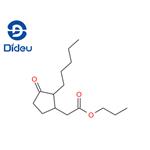
| Product Name: | Prohydrojasmon | | Synonyms: | n-propyl dihydrojasmonate;prohydrojasmon (bsi proposed);PROHYDROJASMON STANDARD (MIXTURE OF ISOMERS);Prohydrojasmon [iso];PROHYDROJASMON;jasmon;Prohydrojasmon racemate;Prohydrojasmon (Tech Mix)@100 μg/mL in Methanol | | CAS: | 158474-72-7 | | MF: | C15H26O3 | | MW: | 254.37 | | EINECS: | 605-149-0 | | Product Categories: | | | Mol File: | 158474-72-7.mol |  |
| | Prohydrojasmon Chemical Properties |
| Boiling point | 340.2±15.0 °C(Predicted) | | density | 0.967±0.06 g/cm3(Predicted) | | storage temp. | 0-6°C | | solubility | Chloroform (Slightly), Hexane (Slightly), Methanol (Slightly) | | form | Oil | | color | Pale Yellow to Light Yellow | | Henry's Law Constant | 1.4×101 mol/(m3Pa) at 25℃, Ebert et al. (2023) | | InChI | InChI=1S/C15H26O3/c1-3-5-6-7-13-12(8-9-14(13)16)11-15(17)18-10-4-2/h12-13H,3-11H2,1-2H3 | | InChIKey | IPDFPNNPBMREIF-UHFFFAOYSA-N | | SMILES | C1(CC(OCCC)=O)CCC(=O)C1CCCCC | | EPA Substance Registry System | Cyclopentaneacetic acid, 3-oxo-2-pentyl-, propyl ester (158474-72-7) |
| | Prohydrojasmon Usage And Synthesis |
| Description |
Prohydrojasmon (PDJ) [propyl(1RS,2RS)-(3-oxo-2-pentylcyclopentyl) acetate], an analog of Jasmonic acid (JA), was first registered as a plant growth regulator, particularly for coloring apples and grapes. Plant growth regulators are naturally or chemically synthesized substances that play roles in plants' developmental or metabolic processes. Subsequently, similar to JA, PDJ was found to induce direct and indirect defenses against herbivores in non-infested plants[1].
| | Uses | Prohydrojasmon (PDJ), as a plant growth regulator, focuses on fruits, including apples, oranges, mangoes, and grapes. Specifically, it has been applied to enhance mango and red pear fruit coloration. PDJ treatment of crops increases their direct and indirect defenses against several insect pests under open field conditions. A report on PDJ treatment of non-infested maize plants suggests a reduction in the weights and survival rates of the common armyworm, Mythimna separata (Walker), larvae and their increased attraction to Cotesia kariyai Watanabe, a parasitoid wasp of the herbivore. Furthermore, two-spotted spider mites (Tetranychus urticae Koch) laid significantly fewer eggs on PDJ-treated leaf disks than on control leaf disks. PDJ treatment of non-infested lima bean plants induced the production of volatiles, including (E)-β-ocimene and (E)-4,8-dimethyl-1,3,7-nonatriene (DMNT), which attract Phytoseiulus persimilis Athias-Henriot, a predatory mite. Moreover, under greenhouse conditions, PDJ treatment of tomato plants negatively affects the damage caused by thrips[3]. | | Production Methods | Commercial production of prohydrojasmon is not available in open literature. However, the process can be inferred from its chemistry as a synthetic derivative of jasmonic acid. Commercial manufacture would involve preparing a jasmonate intermediate, typically via cyclopentanone based condensation routes used for jasmonic acid analogs, followed by structural modification at the side chain to generate the prohydrojasmon scaffold. Final steps would include purification, solvent removal, and stabilisation to yield the technical grade compound | | Biological Functions | The activity of Prohydrojasmon may be similar to that of endogenous JA. It has been shown to affect several physiological processes, including senescence, leaf abscission, fruit ripening, coloration, and pigment accumulation. Other studies have shown that PDJ is an elicitor in plants to stimulate the accumulation of secondary metabolites, including phenolics, anthocyanins, terpenoids, and glucosinolates[2]. | | Mechanism of action | Synthetic plant hormone which enhances chlorophyll and carotene accumulation within the fruit | | References |
[1] Kengo Yoshida. “Effects of Prohydrojasmon on the Number of Infesting Herbivores and Biomass of Field-Grown Japanese Radish Plants.” Frontiers in Plant Science (2021): 695701.
[2] Shinya Takahashi. “Prohydrojasmon Promotes the Accumulation of Phenolic Compounds in Red Leaf Lettuce.” Plants-Basel 10 9 (2021).
[3] Haidar Rafid Azis. “Effect of Prohydrojasmon on the Growth of Eggplant and Komatsuna.” Plants-Basel (2020).
| | Pesticide Type | Plant Growth Regulator |
| | Prohydrojasmon Preparation Products And Raw materials |
|