| Company Name: |
RIANLON CORPORATION Gold |
| Tel: |
022-022-82789722 18502656546 |
| Email: |
market@rianlon.com |
- Light Stabilizer 770
-
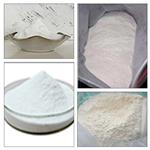
- $1.00
-
2026-09-14
- CAS:52829-07-9
- Min. Order: 1g
- Purity: 99%
- Supply Ability: 100kg
|
| Product Name: | Bis(2,2,6,6-tetramethyl-4-piperidyl) sebacate | | Synonyms: | Decanedioic acid bis(2,2,6,6-tetramethyl-4-piperidinyl)ester;BIS(2,2,6,6-TETRAMETHYL-4-PIPERIDINYL)SEBACATE;BIS(2,2,6,6-TETRAMETHYL-4-PIPERIDYL) SEBACATE;BTPS;adkstabla77;bis(2,2,6,6-tetramethyl-4-piperidinyl)decanedioate;Decanedioic acid,1,10-bis(2,2,6,6-tetraMethyl-4-piperidinyl) ester;Double(2,2,6,6- four-4- Methyldecanoateesterpiperidyl)two | | CAS: | 52829-07-9 | | MF: | C28H52N2O4 | | MW: | 480.72 | | EINECS: | 258-207-9 | | Product Categories: | Polymer Additives;Polymer Science;Stabilizers;Industrial/Fine Chemicals;52829-07-9;UV | | Mol File: | 52829-07-9.mol |  |
| | Bis(2,2,6,6-tetramethyl-4-piperidyl) sebacate Chemical Properties |
| Melting point | 82-85 °C(lit.) | | Boiling point | 499.8±45.0 °C(Predicted) | | density | 1.01±0.1 g/cm3(Predicted) | | vapor pressure | 0Pa at 20℃ | | Fp | 421 °F | | storage temp. | 2-30°C | | solubility | acetone: 19 % (w/w) at 20 °C | | pka | 10.49±0.10(Predicted) | | form | powder to crystal | | color | White to Almost white | | Water Solubility | 18.8mg/L at 23℃ | | InChI | InChI=1S/C28H52N2O4/c1-25(2)17-21(18-26(3,4)29-25)33-23(31)15-13-11-9-10-12-14-16-24(32)34-22-19-27(5,6)30-28(7,8)20-22/h21-22,29-30H,9-20H2,1-8H3 | | InChIKey | XITRBUPOXXBIJN-UHFFFAOYSA-N | | SMILES | C(OC1CC(C)(C)NC(C)(C)C1)(=O)CCCCCCCCC(OC1CC(C)(C)NC(C)(C)C1)=O | | LogP | 0.35 at 25℃ | | CAS DataBase Reference | 52829-07-9(CAS DataBase Reference) | | EPA Substance Registry System | Bis(2,2,6,6-tetramethyl-4-piperidyl) sebacate (52829-07-9) |
| Hazard Codes | T,N,Xi | | Risk Statements | 23-37/38-41-51/53-36 | | Safety Statements | 26-39-45-61 | | RIDADR | UN 2811 6.1/PG 2 | | WGK Germany | 2 | | RTECS | HD8315000 | | TSCA | TSCA listed | | HazardClass | 6.1 | | PackingGroup | II | | HS Code | 29333990 | | Storage Class | 11 - Combustible Solids | | Hazard Classifications | Aquatic Acute 1
Aquatic Chronic 2
Eye Dam. 1 |
| | Bis(2,2,6,6-tetramethyl-4-piperidyl) sebacate Usage And Synthesis |
| Applications | Light Stabilizer 770 is recommended to be used in polypropylene, impact modified PP (TPO), EPDM, polystyrene, impact polystyrene, ABS, SAN, ASA, polyurethanes, and is also effective in polyamides and polyacetals.
| | Applications |
Light Stabilizer 770 (Bis(2,2,6,6-tetramethyl-4-piperidyl) sebacate) is a low molecular weight hindered amine light stabilizer (HALS) for applications demanding particularly high light stability. The benefit of using Light Stabilizer 770 is the high light-stabilizing performance, particularly in PP thick sections to protect the surface. It has broad compatibility and can be easily dispersed. Compared to UV absorbers, the effectiveness of HALS, like Light Stabilizer 770, is not dependent on the polymer’s thickness. For this reason, the use of Light Stabilizer 770 also provides good light stability in articles with higher specific surface, e. g., films and tapes.
| | Guidelines for use | The recommended concentrations range between 0.1 % and 1.0 %, depending on the substrate, processing conditions and application. The optimum level is substrate and application specific. Extensive performance data of Light Stabilizer 770 in various substrates and for various applications is available upon request.
| | Physical properties |  | | Handling | In accordance with good industrial practice, handle with care and avoid unnecessary personal contact. Avoid continuous or repetitive breathing of dust. Use only with adequate ventilation. Avoid contact with eyes. Avoid release to the environment. Avoid dust formation and ignition sources.
| | Chemical Properties | White solid | | Uses |
T770 (Bis(2,2,6,6-tetramethyl-4-piperidyl) sebacate) can be used as a hindered amine UV stabilizer in plastic materials. It can be used in the manufacturing and packaging of pharmaceutical products. Titanium oxide(TiO2)/T770 may be used in amine induced light stabilizers in the synthesis of recyclable water-based polyurethane with poly(oxytetramethylene)glycol (PTMG).
| | General Description | Bis(2,2,6,6-tetramethyl-4-piperidyl) (T770) sebacate is a low molecular weight ultra violet (UV) hindered amine light stabilizer (HALS) made up of nitroxyl radicals. It acts as a heat controller that can react with phenolic antioxidants incorporated in polymers. | | Flammability and Explosibility | Not classified | | Biological Activity | Bis(2,2,6,6-tetramethyl-4-piperidyl) sebacate(BTMPS; Tinuvin 770) is a sterically hindered amine light and radiation stabilizer produced by Ciba-Geigy, widely used in plastics, that inhibits nicotinic acetylcholine receptors expressed in Xenopus oocytes in a use-dependent manner. BTMPS is a symmetrical conjugate of methylated piperidines that are potent inhibitors on their own, but the kinetics of inhibition and recovery are faster than BTMPS. For neuronal nicotinic receptor subunit combinations, the time constant for recovery from inhibition by BTMPS is approximately 1 to 4 h. Muscle-type receptors (α 1-, β 1-γ, and δ subunits) are also inhibited by BTMPS, but control responses are fully restored after a 5 min washout. Hybrids of muscle and neuronal subunits containing neuronal β subunits (α 1-, β 2-, γ, and δ and α-1-, β 4-, and γ-δ) blocked in a more irreversible manner than normal muscle-type receptors, suggesting an interaction between BTMPS and neuronal acetylcholine receptor β subunits. Glutamate receptors were not inhibited by BTMPS. Exposure to agonist solutions from certain plastic syringes that release BTMPS also resulted in a use-dependent inhibition of nicotinic receptors.[1] | | References | [1] R L PAPKE; S F H; A G Craig. Inhibition of nicotinic acetylcholine receptors by bis (2,2,6,6-tetramethyl- 4-piperidinyl) sebacate (Tinuvin 770), an additive to medical plastics.[J]. Journal of Pharmacology and Experimental Therapeutics, 1994, 268 2: 718-726. |
| | Bis(2,2,6,6-tetramethyl-4-piperidyl) sebacate Preparation Products And Raw materials |
|