|
|
| | 2,6-Dichloro-1,4-hydroquinone Basic information |
| Product Name: | 2,6-Dichloro-1,4-hydroquinone | | Synonyms: | 1,4-Benzenediol, 2,6-dichloro-;2,6-dichloro-4-hydroquinone;2,6-Dichloro-4-hydroxyphenol;2,6-Dichlorohydroquinone;2,6-Dichloro-p-benzohydroquinone;Hydroquinone, 2,6-dichloro-;2,6-Dichloro-1,4-benzenediol;2,6-Dichloroquinol | | CAS: | 20103-10-0 | | MF: | C6H4Cl2O2 | | MW: | 179 | | EINECS: | 243-513-7 | | Product Categories: | Aromatics;Metabolites & Impurities;Anthraquinones, Hydroquinones and Quinones | | Mol File: | 20103-10-0.mol | 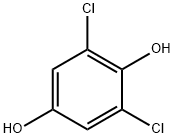 |
| | 2,6-Dichloro-1,4-hydroquinone Chemical Properties |
| Melting point | 157-158 °C | | Boiling point | 255.02°C (rough estimate) | | density | 1.4512 (rough estimate) | | refractive index | 1.4595 (estimate) | | solubility | DMSO (Slightly), Methanol (Slightly) | | form | Solid | | pka | 7.75±0.23(Predicted) | | color | Dark Green to Dark Brown | | Stability: | Hygroscopic |
| | 2,6-Dichloro-1,4-hydroquinone Usage And Synthesis |
| Uses | 2,6-Dichlorohydroquinone is a halogenated dihydric phenol. The chlorination of the hydroquinone ring in 2,6-dichlorohydroquinone leads to increased antioxidative activity. 2,6-Dichlorohydroquinone is a metabolite of pentachlorophenate sodium in microorganisms. | | Definition | ChEBI: A dichlorohydroquinone that is hydroquinone substituted by chloro groups at positions 2 and 6 respectively. |
| | 2,6-Dichloro-1,4-hydroquinone Preparation Products And Raw materials |
|