


Propane

- CAS No.
- 74-98-6
- Chemical Name:
- Propane
- Synonyms
- Lpg;C3H8;Propan;r290;PROPANE, NATURAL;AD2;Popane;n-Propane;Liquefied petroleum gas;HC-290
- CBNumber:
- CB2194886
- Molecular Formula:
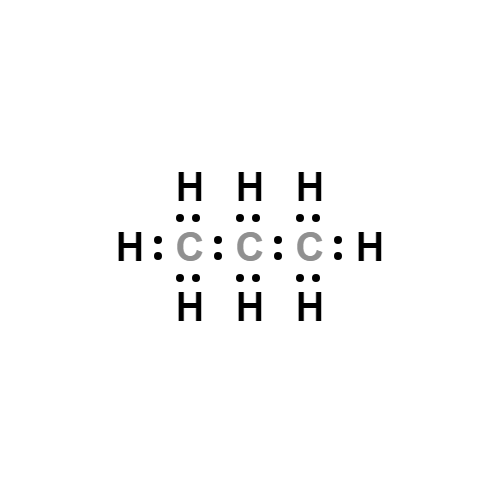
- C3H8
Lewis structure
- Molecular Weight:
- 44.1
- MDL Number:
- MFCD00009359
- MOL File:
- 74-98-6.mol
- MSDS File:
- SDS
| Melting point | -188 °C(lit.) |
|---|---|
| Boiling point | -42.1 °C(lit.) |
| Density | 0.564 g/mL at 20 °C(lit.) |
| vapor density | 1.5 (vs air) |
| vapor pressure | 190 psi ( 37.7 °C) |
| refractive index | 1.2861 |
| Flash point | -104 °C |
| storage temp. | -20°C |
| form | liquid |
| pka | ≈ 44 (Gordon and Ford, 1972) |
| Flame Color | Blue(complete combustion); Yellow or orange(incomplete combustion) |
| biological source | rabbit |
| Odor Threshold | 1500ppm |
| explosive limit | 9.5% |
| Water Solubility | 62.61mg/L(25 ºC) |
| Thermal Conductivity | 0.13 W/(m·K) |
| Specific Heat Capacity | Cp(gas): 1.67 J/(g·K), at 25℃ |
| Merck | 13,7891 |
| BRN | 1730718 |
| Henry's Law Constant | 0.706 at 25 °C (Hine and Mookerjee, 1975) |
| Dielectric constant | 1.6(Ambient) |
| Exposure limits |
OSHA PEL-TWA:1000 ppm (1800 mg/m³) NIOSH REL-TWA:1000 ppm |
| Stability | Stable. Incompatible with strong oxidizing agents. Highly flammable. May form explosive mixtures with air. |
| Cosmetics Ingredients Functions | PROPELLANT |
| LogP | 2.360 |
| Surface tension | 7.7mN/m at 293.15K |
| Substances Added to Food (formerly EAFUS) | PROPANE |
| CAS DataBase Reference | 74-98-6(CAS DataBase Reference) |
| FDA UNII | T75W9911L6 |
| EPA Substance Registry System | Propane (74-98-6) |
| Cosmetics Info | Propane |
| UNSPSC Code | 12352203 |
| NACRES | NA.41 |
SAFETY
Risk and Safety Statements
| Symbol(GHS) |   GHS02,GHS04 |
|||||||||
|---|---|---|---|---|---|---|---|---|---|---|
| Signal word | Danger | |||||||||
| Hazard statements | H220 | |||||||||
| Precautionary statements | P210-P377-P381-P410+P403-P403 | |||||||||
| Hazard Codes | F+ | |||||||||
| Risk Statements | 12 | |||||||||
| Safety Statements | 9-16 | |||||||||
| RIDADR | UN 1978 | |||||||||
| OEB | A | |||||||||
| OEL | TWA: 1000 ppm (1800 mg/m3) | |||||||||
| WGK Germany | - | |||||||||
| RTECS | TX2275000 | |||||||||
| F | 4.5-31 | |||||||||
| Autoignition Temperature | 842 °F | |||||||||
| TSCA | TSCA listed | |||||||||
| DOT Classification | 2.1 (Flammable gas) | |||||||||
| HazardClass | 2.1 | |||||||||
| Storage Class | 10 - Combustible liquids | |||||||||
| Hazardous Substances Data | 74-98-6(Hazardous Substances Data) | |||||||||
| IDLA | 2,100 ppm [10% LEL] | |||||||||
| REACH Registrations | Active | |||||||||
| NFPA 704 |
|
Propane price More Price(11)
| Manufacturer | Product number | Product description | CAS number | Packaging | Price | Updated | Buy |
|---|---|---|---|---|---|---|---|
| Sigma-Aldrich | SAB5300354 | Monoclonal Anti-APOE antibody produced in mouse clone 1H4, ascites fluid | 100 μL | $580 | 2026-04-30 | Buy | |
| Sigma-Aldrich | SAB2701946 | Anti-APOE (C-terminal) antibody produced in rabbit | 74-98-6 | 100μL | $516 | 2026-04-30 | Buy |
| Sigma-Aldrich | HPA065539 | Anti-APOE antibody produced in rabbit Prestige Antibodies® Powered by Atlas Antibodies, affinity isolated antibody, buffered aqueous glycerol solution | 100 μL | $573 | 2026-04-30 | Buy | |
| Sigma-Aldrich | 295655 | Propane 98% | 74-98-6 | 300g | $201 | 2026-04-30 | Buy |
| Sigma-Aldrich | HPA068768 | Anti-APOE antibody produced in rabbit Prestige Antibodies? Powered by Atlas Antibodies, affinity isolated antibody, buffered aqueous glycerol solution | 74-98-6 | 100μL | $570 | 2024-03-01 | Buy |
Propane Chemical Properties, Uses, Production
Description
Propane is colourless and odourless, with a mercaptan odour. Like all fossil fuels, propane is a non-renewable energy source. Propane is a gas derived from natural gas and petroleum. It is found mixed with natural gas and petroleum deposits. Propane is called a ‘fossil fuel’ because it was formed millions of years ago from the remains of tiny sea animals and plants. Propane is a clean-burning, versatile fuel. It is used by nearly everyone, in homes, on farms, by business, and in industry mostly for producing heat and operating equipment. Propane is one of the many fossil fuels included in the liquefied petroleum gas (LPG) family. Because propane is the type of LPG most commonly used in the United States, propane and LPG are often used synonymously. Butane is another LPG often used in lighters.
Description
Propane is a certified reference material standard for propane, a solvent that has been used in the extraction of cannabinoids from Cannabis and has been identified as a contaminant in butane hash oil and Δ9-THC concentrates. It is designed for use as a reference standard for propane by GC- or LC-MS. This product is intended for research and forensic applications.
Chemical Properties
PROPANE is the gas is slightly soluble in H2O, moderately soluble in alcohol, and very soluble in ether. Although a number of organic compounds which are important industrially may be considered to be derivatives of propane, it is not a common starting ingredient. The content of propane in natural gas varies with the source of the natural gas, but on the average is about 6%. Propane also is obtainable from petroleum sources.
Chemical Properties
Propane is a colorless gas that is odorless when pure (a foul-smelling odorant is often added).
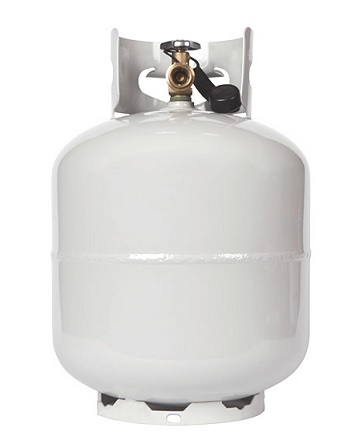
Propane is released to the living environment from automobile exhausts, burning furnaces, natural gas sources, and during combustion of polyethylene and phenolic resins. Propane is both highly inflammable and explosive and needs proper care and management of workplaces. Its use in industry includes as a source for fuel and propellant for aerosols. Occupational workers exposed to liquefi ed propane have demonstrated skin burns and frostbite. Propane also causes depression effects on the CNS.
Physical properties
Propane is a colorless, odorless, flammable gas that follows methane and ethane in the alkane
series. The root word prop comes from the three-carbon acid propionic acid, CH3CH2COOH.
Propionic acid comes from the Greek words protos meaning first and pion meaning fat.It was
the smallest acid with fatty acid properties. Propane is the gas used to fuel barbecues and camp
stoves giving it the common name bottled gas.It is marketed as liquefied petroleum gas (LPG)
or liquefied petroleum; it should be noted that LPG is often a mixture that may contains
butane, butylene, and propylene in addition to propane. In addition to cooking, propane can
be used as an energy source for space heating, refrigeration, transportation, and heating appliances
(clothes dryer).
Propane can be stored as liquid in pressurized (approximately 15 atmospheres) storage tanks
and/or at cold temperatures and vaporizes to a gas at atmospheric pressure and normal temperatures.
This makes it possible to store a large volume of propane as a liquid in a relatively
small volume; propane as a vapor occupies 270 times the volume of propane in liquid form.
This makes liquid propane an ideal fuel for transport and storage until needed.
Characteristics
Propane demonstrates that the carbon atoms have different characteristics in alkanes with more than two carbon atoms. The terminal carbon atoms in propane are bonded to three hydrogen atoms and one carbon atom. A carbon atom bonded to only one other carbon atom is referred to as a primary or 1° carbon. The central carbon atom in propane is bonded to two other carbon atoms and is called a secondary or 2° carbon. A hydrogen atom has the same classifi cation as the carbon atom to which it is attached. Thus the hydrogen atoms attached to the terminal carbon atoms in propane are called primary (1°) hydrogens, whereas the central atom has secondary (2°) hydrogen. The diff erence in bonds leads to diff erences in reactions and properties of diff erent isomers. For example, breaking a primary bond requires more energy than breaking a secondary bond in propane. This makes formation of the isopropyl radical CH3CHCH3• easier than the n-propyl radical, CH3CH2CH2•. Even though the formation of the isopropyl is more favorable energetically, the greater number of primary hydrogen atoms leads to approximately equal amounts of n-propyl and isopropyl radicals formed under similar reaction conditions.
Oxidation of propane can produce various oxygenated compounds under appropriate conditions, but generally alkanes are relatively unreactive compared to other organic groups. Some of the more common oxidation products include methanol (CH3OH), formaldehyde (CH2O), and acetaldehyde (C2H4O). Propane can be converted to cyclopropane by conversion to 1,3 dichloro-propane using zinc dust and sodium iodine ClCH2CH2CH2Cl--Zn. Nacl--cyclopropane.
Uses
Propane has been used as a transportation fuel since its discovery. It was first used as an automobile fuel in 1913. It follows gasoline and diesel as the third most popular vehicle fuel and today powers more than half a million vehicles in the United States and 6 million worldwide. The widespread use of propane is hampered by the lack of a distribution system, but it has been used to fuel fleets of buses, taxis, and government vehicles. Also, it is heavily used to power equipment such as forklifts. Propane is cleaner burning than gasoline or diesel and has been used to reduce urban air pollution. Compared to gasoline it emits 10–40% of the carbon monoxide, 30–60% of the hydrocarbons, and 60–90% of the carbon dioxide. An advantage of cleaner burning propane is that engine maintenance is improved because of lower engine deposits and fouling. Propane’s octane ratings range between 104 and 110. The lower emissions are somewhat compromised by propane’s lower energy value; propane has about 75% of the energy content of gasoline when compared by volume. Propane is separated from natural gas and is also produced during petroleum processing. Approximately 53% of the propane produced in the United States comes from the small fraction (less than 5%) found in natural gas and the remainder comes petroleum refining.
Uses
Propane is used as a fuel gas, as a refrigerant,and in organic synthesis.
Uses
Propane’s greatest use is not as a fuel but in the petrochemical industry as a feedstock. Asan alkane, it undergoes typical alkane reactions of combustion, halogenation, pyrolysis, andoxidation.
Definition
ChEBI: Propane is an alkane and a gas molecular entity. It has a role as a food propellant.
General Description
A colorless gas with a faint petroleum-like odor. PROPANE is shipped as a liquefied gas under its vapor pressure. For transportation PROPANE may be stenched. Contact with the unconfined liquid can cause frostbite by evaporative cooling. Easily ignited. The vapors are heavier than air and a flame can flash back to the source of leak very easily. The leak may be either a liquid or vapor leak. The vapors can asphyxiate by the displacement of air. Under prolonged exposure to fire or heat the containers may rupture violently and rocket.
Air & Water Reactions
Highly flammable.
Reactivity Profile
PROPANE is incompatible with strong oxidizing agents.
Hazard
Asphyxiant. Flammable, dangerous fire risk, explosive limits in air 2.4–9.5%. For storage, see butane (note).
Health Hazard
Propane is a nontoxic gas. It is an asphyxiate.At high concentrations it shows narcoticeffects.
Health Hazard
Vaporizing liquid may cause frostbite. Concentrations in air greater than 10% cause dizziness in a few minutes. 1% concentrations give the same effect in 10 min. High concentrations cause asphyxiation.
Fire Hazard
Behavior in Fire: Containers may explode. Vapor is heavier than air and may travel a long distance to a source of ignition and flash back.
Biochem/physiol Actions
In addition to facilitating solubilization of lipids, apolipoproteins help to maintain the structural integrity of lipoproteins, serve as ligands for lipoprotein receptors, and regulate the activity of enzymes involved in lipid metabolism. Apolipoprotein E (ApoE) plays an important role in lipid metabolism. It′s interaction with specific ApoE receptor enables uptake of chylomicron remnants by liver cells, which is an essential step during normal lipid metabolism. It also binds with the LDL receptor (Apo B/E). Defects in ApoE are a cause of hyperlipoproteinemia type III.
Safety Profile
Central nervous system effects at high concentrations. An asphyxiant. Flammable gas. Highly dangerous fire hazard when exposed to heat or flame; can react vigorously with oxidizers. Explosive in the form of vapor when exposed to heat or flame. Explosive reaction with ClO2. Violent exothermic reaction with barium peroxide + heat. To fight fire, stop flow of gas. When heated to decomposition it emits acrid smoke and irritating fumes.
Potential Exposure
Flammable gas. May form explosive mixture with air. Incompatible with oxidizers (chlorates, nitrates, peroxides, permanganates, perchlorates, chlorine, bromine, fluorine, etc.); contact may cause fires or explo- sions. Keep away from alkaline materials, strong bases, strong acids, oxoacids, epoxides. Liquid attacks some plas- tics, rubber and coatings.
Carcinogenicity
Propane is an anesthetic and is nonirritating to the eyes, nose, or throat. Direct skin or mucous membrane contact with liquefied propane causes burns and frostbite. At air concentration levels below 1000 ppm, propane exerts very little physiological action. At very high levels, propane has CNS depressant and asphyxiating properties; its target organ is the central nervous system.
Source
Schauer et al. (2001) measured organic compound emission rates for volatile organic
compounds, gas-phase semi-volatile organic compounds, and particle-phase organic compounds
from the residential (fireplace) combustion of pine, oak, and eucalyptus. The gas-phase emission
rate of propane was 169 mg/kg of pine burned. Emission rates of propane were not measured
during the combustion of oak and eucalyptus.
California Phase II reformulated gasoline contained propane at a concentration of 100 mg/kg.
Gas-phase tailpipe emission rates from gasoline-powered automobiles with and without catalytic
converters were 1.62 and 191 mg/km, respectively (Schauer et al., 2002).
Environmental Fate
Biological. In the presence of methane, Pseudomonas methanica degraded propane to 1-
propanol, propionic acid, and acetone (Leadbetter and Foster, 1959). The presence of carbon
dioxide was required for “Nocardia paraffinicum” to degrade propane to propionic acid
(MacMichael and Brown, 1987). Propane may biodegrade in two pathways. The first is the
formation of propyl hydroperoxide, which decomposes to 1-propanol followed by oxidation to
propanoic acid. The other pathway involves dehydrogenation to 1-propene, which may react with
water giving propanol (Dugan, 1972). Microorganisms can oxidize alkanes under aerobic
conditions (Singer and Finnerty, 1984). The most common degradative pathway involves the
oxidation of the terminal methyl group forming the corresponding alcohol (1-propanol). The
alcohol may undergo a series of dehydrogenation steps forming an aldehyde (propionaldehyde),
then a fatty acid (propionic acid). The fatty acid may then be metabolized by β-oxidation to form
the mineralization products carbon dioxide and water (Singer and Finnerty, 1984).
Photolytic. When synthetic air containing propane and nitrous acid was exposed to artificial
sunlight (λ = 300–450 nm), propane photooxidized to acetone with a yield of 56% (Cox et al.,
1980). The rate constants for the reaction of propane and OH radicals in the atmosphere at 298 and
300 K were 1.11 x 10⁻¹² cm3/moleculesec (DeMore and Bayes, 1999) and 1.3 x 10⁻¹²
cm3/moleculesec (Hendry and Kenley, 1979). Cox et al. (1980) reported a rate constant of 1.9 x
10-12 cm3/moleculesec for the reaction of gaseous propane with OH radicals based on a value of 8
x 10-12 cm3/moleculesec for the reaction of ethylene with OH radicals.
Chemical/Physical. Incomplete combustion of propane in the presence of excess hydrogen
chloride resulted in a high number of different chlorinated compounds including, but not limited to
alkanes, alkenes, monoaromatics, alicyclic hydrocarbons, and polynuclear aromatic hydrocarbons.
Without hydrogen chloride, 13 nonchlorinated polynuclear aromatic hydrocarbons were formed
(Eklund et al., 1987).
Complete combustion in air yields carbon dioxide and water.
Solubility in organics
(vol %):
Alcohol (790 at 16.6 °C and 754 mmHg), benzene (1,452 at 21.5 °C and 757 mmHg), chloroform
(1,299 at 21.6 °C and 757 mmHg), ether (926 at 16.6 °C and 757 mmHg), and turpentine (1,587 at
17.7 °C and 757 mmHg) (Windholz et al., 1983).
Solubility in water
(vol %):
Alcohol (790 at 16.6 °C and 754 mmHg), benzene (1,452 at 21.5 °C and 757 mmHg), chloroform
(1,299 at 21.6 °C and 757 mmHg), ether (926 at 16.6 °C and 757 mmHg), and turpentine (1,587 at
17.7 °C and 757 mmHg) (Windholz et al., 1983).
Shipping
UN1978 Propane, Hazard Class: 2.1; Labels: 2.1-Flammable gas. UN1075 Petroleum gases, liquefied or Liquefied petroleum gas, Hazard Class: 2.1; Labels: 2.1-Flammable gas. Cylinders must be transported in a secure upright position, in a well-ventilated truck. Protect cylinder and labels from physical damage. The owner of the compressed gas cylinder is the only entity allowed by federal law (49CFR) to transport and refill them. It is a violation of transportation regulations to refill compressed gas cylinders without the express written permission of the owner.
Purification Methods
Purify propane by bromination of the olefinic contaminants. Propane is treated with bromine for 30minutes at 0o. Unreacted bromine is quenched, and the propane is distilled through two -78o traps and collected at -196o [Skell et al. J Am Chem Soc 108 6300 1986]. It autoignites at 450o and the flash point is -104o. It is highly FLAMMABLE and is available in metal cylinders. [Beilstein 1 H 103, 1 I 33, 1 II 71, 1 III 204, 1 IV 175.]
Toxicity evaluation
Some sources classify propane as a simple anesthetic, although it can principally be classified as a simple asphyxiant. Concentrations that are high enough to displace oxygen would be expected to cause lightheadedness, loss of consciousness, and possibly death from asphyxiation.
Waste Disposal
Return refillable compressed gas cylinders to supplier. Dissolve or mix the material with a combustible solvent and burn in a chemical incinerator equipped with an afterburner and scrubber. All federal, state, and local environmental regulations must be observed.
References
[1] SYTZE ELZINGA. Acetone as Artifact of Analysis in Terpene Samples by HS-GC/MS.[J]. Molecules, 2022. DOI: 10.3390/molecules27186037
[2] DANIEL RIBEIRO GRIJó . Hemp (Cannabis sativa L.) seed oil extraction with pressurized n-propane and supercritical carbon dioxide[J]. Journal of Supercritical Fluids, 2019, 143: Pages 268-274. DOI: 10.1016/j.supflu.2018.09.004
Propane Preparation Products And Raw materials
Raw materials
Preparation Products
1of4
| Supplier | Tel | Country | ProdList | Advantage | |
|---|---|---|---|---|---|
| Central China Special Gas (CCSG) Co., Ltd | 0734-8755555 15674722888 | lyq@ccsg.cn | China | 405 | 58 |
| Guangzhou Yuejia Gas Co., Ltd | 400-6377517 19876107228 | linfeng@yigas.cn | China | 39 | 58 |
| Jinan Wanli Gas Co., LTD | 13245484555 | 3864308976@qq.com | China | 146 | 58 |
| Energy Chemical | 400-0056266 | sales8178@energy-chemical.com | China | 44850 | 61 |
| Beijing HuaMeiHuLiBiological Chemical | 010-56205725 | waley188@sohu.com | China | 12323 | 58 |
| Beijing Universal Century Technology Co., Ltd. | hysj_bj.com | China | 3576 | 55 | |
| Sigma-Aldrich | 021-61415566 800-8193336 | orderCN@merckgroup.com | China | 51389 | 80 |
| Shanghai wechem chemical co., ltd | 18824865657 | 2684615189@qq.com | China | 428 | 58 |
| AoboRui (Tianjin) Co., Ltd. | 022-65675308 18310521067 | 23034325@qq.com | China | 99 | 55 |
| Zibo Zeno Pharmaceutical Technology Co., Ltd. | 0533-8800999 13515338377 | zenuoyiyao@163.com | China | 55 | 58 |
Related articles
- How to draw the propane dot structure (Lewis structure) ?
- Propane have 4 valence electrons for Carbon--it have 3 Carbons. It have 1 valence electron for Hydrogen--8 Hydrogens. Add them....
- May 18,2026
- Why Is a Propane Gas Flame Blue?
- A blue flame means complete combustion of the gas. With complete combustion, LPG (Propane) burns with a blue flame. Pure hydro....
- Jan 25,2024
- The Chemical Properties of Propane
- Propane is a colorless and odorless flammable gas. It is also an asphyxiant. If inhaled, it will cause dizziness, difficulty b....
- Jan 4,2024

74-98-6 (Propane) Related Search:
1of4
