


Potassium bicarbonate

- CAS No.
- 298-14-6
- Chemical Name:
- Potassium bicarbonate
- Synonyms
- KHCO3;bicarbonate;POTASSIUM HYDROGEN CARBONATE;K-Lyte;Kaliumhydrogencarbonat;POTASSIUM ACID CARBONATE;POTASSIUM BICARBONATE BP;Potassium Bicarbonate (1 g) (AS);Potassium hydrogen carbonate, for analysis;Kafylox
- CBNumber:
- CB3260704
- Molecular Formula:
- CHKO3
- Molecular Weight:
- 100.12
- MDL Number:
- MFCD00011402
- MOL File:
- 298-14-6.mol
- MSDS File:
- SDS
- TDS File:
- TDS
| Melting point | 292 °C |
|---|---|
| Density | 2,17 g/cm3 |
| storage temp. | Store at +15°C to +25°C. |
| solubility | H2O: 1 M at 20 °C, clear, colorless |
| form | fine crystals |
| pka | 10.33(at 25℃) |
| color | White |
| Specific Gravity | 2.17 |
| Odor | Odorless |
| PH Range | 8 - 9 |
| PH | 8.27(1 mM solution);8.25(10 mM solution);8.13(100 mM solution); |
| Water Solubility | Soluble in water. Insoluble in alcohol. |
| λmax |
λ: 260 nm Amax: 0.010 λ: 280 nm Amax: 0.01 |
| Merck | 14,7609 |
| BRN | 4535309 |
| Stability | Stable. |
| Cosmetics Ingredients Functions | BUFFERING |
| InChI | 1S/CH2O3.K/c2-1(3)4;/h(H2,2,3,4);/q;+1/p-1 |
| InChIKey | TYJJADVDDVDEDZ-UHFFFAOYSA-M |
| SMILES | [K+].OC([O-])=O |
| SCOGS (Select Committee on GRAS Substances) | Potassium bicarbonate |
| Substances Added to Food (formerly EAFUS) | POTASSIUM BICARBONATE |
| FDA 21 CFR | 184.1613; 310.545; 582.1613 |
| CAS DataBase Reference | 298-14-6(CAS DataBase Reference) |
| EWG's Food Scores | 1 |
| FDA UNII | HM5Z15LEBN |
| ATC code | A12BA04 |
| EPA Substance Registry System | Potassium bicarbonate (298-14-6) |
| UNSPSC Code | 41116107 |
| NACRES | NB.24 |
SAFETY
Risk and Safety Statements
| Symbol(GHS) |  GHS07 |
|||||||||
|---|---|---|---|---|---|---|---|---|---|---|
| Signal word | Warning | |||||||||
| Hazard statements | H302-H315-H319-H335 | |||||||||
| Precautionary statements | P261-P280-P305+P351+P338 | |||||||||
| Risk Statements | 22-35 | |||||||||
| Safety Statements | 24/25-45-36/37/39-26 | |||||||||
| WGK Germany | 1 | |||||||||
| RTECS | FG1840000 | |||||||||
| F | 3 | |||||||||
| TSCA | TSCA listed | |||||||||
| HS Code | 28364000 | |||||||||
| Storage Class | 13 - Non Combustible Solids | |||||||||
| Toxicity | LD50 orally in Rabbit: > 2000 mg/kg | |||||||||
| REACH Registrations | Active | |||||||||
| NFPA 704 |
|
Potassium bicarbonate price More Price(84)
| Manufacturer | Product number | Product description | CAS number | Packaging | Price | Updated | Buy |
|---|---|---|---|---|---|---|---|
| Sigma-Aldrich | 12602 | Potassium bicarbonate puriss., meets analytical specification of Ph. Eur., BP, USP, E501, 99.5-101.0% (acidimetric) | 298-14-6 | 1kg | $194 | 2026-04-30 | Buy |
| Sigma-Aldrich | 1.72574 | Potassium hydrogen carbonate for table water FCC,E 501 | 298-14-6 | 25kg | $200 | 2026-04-30 | Buy |
| Sigma-Aldrich | 1.04852 | Potassium hydrogen carbonate EMPROVE? ESSENTIAL Ph Eur,BP,USP,FCC,E 501 | 298-14-6 | 1kg | $149 | 2026-04-30 | Buy |
| Sigma-Aldrich | 1.04854 | Potassium hydrogen carbonate for analysis EMSURE? ACS | 298-14-6 | 500g | $170 | 2026-04-30 | Buy |
| Sigma-Aldrich | 1.04852 | Potassium hydrogen carbonate EMPROVE? ESSENTIAL Ph Eur,BP,USP,FCC,E 501 | 298-14-6 | 25kg | $825 | 2026-04-30 | Buy |
Potassium bicarbonate Chemical Properties, Uses, Production
description
Potassium bicarbonate for the production of potassium carbonate, potassium acetate, potassium arsenite and other raw materials, but also for food, pharmaceuticals, fire extinguisher materials, antacids, and hair/skin products.
Potassium bicarbonate has also been employed in studies of renal disorders and the relationship of muscle injury to this process. Has been shown to inhibit the growth of Aspergillus parasiticus in Czapek's agar, and also in alflatoxin synthesis.
Potassium bicarbonate is produced by reacting potassium carbonate liquid with carbon dioxide, then recrystallizing it. All equipment from production to packaging is dedicated solely to potassium bicarbonate.
Potassium bicarbonate is a widely used reagent in research. It is employed as a catalyst in synthetic fiber polymerization and olefin dehydrogenation.
Potassium bicarbonate is a bubbly medication that is used to neutralize acid in the stomach and boost potassium levels in those whose bodies are experiencing severe potassium deficiencies. Because the body requires potassium for a number of functions, it is very important to maintain normal potassium levels. However, if you are potentially taking this medication, it is important to be aware of the risks and potential side effects.
Chemical properties
Potassium bicarbonate is a GRAS food ingredient. It appears as colorless transparent monoclinic crystal, being soluble in water but insoluble in alcohol. It is stable under normal conditions. Potassium bicarbonate contains no toxic chemicals and is not listed as a carcinogen or potential carcinogen.
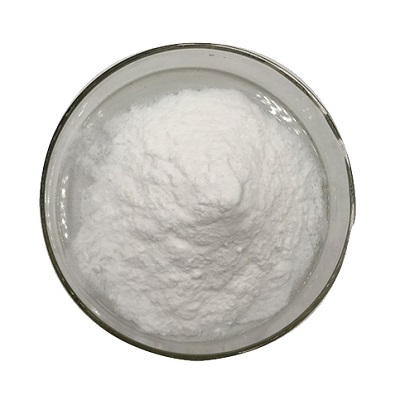
Potassium bicarbonate is a widely used reagent in research and industrial applications. It is used in crop fertilization and soil maintenance in agriculture, as a dry powder ingredient in fire extinguishers, and as a catalyst in synthetic fiber polymerization and olefin dehydrogenation.
Benefits
Sodium bicarbonate and potassium bicarbonate are key components of body tissues that help regulate the body’s acid/base balance. This formula of buffered mineral compounds can assist in reestablishing the acid/base balance when the body’s own bicarbonate reserves are depleted because of metabolic acidosis caused by adverse reactions to food or other environmental exposures.
Potassium is excellent for heart health, If a person does not have enough potassium in the body, a condition known as hypokalemia, negative symptoms can occur. These include fatigue, muscle cramping, constipation, bloating, muscle paralysis and potentially life-threatening heart rhythms, according to the Linus Pauling Institute. Taking potassium bicarbonate can help to reduce these symptoms. Potassium bicarbonate also can lower blood pressure and reduce the risk of developing kidney stones.
Production method
Carbonation way: potassium carbonate can be used as three-grade product as well as alkali as raw materials, including potassium carbonate 40% to 60%, potassium sulfate 10% to 15%, potassium chloride 3.5%. Before feeding, it should be calcined to remove organic matter, taking advantage of the different solubility to remove potassium sulfate and potassium chloride. Addition of lime milk or magnesium carbonate can be used to remove silicon, aluminum, phosphorus and other impurities through pressure filtration. The filtrate, after evaporation, is used for preparation of potassium carbonate solution so that the total alkali concentration is 750~800 g/L (in potassium carbonate) before being sent into the carbonation tower. Carbonization is carried out at a temperature of 50 °C or higher and at a reaction pressure of 0.4 MPa with sending carbon dioxide (concentration of 30% or more). The potassium bicarbonate is continuously precipitated with increasing concentration. After 5~6h carbonation, the mother liquor was separated by crystallization, washed, centrifuged and dried at 80 ℃ to obtain the product of potassium bicarbonate. Its reaction equation is:
K2CO3 + CO2 + H2O → 2KHCO3
Ion exchange method:
The potassium chloride solution is countercurrent passed through the ion exchange column after removing calcium and magnesium, making the (R-Na) be converted into potassium type (RK). Wash with soft water to remove the chloride ions, make the ammonium bicarbonate solution flow downstream through the resin exchange column, obtaining the mixed dilute solution of potassium bicarbonate and ammonium bicarbonate. The dilute solution is mostly decomposed into potassium carbonate after evaporation decomposition. The solution is further sent to the carbonation tower for carbonation of potassium bicarbonate, and then by crystallization, separation, washing and drying to obtain the potassium bicarbonate products. Its
R-Na + KCl → R-K + NaCl
R-K + NH4HCO3 → R-NH4 + KHCO3
2KHCO3 → K2CO3 + CO2 ↑ + H2O
K2CO3 + CO2 + H2O → 2KHCO3
It is obtained through the absorption of carbon dioxide via the 80% ethanol solution of potassium hydroxide or potassium carbonate saturated solution.
K2CO3 + CO2 + H2O → 2KHCO3
Uses
1,It can be used for the production of potassium carbonate, potassium acetate and potassium arsenite as well as other raw materials, but also for medicine, food, fire extinguishing agent and other industries
2,It is commonly used as analytical reagents
3,It can be used as acidity regulator and chemical leavening agent. Our country provides that it can be used to add to various types of leavening agent of food for appropriate use according to the production demand.
4,It is the raw material for the production of potassium carbonate, potassium acetate and potassium arsenite, being able to used as the extinguishing agent for oil and chemicals. It can also be used for medicine, baking powder.
Thermal decomposition
The thermal decomposition reactions of potassium bicarbonate dispersed in the KBr pressed disk have been studied by observing the changes in the infrared spectrum of the disk with heating. In the temperature range of 140-220°, the principal reaction in a disk containing up to about 2 mg/g of solute was the decomposition of the cyclic bicarbonate dimer into two monomeric anions with a rate constant of 7.2 x 10² exp[-(14 f 2 kcal)/RT] sec-l. Some carbonate ion was also produced during this reaction, and its yield increased with increasing initial concentration of the solute. At higher reaction temperatures, the formate ion was also produced at a rate second order in the bicarbonate monomer. The rate constant was 7.6 x 10'8 exp [-(49 f 6 kcal)/RT] M-" sec-' for the temperature range 420-500°, and the reaction stoichiometry suggested one formate ion produced from each bicarbonate monomer. The rate of carbonate production in the temperature range 450-550° appeared to be second order in the bicarbonate monomer with an Arrhenius activation energy of about 20 kcal/mol, but quantitative kinetic results could not be obtained for this reaction because of inter-ference by the formate reaction.
References
Thermal Decomposition of Potassium Bicarbonate' by I. C. Hisatsune and T. Ad1
Department of Chemistry, Whitmore Laboratory, The Pennsylvania State Universitg, University Park, Pennsylvania 16802 (Received April 8, 1970)
Toxicity
ADI is not subject to any special provision (FAO/WHO, 2001).
GRAS (FDA, § 184.1613, 2000);
Chemical Properties
Potassium bicarbonate occurs as colorless, transparent crystals or as a white granular or crystalline powder. It is odorless, with a saline or weakly alkaline taste.
Electrical Conductivity
| Concentration | 0.50% | 1% | 2% | 5% | 10% | 15% | 20% |
|---|---|---|---|---|---|---|---|
| mS/cm | 4.6 | 8.9 | 17 | 38.8 | 72.4 | 101 | 128 |
Uses
Potassium Bicarbonate is an alkali and leavening agent obtained as colorless prisms or white powder. it is very soluble, with 1 g dis- solving in 2.8 ml of water. upon heating, it liberates carbon dioxide which provides leavening in baked goods. it is also used in confec- tionary products.
Uses
Used as a buffer.
Uses
In baking powders, effervescent salts.
Definition
ChEBI: A potassium salt that is the monopotassium salt of carbonic acid. It has fungicidal properties and is used in organic farming for the control of powdery mildew and apple scab.
Production Methods
Potassium bicarbonate can be made by passing carbon dioxide into
a concentrated solution of potassium carbonate, or by exposing
moist potassium carbonate to carbon dioxide, preferably under
moderate pressure.
Potassium bicarbonate also occurs naturally in the mineral
calcinite.
General Description
Potassium bicarbonate is water soluble alkaline potassium salt with monoclinic crystalline structure. It is a raw material for the synthesis of many potassium compounds. It is a better coolant than sodium bicarbonate in the aerosol fire extinguishing apparatus. It shows potential as an antifungal agent.
Flammability and Explosibility
Non flammable
Pharmaceutical Applications
Alkali metal carbonates and bicarbonates have wide-ranging pharmaceutical applications. Potassium bicarbonate or citrate is used in over-the-counter drugs as active pharmaceutical ingredients (APIs) against urinary-tract infections (increasing the pH of the urine) in the United Kingdom.
Oralbicarbonate solutions such as potassium bicarbonate are typically given orally for chronic acidosis states low pH of the blood plasma. This can be again due to impaired kidney function. The use of potassium bicarbonate for the treatment of acidosis has to be carefully evaluated, as even small changes of the potassium plasma levels can have severe consequences.
Agricultural Uses
Potassium bicarbonate (KHCO3), also called potassium
hydrogen carbonate, is a white crystalline solid, soluble
in water (insoluble in ethanol). It decomposes at about
120°C. Potassium bicarbonate contains about 28%
potassium (K2O) and used as a potassium supplying
fertilizer.
Potassium bicarbonate, which occurs naturally as
calcinite, is made by passing carbon dioxide into
saturated potassium carbonate solution. It is used as
baking powder and as a fire extinguisher.
Pharmaceutical Applications
As an excipient, potassium bicarbonate is generally used in
formulations as a source of carbon dioxide in effervescent
preparations, at concentrations of 25–50% w/w. It is of particular
use in formulations where sodium bicarbonate is unsuitable, for
example, when the presence of sodium ions in a formulation needs
to be limited or is undesirable. Potassium bicarbonate is often
formulated with citric acid or tartaric acid in effervescent tablets or
granules; on contact with water, carbon dioxide is released through
chemical reaction, and the product disintegrates. On occasion, the
presence of potassium bicarbonate alone may be sufficient in tablet formulations, as reaction with gastric acid can be sufficient to cause
effervescence and product disintegration.
Potassium bicarbonate has also been investigated as a gasforming
agent in alginate raft systems.The effects of potassium
bicarbonate on the stability and dissolution of paracetamol and
ibuprofen have been described.
Potassium bicarbonate is also used in food applications as an
alkali and a leavening agent, and is a component of baking powder.
Therapeutically, potassium bicarbonate is used as an alternative
to sodium bicarbonate in the treatment of certain types of metabolic
acidosis. It is also used as an antacid to neutralize acid secretions in
the gastrointestinal tract and as a potassium supplement.
Mechanism of action
Protectant and eradicant, bicarbonate causes the collapse of hyphal walls and shrinkage of fungal conidia
Safety
Potassium bicarbonate is used in cosmetics, foods, and oral pharmaceutical formulations, where it is generally regarded as a relatively nontoxic and nonirritant material when used as an excipient. However, excessive consumption of potassium bicarbonate or other potassium salts may produce toxic manifestations of hyperkalemia.
storage
Potassium bicarbonate should be stored in a well-closed container in a cool, dry location. Potassium bicarbonate is stable in air at normal temperatures, but when heated to 100–200°C in the dry state, or in solution, it is gradually converted to potassium carbonate.
Purification Methods
It is crystallised from water at 65-70o (1.25mL/g) by filtering and then cooling to 15o (~0.4ml/g). During all operations, CO2 is passed through the stirred mixture. The crystals are sucked dry at the pump, washed with distilled water, dried in air and then over H2SO4 in an atmosphere of CO2. It is much less soluble than the carbonate in H2O (see below).
Incompatibilities
Potassium bicarbonate reacts with acids and acidic salts with the evolution of carbon dioxide.
Toxics Screening Level
An initial threshold screening level (ITSL) for potassium bicarbonate will not be set.
Regulatory Status
E501 refers to potassium carbonates). Included in nonparenteral medicines licensed in the UK and USA (chewable tablets; effervescent granules; effervescent tablets; lozenges; oral granules; oral suspensions; powder for oral solutions). Included in the Canadian List of Acceptable Non-medicinal Ingredients.
Pesticide Type
Fungicide

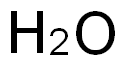


Potassium bicarbonate Preparation Products And Raw materials
Raw materials
1of2
Preparation Products
1of5
| Supplier | Tel | Country | ProdList | Advantage | |
|---|---|---|---|---|---|
| Tianjin Guangfu Technology Development Co. LTD | 022-85689490 13132141716 | sales@guangfubiaowu.com | China | 1631 | 58 |
| Lianyungang Kexin Chemical Co., Ltd. | 518-85112285 18861332669 | sales7199@jskolod.com | China | 104 | 58 |
| Fuxin Kaituo Fine Chemical Technology Co., Ltd | 15714082442 | 15714082442@163.com | China | 241 | 58 |
| wuhan geeyeschem chemical | 027-1537705-6467 15377056467 | 3410849474@qq.com | China | 2018 | 58 |
| Shandong Jiayu Chemical Co.,Ltd | 531-88613858 15562516958 | rhbs@qq.com | China | 406 | 58 |
| shandongxinheng | 152-15269160605-0605 15269160605 | 15269160605@163.com | China | 985 | 58 |
| Tianjin Jinhui Taiya Chemical Reagent Co., Ltd | 022-59582624 18622766592 | 2163746375@qq.com | China | 271 | 58 |
| J & K SCIENTIFIC LTD. | 18210857532 18210857532 | jkinfo@jkchemical.com | China | 96815 | 76 |
| Meryer (Shanghai) Chemical Technology Co., Ltd. | 4006356688 18621169109 | market03@meryer.com | China | 40202 | 62 |
| 3B Pharmachem (Wuhan) International Co.,Ltd. | 18930552037 | 3bsc@sina.com | China | 15813 | 69 |
Related articles
- Potassium bicarbonate: The all-rounder of the chemical world
- This article popularize the chemistry of potassium bicarbonate in an all-round way and bring you to appreciate its unique styl....
- Oct 24,2024
- Preparation of potassium bicarbonate
- Potassium bicarbonate is an inorganic substance with the chemical formula KHCO3.
- Apr 13,2022
Related Questions
Ask a questionView Latest Price from Potassium bicarbonate manufacturers
| Image | Update time | Product | Price | Min. Order | Purity | Supply Ability | Manufacturer | |
|---|---|---|---|---|---|---|---|---|
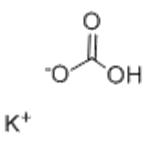 |
2026-09-14 | Potassium bicarbonate
298-14-6
|
0.99 | RongNa Biotechnology Co.,Ltd | ||||
 |
2026-05-28 | Potassium Bicarbonate
298-14-6
|
$10.00 | 1kg | 98% | 10 ton | Hebei Chuanghai Biotechnology Co,.LTD | |
 |
2026-03-22 | Food Grade Potassium Bicarbonate China Manufacturer
298-14-6
|
$25.00 | 25KG | 99.0%--101.5% | 2000tons | Jiangsu Kolod Food Ingredients Co.,Ltd. |
-
- Potassium bicarbonate
298-14-6
- 0.99
- RongNa Biotechnology Co.,Ltd
-
- Potassium Bicarbonate
298-14-6
- $10.00
- 98%
- Hebei Chuanghai Biotechnology Co,.LTD
-
- Food Grade Potassium Bicarbonate China Manufacturer
298-14-6
- $25.00
- 99.0%--101.5%
- Jiangsu Kolod Food Ingredients Co.,Ltd.
