- Demethoxycurcumin
-

- $160.00
-
2026-06-02
- CAS:22608-11-3
- Purity: 99.30%
- Supply Ability: 10g
- Demethoxycurcumin
-

- $55.00
-
2025-05-23
- CAS:22608-11-3
- Min. Order: 1kg
- Purity: 99%
- Supply Ability: 20 tons
- Demethoxycurcumin
-
-
2023-02-24
- CAS:22608-11-3
- Min. Order: 5mg
- Purity: ≥98%(HPLC)
- Supply Ability: 10 g
|
| | Demethoxy Curcumin Basic information |
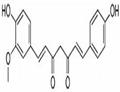
| Product Name: | Demethoxy Curcumin | | Synonyms: | Feruloyl-P-hydroxycinnnamoylmethane;MonodeMethoxycurcuMin;(1E,6E)-1-(4-Hydroxyphenyl)-7-(4-hydroxy-3-Methoxyphenyl)-1,6-heptadiene-3,5-d;(E,E)-1-(4-Hydroxy-3-Methoxyphenyl)-7-(4-hydroxyphenyl)-1,6-heptadiene-3,5-dione;1-(4-Hydroxy-3-Methoxyphenyl)-7-(p-hydroxyphenyl)-1,6-heptadiene-3,5-dione;DeMethoxyCurcuMin(DesMethoxycurcuMin);p-HydroxycinnaMoylferuloylMethane;1,6-Heptadiene-3,5-dione, 1-(4-hydroxy-3-methoxyphenyl)-7-(4-hydroxyphenyl)- | | CAS: | 22608-11-3 | | MF: | C20H18O5 | | MW: | 338.35 | | EINECS: | | | Product Categories: | Aromatics;Inhibitors;Intermediates & Fine Chemicals;Pharmaceuticals | | Mol File: | 22608-11-3.mol | 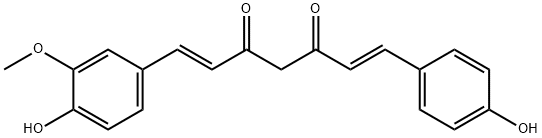 |
| | Demethoxy Curcumin Chemical Properties |
| Melting point | 166~170℃ | | Boiling point | 571.4±50.0 °C(Predicted) | | density | 1.282±0.06 g/cm3(Predicted) | | storage temp. | 2-8°C | | solubility | DMSO: ≥10mg/mL | | pka | 8.31±0.46(Predicted) | | form | powder | | color | orange | | Cosmetics Ingredients Functions | ANTIOXIDANT | | InChI | 1S/C20H18O5/c1-25-20-12-15(6-11-19(20)24)5-10-18(23)13-17(22)9-4-14-2-7-16(21)8-3-14/h2-12,21,24H,13H2,1H3/b9-4+,10-5+ | | InChIKey | HJTVQHVGMGKONQ-LUZURFALSA-N | | SMILES | COc1cc(\C=C\C(=O)CC(=O)\C=C\c2ccc(O)cc2)ccc1O | | LogP | 3.113 (est) |
| Hazard Codes | N | | Risk Statements | 50 | | Safety Statements | 61 | | RIDADR | UN 3077 9 / PGIII | | WGK Germany | 2 | | HS Code | 29145090 | | Storage Class | 11 - Combustible Solids |
| | Demethoxy Curcumin Usage And Synthesis |
| Chemical Properties | Yellow crystalline powder, soluble in organic solvents such as methanol, ethanol, and DMSO, derived from turmeric rhizomes. | | Uses | The demethoxy derivative of Curcumin (C838500) that regulates anti-inflammatory and anti-proliferative responses through a ROS-independent mechanism. It attenuates the Wnt/β-catenin pathway through do
wn-regulation of the transcriptional coactivator p300. | | Uses | Demethoxycurcumin (DMC) is a natural demethoxy derivative of curcumin. More stable than curcumin in physiological media, DMC suppresses proliferation in cancer cells at 50-100 μM. It down-regulates the transcriptional coactivator p300, suppressing the Wnt/β-catenin pathway, and inhibits lipopolysaccharide induction of iNOS. | | Definition | ChEBI: Demethoxycurcumin is a beta-diketone that is curcumin in which one of the methoxy groups is replaced by hydrogen. It is found in Curcuma zedoaria and Etlingera elatior. It has a role as a metabolite, an antineoplastic agent and an anti-inflammatory agent. It is a polyphenol, a beta-diketone, an enone and a diarylheptanoid. | | General Description | This substance is a primary reference substance with assigned absolute purity (considering chromatographic purity, water, residual solvents, inorganic impurities). The exact value can be found on the certificate. Produced by PhytoLab GmbH & Co. KG | | Biochem/physiol Actions | Demethoxycurcumin (DMC) is a derivative or curcumin, and represents one of the major active components of curcumin products isolated from Curcumae sp. DMC inhibits LPS-induced nitric oxide (NO) production, and expression of iNOS and COX2 in RAW264.7 cells by blocking NF-kB activation. DMC also inhibits NF-kB dependent iNOS, TNFα and IL-1β expression in LPS-treated rat microglial cells. DMC suppresses expression of MMPs and ICAM-1 in MDA-MB-231 human breast cancer cells by inhibition of NF-kB. | | in vivo | Demethoxycurcumin (3-30 mg/kg/day for 5 days or 20 days, i.p.) regulates the expression of inflammatory and apoptotic genes in the hippocampus and frontal cortex of rat models infused with Aβ + Ibotenic acid (HY-N2311) and helps to improve Alzheimer's disease[3].
Demethoxycurcumin (10 mg/kg/day for 28 days, p.o.) can enhance cognition and enhance choline acetyltransferase (ChAT) activity in mice induced by Scopolamine (HY-N0296) [4].
| Animal Model: | Male ICR mice (6 weeks old) weighing 30–35 g, memory impairment induced by Scopolamine[5] | | Dosage: | 10 mg/kg/day for 28 days | | Administration: | Oral gavage (p.o.) | | Result: | Significantly improved scopolamine induced passive avoidance task learning disabilities and memory impairments in Morris Water Maze.
The activity of choline acetyltransferase (ChAT) was significantly increased to 33.03%.
|
| | IC 50 | ChAT; iNOS |
| | Demethoxy Curcumin Preparation Products And Raw materials |
|