- Sulfoxaflor
-

- $10.00
-
2026-09-18
- CAS:946578-00-3
- Min. Order: 1ASSAYS
- Purity: 99%
- Supply Ability: 1 ton
- Sulfoxaflor
-
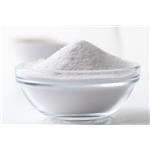
-
2026-07-14
- CAS:946578-00-3
- Min. Order: 1kg
- Purity: 99
- Supply Ability: 20tons
- Sulfoxaflor
-

- $107.00
-
2026-06-02
- CAS:946578-00-3
- Purity: 99.98%
- Supply Ability: 10g
|
| | Sulfoxaflor Basic information |
| Product Name: | Sulfoxaflor | | Synonyms: | Sulfoxaflor;Sulfoxaflor solution;Sulfoxaflor solution,1000ppm;Cyanamide,N-[methyloxido[1-[6-(trifluoromethyl)-3-pyridinyl]ethyl]-l4-sulfanylidene]-;[methyl(oxido){1-[6-(trifluoromethyl)pyridin-3-yl]ethyl}-lambda~4~-sulfanylidene]cyanamide;Sulfoxaflor@100 μg/mL in Methanol;Sulfoxaflor@1000 μg/mL in Acetonitrile;Sulfoxaflo | | CAS: | 946578-00-3 | | MF: | C10H10F3N3OS | | MW: | 277.27 | | EINECS: | 202-303-5 | | Product Categories: | | | Mol File: | 946578-00-3.mol | 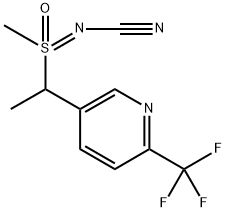 |
| | Sulfoxaflor Chemical Properties |
| | Sulfoxaflor Usage And Synthesis |
| Description | Sulfoxaflor is an insecticide that is used to control aphids in field crops and favourably compares with imidacloprid in efficiacy. It is relatively volatile, whilst potentially mobile in soils it has a low potential for leaching due to its rapid degradation rate. It has a high potential to bioaccumulate, generally moderately toxic to birds and mammals and has a low toxicity to most aquatic species. It is toxic to honeybees and earthworms | | History | lt was first registered by EPA for emergency use on cotton to controltarnished plant bug, Lygus lineolaris in the state of Mississippi,Arkansas,Louisiana, and Tennessee in June 2012. lts use was extended to other cropsin 2013.Sulfoxaflor is registered for use in Minnesota in June 2013. | | Uses | Sulfoxaflor-d3 is the isotope analog of Sulfoxaflor. Sulfoxaflor, is a new insecticide which acts as an insect neurotoxin, and is the only member of class of chemicals called the sulfoximines which act on the central nervous system of insects with much lower toxicity to mammals. | | Definition | ChEBI: [methyl(oxido){1-[6-(trifluoromethyl)pyridin-3-yl]ethyl}-lambda(6)-sulfanylidene]cyanamide is a member of the class of pyridines that is 5-ethyl-2-trifluoromethylpyridine in which the ethyl group is substituted at position 1 by an N-cyano-S-methylsulfonimidoyl group. The insecticide sulfoxalor is a mixture of the four possible stereoisomers arising from the two tetrahedral stereocentres. It is a member of pyridines, a sulfoximide, a nitrile and an organofluorine compound. | | Production Methods | Sulfoxaflor is commercially produced via a multi-step process starting with the nucleophilic addition of methyl mercaptan to cyanogen chloride to form [[(methylthio)methyl]thio]acetonitrile, which is oxidised with hydrogen peroxide under acidic conditions to the corresponding sulfoximine; this intermediate undergoes cyclisation with ethyl acetoacetate and subsequent amination with 2-chloro-5-(trifluoromethyl)pyridine to yield the active compound. | | benefits | Sulfoxaflor may be registered for use on the following major crops inMinnesota: soybeans, potatoes, wheat. According to UMN extension,sulfoxaflor worked well against aphids in soybean and potatoes. It will beof use against piercing/sucking insects such as aphids, leafhoppers, plantbugs, etc. lt is not labeled for residential uses. | | Mechanism of action | Systemic. Nicotinic acetylcholine receptor (nAChR) channel blocker. | | Toxicology |
After reviewing the data, EPA has determined that, when used according to the label requirements, sulfoxaflor does not pose a risk of concern for people, including infants, children and agricultural workers and that, overall, sulfoxaflor presents a low risk to birds, mammals, fish, and other aquatic animals and plants. To reduce the risk to pollinators, the label will include instructions for pollinator protection and crop-specific restrictions.
| | Environmental Fate | The fate of sulfoxoflor in the environment is highly dependent on whether it is in a soil ystem, groundwater system, or surface watersystem. Environmental fate characteristics are listed for parent and all relevant degradates where appropriate. | | Pesticide Type | Insecticide |
| | Sulfoxaflor Preparation Products And Raw materials |
|