- Propargite
-

- $61.00
-
2026-07-17
- CAS:2312-35-8
- Purity: 98.81%
- Supply Ability: 10g
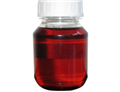
- Propargite
-
-
2026-07-14
- CAS:2312-35-8
- Min. Order: 1box
- Purity: 90%
- Supply Ability: 20KL
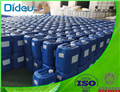
- Propargite
-
-
2020-04-28
- CAS:2312-35-8
- Min. Order: 1KG
- Purity: 99.0%
- Supply Ability: 500 tons
|
| | Propargite Basic information |
| Product Name: | Propargite | | Synonyms: | 2-(p-t-butylphenoxy)cyclohexylpropargylsulfite;2-(p-tert-Butylphenoxy)cyclohexylpropargylsulfite;comite;RETADOR;MIGHTIKILL;PROPARGIET;PROPARGIT;PROPARGITE | | CAS: | 2312-35-8 | | MF: | C19H26O4S | | MW: | 350.47 | | EINECS: | 219-006-1 | | Product Categories: | INSECTICIDE | | Mol File: | 2312-35-8.mol |  |
| | Propargite Chemical Properties |
| Melting point | <25 °C | | Boiling point | 454.45°C (rough estimate) | | density | 1.1604 (rough estimate) | | vapor pressure | 0Pa at 20℃ | | refractive index | 1.5220 (estimate) | | Fp | 71 °C | | storage temp. | Sealed in dry,2-8°C | | solubility | Chloroform (Slightly), Hexane (Slightly) | | form | Viscous Liquid | | color | Dark/light brown | | Water Solubility | 215μg/L at 20℃ | | Merck | 13,7900 | | BRN | 6934289 | | Henry's Law Constant | 1.5×101 mol/(m3Pa) at 25℃, Duchowicz et al. (2020) | | Major Application | agriculture
cleaning products
cosmetics
environmental
food and beverages
personal care | | InChI | 1S/C19H26O4S/c1-5-14-21-24(20)23-18-9-7-6-8-17(18)22-16-12-10-15(11-13-16)19(2,3)4/h1,10-13,17-18H,6-9,14H2,2-4H3 | | InChIKey | ZYHMJXZULPZUED-UHFFFAOYSA-N | | SMILES | CC(C)(C)c1ccc(OC2CCCCC2OS(=O)OCC#C)cc1 | | LogP | 5.7 | | CAS DataBase Reference | 2312-35-8(CAS DataBase Reference) | | NIST Chemistry Reference | Propargite(2312-35-8) | | EPA Substance Registry System | Propargite (2312-35-8) |
| Hazard Codes | T;N,N,T | | Risk Statements | 23-38-40-41-50/53 | | Safety Statements | 26-36/37/39-45-60-61 | | RIDADR | UN 2810 | | WGK Germany | 3 | | RTECS | WT2900000 | | HazardClass | 9 | | PackingGroup | III | | HS Code | 29209090 | | Storage Class | 6.1A - Combustible acute toxic Cat. 1 and 2
very toxic hazardous materials | | Hazard Classifications | Acute Tox. 2 Inhalation
Aquatic Acute 1
Aquatic Chronic 1
Carc. 2
Eye Dam. 1
Skin Irrit. 2 | | Hazardous Substances Data | 2312-35-8(Hazardous Substances Data) | | Toxicity | LD50 in male, female rats (mg/kg): 1480, 1480 orally; 250, 680 dermally (Gaines); LC50 in rainbow trout, bluegill sunfish (ppb): >100, 31 (Stone) |
| | Propargite Usage And Synthesis |
| Description | The pesticide omite pricipally acts as an irritant.
Contact dermatitis was reported in 40 of 47 agricultural
workers using it. | | Chemical Properties | Insoluble in water. | | Uses | Propargite is a pesticide used to control mite and is used on various crops from cotton to corn. | | Uses | Acaricide for fruits, vegetables, row crops. | | Definition | ChEBI: Propargite is a sulfite ester and a terminal acetylenic compound. It has a role as a sulfite ester acaricide. | | Production Methods | The industrial synthesis of propargite begins with the preparation of 2-(4-tert-butylphenoxy)cyclohexanol, which is synthesised by reacting 4-tert-butylphenol with cyclohexene oxide under acidic conditions to form the ether linkage. This intermediate is then esterified with propargyl sulfonyl chloride in the presence of a base such as triethylamine or pyridine, forming the sulfonate ester. The reaction is typically carried out in organic solvents like dichloromethane or toluene under controlled temperature and pH conditions to ensure high yield and purity. After synthesis, the crude product is purified through distillation or solvent extraction. | | General Description | Propargite is a dark colored liquid. Propargite is a wettable powder or water emulsifiable liquid. Propargite can cause illness by inhalation, skin absorption and/or ingestion. The primary hazard is the threat to the environment. Immediate steps should be taken to limit its spread to the environment. Since Propargite is a liquid Propargite can easily penetrate the soil and contaminate groundwater and nearby streams. Propargite is used as a pesticide. Practically insoluble in water (10.5 mg/L). Used as an acaricide. | | Air & Water Reactions | Practically insoluble in water (10.5 mg/L). Slowly reacts with water to form sulfur dioxide and alcohols; reaction is more rapid under basic or acidic conditions. | | Reactivity Profile | Propargite is a sulfite ester. As an ester, Propargite will hydrolyze to form sulfur dioxide and alcohols; reaction is more rapid under basic conditions. Propargite may react exothermically with acids to generate alcohols. Heat will be generated by interaction with basic or caustic solutions. Flammable hydrogen is generated by mixing with alkali metals and hydrides. | | Health Hazard | INHALATION: Irritation of mucous membranes. EYES: Irritation, may be severe. SKIN: Irritation. | | Flammability and Explosibility | Non flammable | | Agricultural Uses | Miticide and acaricide: Pending for use in EU countries. A U.S. EPA restricted Use Pesticide (RUP). Used on a variety of bearing and non-bearing food crops and non-food sites. Grapes, walnuts, almonds, nectarines and mint are the most treated crops. Other crops include alfalfa, avocados, beans, boysenberries, carrots, cherries, citrus, corn, currants, dates, filberts, grapefruit, jojoba, grapes, hops, peanuts, sugar beets, cotton and ornamentals. | | Trade name | COMITE II®; COMITE® AGRICULTURAL MITICIDE; D-014®; DIBROM OMITE®; DICTATOR®; NAUGATUCK® D-014; OMAIT®; OMITE®; OMITE® 570EW; RED-TOP®[C]; UNIROYAL® D-014; U.S. RUBBER D-014® | | Contact allergens | The pesticide omite principally acts as an irritant.
Contact dermatitis was reported in 40 of 47 agricultural
workers using Omite. | | Mechanism of action | Non-systemic with contact action, inhibits oxidative phosphorylation. Inhibitor of mitochondrial ATP synthase. | | Safety Profile | Poison by skin contact. Moderately toxic by ingestion. When heated to decomposition it emits toxic fumes of SOx. See also ESTERS and SULFUROUS ACID. | | Pesticide Type | Acaricide; Insecticide |
| | Propargite Preparation Products And Raw materials |
|