- BIS-TRIS
-

-
2026-10-13
- CAS:6976-37-0
- Min. Order: 1kg
- Purity: 99%-101%
- Supply Ability: 500 KG
- BIS-Tris
-
- $5.00
-
2026-09-02
- CAS:6976-37-0
- Min. Order: 1KG
- Purity: 99%
- BIS-TRIS
-

-
2026-07-22
- CAS:6976-37-0
- Min. Order: 1kg
- Purity: 99%
- Supply Ability: 20MT
|
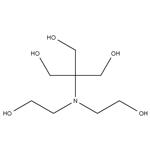
| Product Name: | BIS-Tris | | Synonyms: | 2,2-BIS(HYDROXYETHYL)-(IMINOTRIS)-(HYDROXYMETHYL)-METHANE;2-BIS[2-HYDROXYETHYL]AMINO-2-[HYDROXYMETHYL]1,3-PROPANEDIOL;2-[bis(2-hydroxyethyl)amino]-2-(hydroxymethyl)-3-propanediol;Bis Tris Bis(2-hydroxyethyl)imino-tris(hydroxymethyl)methane;Bis Tris, Molecular Biology Grade Bis(2-hydroxyethyl)imino-tris(hydroxymethyl)methane, Molecular Biology Grade;Bis(2-hydroxyethyl)aminotris(hydroxymethyl)methane~Bis-TRIS;Bis-Tris (2,2-Bis(hydroxymethyl)-2,2',2''-nitrilotriethanol);BIS-TRIS BIOULTRA, >= 99.0% (NT) | | CAS: | 6976-37-0 | | MF: | C8H19NO5 | | MW: | 209.24 | | EINECS: | 230-237-7 | | Product Categories: | Buffer;API intermediates | | Mol File: | 6976-37-0.mol | 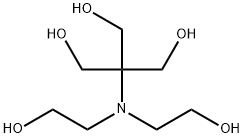 |
| | BIS-Tris Chemical Properties |
| Melting point | 104 °C(lit.) | | Boiling point | 466.2±40.0 °C(Predicted) | | density | 1.346±0.06 g/cm3(Predicted) | | vapor pressure | 0Pa at 25℃ | | storage temp. | Inert atmosphere,Room Temperature | | solubility | H2O: 1 M at 20 °C, clear, colorless | | form | Solution | | color | Yellow to orange | | PH Range | 5.8 - 7.2 | | Odor | Odorless | | PH | 9.0-10.1 (20-25℃, 1M in water) | | pka | 6.5(at 25℃) | | biological source | synthetic | | Water Solubility | soluble | | Sensitive | Air Sensitive | | λmax | λ: 280 nm Amax: 0.15 | | BRN | 2205275 | | Major Application | diagnostic assay manufacturing | | Cosmetics Ingredients Functions | BUFFERING | | InChI | 1S/C8H19NO5/c10-3-1-9(2-4-11)8(5-12,6-13)7-14/h10-14H,1-7H2 | | InChIKey | OWMVSZAMULFTJU-UHFFFAOYSA-N | | SMILES | OCCN(CCO)C(CO)(CO)CO | | LogP | -2.26 at 20℃ | | CAS DataBase Reference | 6976-37-0(CAS DataBase Reference) | | EPA Substance Registry System | 1,3-Propanediol, 2-[bis(2-hydroxyethyl)amino]-2-(hydroxymethyl)- (6976-37-0) | | Absorption | cut-off at 270nm in H2O at 1M |
| | BIS-Tris Usage And Synthesis |
| Preparation | First, 100 ml of water and 120 g of tris(hydroxymethyl)aminomethane were added to a 1000 ml four-necked flask and heated with stirring. Then, when the temperature reached 80°C, 25 g of anion exchange resin was added, and 200 g of molten ethylene carbonate was added dropwise. Specifically, the 200 g of molten ethylene carbonate was added dropwise over three hours. Simultaneously, the reaction was maintained at 80°C for 20 hours. After the reaction was stopped, the reaction solution was filtered to remove the anion exchange resin and washed with 50 ml of pure water. Then, the filtrate was adjusted to pH 9.5 using a 30% NaOH solution, and then dehydrated under reduced pressure (0.08 MPa) at 78°C-100°C to obtain an oily substance. This was then dissolved in 200 ml of ethanol, cooled to precipitate crystals, and filtered to obtain the crude product. Finally, the crude product was recrystallized from ethanol and dried to obtain 88 g of BIS-Tris. The final product was a white crystal with a yield of 42.4%. | | Chemical Properties | White/clear crystalline powder | | Uses | It is used as a biological buffer, organic synthesize, chemical & pharmaceutical intermediate. It is suitable for fractionation of hemoglobin. | | Uses | Bis Tris is a commonly used biological buffer for very broad usage in biological systems such as diagnostics, electrophoresis and protein based bioprocessing. The pKa of Bis Tris is 6.36 which makes it a good candidate for biological-based formulations.
Bis Tris is used in a wide variety of biological applications including protein separation buffers, cell culture media, electrophoresis separations and diagnostic reagent formulations. | | Uses | Bis-Tris, also known as bis-Tris methane, is a zwitterionic buffering agent used in biochemistry and molecular biology. It is a bis(2-hydroxyethyl)amine and Tris family buffer. Bis Tris is a common component of many buffer systems for various types of electrophoresis. Bis-Tris may form a complex with some common metals, such as Cu(II) and Pb(II), and formation constants should be taken into account when using this buffer in a solution containing metal ions. Bis-Tris can be used as a substitute for the highly toxic buffer cacodylate. | | Definition | ChEBI: Bis-tris is a buffer substance useful for calibration of glass electrodes and for the preparation of the biochemical and biological buffer solutions; pKa = 6.46 at 25 ℃. It has a role as a buffer. It is functionally related to a member of tris. | | Flammability and Explosibility | Not classified | | Purification Methods | Crystallise BIS-TRIS from hot 1-butanol and dry it in a vacuum at 25o. N,N-Bis-(2-hydroxyethyl)glycine (BICINE) See in “Amino Acids and Peptides”, Chapter 6. |
| | BIS-Tris Preparation Products And Raw materials |
|