- Madecassoside
-
-
2026-09-16
- CAS:34540-22-2
- Min. Order: 1KG
- Purity: 99%
- Supply Ability: 500kg/month
- Madecassoside
-

- $8.00
-
2026-09-02
- CAS:34540-22-2
- Min. Order: 1kg
- Purity: 99%
|
| | Madecassoside Basic information |
| Product Name: | Madecassoside | | Synonyms: | Madecassoside, 98%, from Centella asiatica;MADECASSOIDE;MADECASSOSIDE;O-6-Deoxy-alpha-L-mannopyranosyl-(1.4)-O-beta-D-glucopyranosyl-(1.6)-beta-D-glucopyranosyl (2alpha,3beta,4alpha,6beta)-2,3,6,23-tetrahydroxyurs-12-en-28-oate;O-6-deoxy-alpha-L-mannopyranosyl-(1->4)-O-beta-D-glucopyranosyl-(1->6)-beta-D-glucopyranosyl (2alpha,3beta,4alpha,6beta)-2,3,6,23-tetrahydroxyurs-12-en-28-oate;MADECASSOSIDE(P);MADECASSOSIDE hplc;glucopyranosyl-(1→6)-β-D-glucopyranosyl ester, (2α,3β,4α,6β)- | | CAS: | 34540-22-2 | | MF: | C48H78O20 | | MW: | 975.12 | | EINECS: | 252-076-1 | | Product Categories: | Inhibitors;The group of Asiaticoside;chemical reagent;pharmaceutical intermediate;phytochemical;reference standards from Chinese medicinal herbs (TCM).;standardized herbal extract;Saponins | | Mol File: | 34540-22-2.mol |  |
| | Madecassoside Chemical Properties |
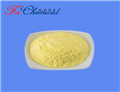
| Melting point | 220-223 °C | | Boiling point | 1043.6±65.0 °C(Predicted) | | density | 1.47±0.1 g/cm3(Predicted) | | storage temp. | 2-8°C | | solubility | H2O: soluble1mg/mL, clear, colorless | | pka | 12.50±0.70(Predicted) | | form | powder | | color | white to off-white | | Water Solubility | H2O: 1mg/mL, clear, colorless | | Stability: | Hygroscopic | | Major Application | metabolomics
vitamins, nutraceuticals, and natural products | | Cosmetics Ingredients Functions | ANTIOXIDANT
SKIN CONDITIONING | | InChIKey | BNMGUJRJUUDLHW-CIZDPPTDSA-N | | SMILES | O1C(C(C(C(C1C)O)O)O)OC2C(OC(C(C2O)O)OCC3OC(C(C(C3O)O)O)OC(=O)C54C(C(C(CC5)C)C)C6=CCC7C8(C(C(CC7(C6(CC4)C)C)O)C(C(C(C8)O)O)(CO)C)C)CO | | LogP | -1.338 (est) |
| Safety Statements | 24/25 | | WGK Germany | 3 | | RTECS | YU9555000 | | HS Code | 29389090 | | Storage Class | 11 - Combustible Solids |
| | Madecassoside Usage And Synthesis |
| Description | Madecassoside is a triterpenoid saponin found in the tropical Asian plant C. asiatica. It has a wide range of reported anti-inflammatory, wound healing, and antioxidant activities and has been shown to suppress LPS-induced TNF-α production via inhibition of ERK, p38, and NF-κB activity. | | Chemical Properties | Madecassoside is soluble in organic solvents such as ethanol, DMSO, and dimethyl formamide. The solubility of madecassoside in these solvents is approximately 5, 10, and 25 mg/ml, respectively.H2O : 33.33 mg/mL (34.18 mM) | | Uses | Madecassoside is an antioxidant and anti-inflammatory agent. Used as a protective agent against cognitive impairment. | | Definition | ChEBI: A triterpenoid saponin that is a trisaccharide derivative of madecassic acid. Isolated from Centella asiatica, it exhibits anti-inflammatory, antioxidant and antirheumatic activities. | | benefits | Madecassoside is a key bioactive compound found in Centella asiatica extract and is widely used in skincare products. Madecassoside promotes wound healing and reduces the apoptosis of keratinocytes following UVB radiation damage. It offers benefits such as soothing the skin after sun exposure and strengthening the skin's moisture barrier[2].
| | Biological Functions | Madecassoside, a triterpenoid saponin compound mainly isolated from the gotu kola herb (Centella asiatica), shows an extensive range of biological activities, including antiapoptotic, antioxidant, anti-inflammatory, moisturizing, neuroprotective, and wound healing effects. It has been highly used in the management of eczema, skin wounds, and other diseases[3]. | | Mechanism of action | Madecassoside can directly reduce the cytoskeletal protein actin expression of KFs and its mechanism of action is by inhibiting the activity of some (not all) of the several intracellular molecules that are responsible for abnormal keloid migration, including the significant, concentration‐dependent reduction of phosphorylated Akt, PI3K and p38 of KFs and the repression of actin‐depolymerization‐associated p‐cofilin/cofilin[1]. | | References | [1] Bandopadhyay s, et al. Therapeutic properties and pharmacological activities of asiaticoside and madecassoside: A review. J. Cell. Mol. Med, 2023; 27: 593–608.
[2] Tadhi Sucharitakul. (2026). <i>Centella asiatica</i> phytochemical Madecassoside enhances skin wound healing and protects against UVB-induced keratinocyte damage. Tissue Barriers, 2532229. https://doi.org/10.1080/21688370.2025.2532229
[3] Muhammad Suhail*, & Pao-Chu Wu*, (2024). Formulation and In Vitro Assessment of Polymeric pH-Responsive Nanogels of Chitosan for Sustained Delivery of Madecassoside. ACS Omega, 9 17, 19345–19352. https://doi.org/10.1021/acsomega.4c00461
|
| | Madecassoside Preparation Products And Raw materials |
|