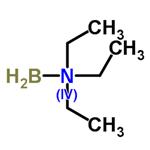
- Triethylaminoborane
-
- $1.10
-
2026-08-25
- CAS:1722-26-5
- Min. Order: 1kg
- Purity: 99%min
- Supply Ability: 100kg
|
| | Borane-triethylamine complex Basic information |
| | Borane-triethylamine complex Chemical Properties |
| Hazard Codes | F,C | | Risk Statements | 11-20/21/22-34 | | Safety Statements | 26-36/37/39-45-33-16 | | RIDADR | UN 2924 3/PG 2 | | WGK Germany | 3 | | F | 10-21 | | TSCA | TSCA listed | | HazardClass | 3 | | PackingGroup | II | | HS Code | 29299090 | | Storage Class | 3 - Flammable liquids | | Hazard Classifications | Acute Tox. 4 Oral
Flam. Liq. 2
Skin Corr. 1B |
| | Borane-triethylamine complex Usage And Synthesis |
| Chemical Properties | clear colourless liquid | | Uses | Borane–trimethylamine complex (Me3N·BH3; BTM) is the most stable of the amine–borane complexes that are commercially available, and it is cost-effective. It is a valuable reagent in organic chemistry with applications in the reduction of carbonyl groups and carbon–nitrogen double bond reduction, with considerable examples in the reduction of oximes, hydrazones and azines.
As a reducing agent and in hydroboration reactionsBorane-triethylamine complex is used for ethanolysis of amine-borane adducts. It is also used in photochemical hydroboration and oxidation of single-walled carbon nanotubes. Further, it acts as a reactant for the synthesis of silylboranate and N-heterocyclic carbene borane complexes through Lewis base exchange with amine-boranes. It plays an important role in the generation of boron carbide nitride films through low-pressure chemical vapor deposition. | | reaction suitability | reagent type: reductant | | Purification Methods | Distil it in a vacuum using a 60cm glass helices-packed column. [Brown et al. J Am Chem Soc 64 325 1942, Ashby & Foster J Am Chem Soc 84 3407 1962, Matsuura & Tolcura Tetrahedron Lett 4703 1968, Beilstein 4 IV 329.] |
| | Borane-triethylamine complex Preparation Products And Raw materials |
|