- Dibutyltin Diacetate
-

- $5.00
-
2026-05-28
- CAS:1067-33-0
- Min. Order: 1KG
- Purity: 99%
- Supply Ability: 10000kg
- Dibutyltindiacetate
-

- $4.38
-
2025-07-17
- CAS:1067-33-0
- Min. Order: 200kg
- Purity: 98.99%
- Supply Ability: 8000 tons per year
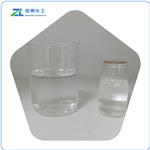
- Dibutyltin diacetate
-
- $60.00
-
2025-04-15
- CAS:1067-33-0
- Min. Order: 1kg
- Purity: 99%
- Supply Ability: 5000kg/week
|
| | Dibutyltin diacetate Basic information |
| | Dibutyltin diacetate Chemical Properties |
| Melting point | 7-10 °C(lit.) | | Boiling point | 142-145 °C10 mm Hg(lit.) | | density | 1.32 g/mL at 25 °C(lit.) | | vapor density | 12 (vs air) | | vapor pressure | 1.3 mm Hg ( 25 °C) | | refractive index | n20/D 1.471(lit.) | | Fp | >230 °F | | storage temp. | Store below +30°C. | | solubility | 0.006g/l | | form | liquid | | color | colorless | | Specific Gravity | 1.32 | | Water Solubility | insoluble | | BRN | 4136035 | | Exposure limits | ACGIH: TWA 0.1 mg/m3; STEL 0.2 mg/m3 (Skin)
NIOSH: IDLH 25 mg/m3; TWA 0.1 mg/m3 | | InChI | 1S/2C4H9.2C2H3O2.Sn/c2*1-3-4-2;2*1-2(3)4;/h2*1,3-4H2,2H3;2*1H3; | | InChIKey | QFRLGSUYBLMJKF-UHFFFAOYSA-N | | LogP | 3.39 at 20℃ | | CAS DataBase Reference | 1067-33-0(CAS DataBase Reference) | | NIST Chemistry Reference | Dibutyltin diacetate(1067-33-0) | | EPA Substance Registry System | Dibutyltin diacetate (1067-33-0) |
| Hazard Codes | T,N,C | | Risk Statements | 25-34-36/38-68-50/53-48/25-43-61-60 | | Safety Statements | 26-36/37/39-45-37/39-28A-61-60-53 | | RIDADR | UN 2922 8/PG 2 | | WGK Germany | 3 | | RTECS | WH6880000 | | Autoignition Temperature | >200 °C | | TSCA | TSCA listed | | HazardClass | 6.1 | | PackingGroup | II | | HS Code | 29310095 | | Storage Class | 6.1A - Combustible, acute toxic Cat. 1 and 2
very toxic hazardous materials | | Hazard Classifications | Aquatic Acute 1
Aquatic Chronic 1
Eye Dam. 1
Muta. 2
Repr. 1B
Skin Corr. 1B
Skin Sens. 1
STOT RE 1
STOT SE 1 Oral | | Hazardous Substances Data | 1067-33-0(Hazardous Substances Data) | | Toxicity | LD50 orally in Rabbit: 900 - 1235 mg/kg LD50 dermal Rabbit 2320 mg/kg |
| | Dibutyltin diacetate Usage And Synthesis |
| Chemical Properties | clear pale yellow to yellow liquid | | Uses | PU catalyst, RTV silicone rubber | | Uses | As as stabilizer in chlorinated organics, and as a catalyst for condensation reactions.Di-n-butyltin diacetate is used as a stabilizer for polyvinyl chloride. It acts as a catalyst for the preparation of silicone and urethane foams. Further, it is used as a curing agent for silicone elastomers. In addition to this, it is used as a precursor for thin-film tin(IV) oxide gas sensing materials by laser-assisted chemical vapor deposition. | | General Description | Clear yellow liquid. | | Air & Water Reactions | Forms white precipitate in water. Insoluble in water. | | Reactivity Profile | Dibutyltin diacetate is stable under normal laboratory conditions. Dibutyltin diacetate may react with oxidizers. . Strongly reactive with many other groups. Incompatible with acids and bases. Organometallics are good reducing agents and therefore incompatible with oxidizing agents. | | Fire Hazard | Dibutyltin diacetate is combustible. | | Safety Profile | Poison by ingestion and
intravenous routes. Experimental
reproductive effects. Combustible when
exposed to heat or flame; can react with
oxidizing materials. To fight fire, use water,
foam, CO2, dry chemical. When heated to
decomposition it emits acrid smoke and
irritating fumes. See also TIN
COMPOUNDS. |
| | Dibutyltin diacetate Preparation Products And Raw materials |
|