- Cyphenothrin
-

- $1.00
-
2026-03-20
- CAS:39515-40-7
- Min. Order: 1KG
- Purity: 99%
- Supply Ability: 10 mt
- Cyphenothrin
-
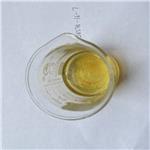
-
2025-06-20
- CAS:39515-40-7
- Min. Order: 1kg
- Purity: 99%
- Supply Ability: 20tons
- Cyphenothrin
-
- $10.00
-
2021-12-22
- CAS:39515-40-7
- Min. Order: 10g
- Purity: 99
- Supply Ability: 1000KG
|
| | Cyphenothrin Basic information |
| Product Name: | Cyphenothrin | | Synonyms: | 2,2-dimethyl-3-(2-methyl-1-propenyl)-cyclopropanecarboxylicacicyano(3-phe;Cyano-3-Phenoxybenzyl2,2-dimethyl-3-(2-methylpropenyl)cyclopropanecarboxylate;Cyclopropanecarboxylicacid,2,2-dimethyl-3-(2-methyl-1-propenyl)-,cyano(3-phenoxyphenyl)methylester;CYPHENOTHRIN;D-TRANS-CYPHENOTHRIN;CYPHENOTHRIN MIXTURE OF CIS AND TRANS IS;CYPHENOTHRIN (CIS+ TRANS);alpha-cyano-3-phenoxybenzyl 2,2-dimethyl-3-(2-methylprop-1-enyl)cyclopropanecarboxylate | | CAS: | 39515-40-7 | | MF: | C24H25NO3 | | MW: | 375.46 | | EINECS: | 254-484-5 | | Product Categories: | Alpha sort;C;CAlphabetic;CO - CZPesticides;Insecticides;Pesticides&Metabolites;Pyrethroids | | Mol File: | 39515-40-7.mol |  |
| | Cyphenothrin Chemical Properties |
| Melting point | 25°C | | Boiling point | 504.24°C (rough estimate) | | density | d2525 1.083 | | vapor pressure | 1.2×10⁻⁴pa 20°C | | refractive index | 1.5614 (estimate) | | storage temp. | -20°C | | solubility | Chloroform, DMSO (Slightly), Methanol (Slightly) | | Water Solubility | 0.001 mg l-1 (23 °C) | | Merck | 13,2797 | | Stability: | Light Sensitive | | InChI | 1S/C24H25NO3/c1-16(2)13-20-22(24(20,3)4)23(26)28-21(15-25)17-9-8-12-19(14-17)27-18-10-6-5-7-11-18/h5-14,20-22H,1-4H3 | | InChIKey | FJDPATXIBIBRIM-UHFFFAOYSA-N | | SMILES | C\C(C)=C\C1C(C(=O)OC(C#N)c2cccc(Oc3ccccc3)c2)C1(C)C | | CAS DataBase Reference | 39515-40-7(CAS DataBase Reference) | | EPA Substance Registry System | Cyphenothrin (39515-40-7) |
| Hazard Codes | Xn;N,N,Xn | | Risk Statements | 22-50/53 | | Safety Statements | 60-61 | | RIDADR | UN 2810 | | WGK Germany | 3 | | RTECS | GZ1453500 | | HS Code | 29269090 | | Storage Class | 6.1C - Combustible acute toxic Cat.3
toxic compounds or compounds which causing chronic effects | | Hazard Classifications | Acute Tox. 4 Oral
Aquatic Acute 1
Aquatic Chronic 1 | | Hazardous Substances Data | 39515-40-7(Hazardous Substances Data) |
| | Cyphenothrin Usage And Synthesis |
| Description | Cyphenothrin is a pyrethroid insecticide with public health and industrial applications. It has a low aqueous solubility and is non-volatile. Whilst it is not expected to be persistent in soil systems, it may be persistent in water systems depending on local conditions. Based on its physico-chemical properties it is not expected to leach to groundwaters. It is highly toxic to aquatic life and moderately toxic to honeybees. Cyphenothrin is also moderately toxic to mammals via the oral route. | | Chemical Properties | Thick, yellow liquid. | | Uses | Cyphenothrin controls insects in household, public health and
industrial situations. It is also used to control insects which attack wood
and fabrics. | | Uses | Insecticide. | | Definition | ChEBI: Cyphenothrin is a cyclopropanecarboxylate ester. It has a role as a pyrethroid ester insecticide and an agrochemical. It is functionally related to a chrysanthemic acid. | | Production Methods | Cyphenothrin is commercially produced via a process that begins with the preparation of (1R,S)-trans-chrysanthemic acid through esterification of 2,2-dimethyl-3-(2-methylprop-1-enyl)cyclopropanecarboxylic with thionyl chloride, followed by resolution of the (1R)-trans isomer using (S)-alpha-methylbenzylamine. The key coupling occurs via transesterification with 3-phenoxybenzyl alcohol (or its cyanohydrin variant for the alpha-cyano form) under basic conditions to form the ester linkage. Final purification by high-vacuum fractional distillation or crystallisation from hexane yields cyphenothrin. | | Mechanism of action | Non-systemic, rapid knockdown with contact and stomach action damaging insects nervous system. Sodium channel modulator. | | Potential Exposure | Pyrethroid insecticide. Those involved in
the manufacture and application of this agricultural chemical. | | Metabolic pathway | Cyphenothrin is the name given to the α-RS,1RS-cis-trans isomer mixture
(racemic). The product now used is cyphenothrin which is 95% 1R and
75% trans. It has no field use because the chrysanthemate moiety is very
sensitive to photodegradation. A study in rodents has been reported.
Cyphenothrin is degraded mainly by photo-oxidation and by hydrolysis
and oxidation in plants and animals. | | Shipping | UN3349 Pyrethroid pesticide, solid toxic,
Hazard Class: 6.1; Labels: 6.1-Poisonous material. UN3352
Pyrethroid pesticide, liquid toxic, Hazard Class: 6.1;
Labels: 6.1-Poisonous materials. UN3082 Environmentally
hazardous substances, liquid, n.o.s., Hazard class: 9;
Labels: 9-Miscellaneous hazardous material, Technical
Name Required | | Degradation | Cyphenothrin is stable under normal storage conditions but it is labile
to base, being hydrolysed to trans-2,2-dimethyl-3-(2-methylprop-1-enyl)-
cyclopropanecarboxylic acid (2,trans-chrysanthemic acid) and 3-phenoxybenzaldehyde
(3, 3PBAl) and cyanide ion (Scheme 1). It is sensitive to
light (see phenothrin for expected products). | | Incompatibilities | May react violently with strong oxidi-
zers, bromine, 90% hydrogen peroxide, phosphorus
trichloride, silver powders, or dust. Incompatible with silver
compounds. Mixture with some silver compounds forms
explosive salts of silver oxalate | | Waste Disposal | Incineration would be an
effective disposal procedure where permitted. If an efficient
incinerator is not available, the product should be mixed
with large amounts of combustible material and contact
with the smoke should be avoided. In accordance with
40CFR165, follow recommendations for the disposal of
pesticides and pesticide containers. Noncombustible con-
tainers should be crushed and buried under more than
40 cm of soil
. | | Pesticide Type | Insecticide |
| | Cyphenothrin Preparation Products And Raw materials |
|