








Product Details
| Product Name: 4-Pyridinealdoxime | CAS No.: 696-54-8 |
| EC-No.: 211-796-6 | Min. Order: 1kg |
| Purity: 99.97% | Supply Ability: 1000kg |
| Release date: 2025/12/17 |
Items | Specifications | Results |
Identification | Working standard sample | Confirm |
Assay(HPLC) | 98.0%min | 99.97 % |
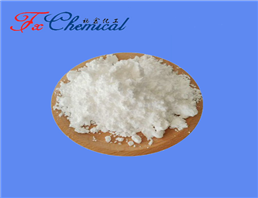
Appearance | White or off-white solid powder | white solid powder |
Water content(K.F) | 0.5%max | 0.33% |
Residue on ignition | 0.5%max | 0.14% |
Conclusion | The product conforms to the above specifications. | |
4-Pyridinealdoxime (also known as 4-Pyridylaldoxime, Isonicotinaldehyde oxime, or 4-PAO) is an organic compound with the molecular formula C₆H₆N₂O. It is one of the three isomeric pyridine aldoximes (the others being 2-pyridinealdoxime and 3-pyridinealdoxime).
Its structure consists of a pyridine ring (a six-membered aromatic ring with one nitrogen atom) with an aldoxime functional group (–CH=N–OH) attached at the 4-position (para to the nitrogen).
Primary Use: Antidote for Poisoning
The most significant and well-studied use of 4-pyridinealdoxime (and its derivatives) is as an acetylcholinesterase (AChE) reactivator in the treatment of organophosphate poisoning.
How It Works:
Poisoning Mechanism: Organophosphates (found in many pesticides like parathion and chemical nerve agents like sarin, VX, and soman) work by irreversibly phosphorylating the serine residue in the active site of the acetylcholinesterase enzyme. This enzyme is critical for breaking down the neurotransmitter acetylcholine (ACh).
Consequence: ACh accumulates, leading to overstimulation of muscarinic and nicotinic receptors. This causes a "cholinergic crisis" – symptoms include excessive salivation, tearing, convulsions, respiratory failure, and death.
Reactivation Mechanism: 4-Pyridinealdoxime acts as a nucleophile. Its oximate anion (R–CH=N–O⁻) attacks the phosphorus atom of the phosphorylated enzyme. This displaces the phosphate group and regenerates the active serine hydroxyl group, restoring the enzyme's function.
Key Derivatives (Used in Medicine):
While 4-pyridinealdoxime itself is a prototype, its quaternary ammonium salts are the actual therapeutic drugs because they have better solubility and ability to cross certain barriers. The most important derivatives are:
Pralidoxime (2-PAM, Protopam): Ironically, the most famous oxime antidote is the 2-isomer (2-pyridinealdoxime methochloride), not the 4-isomer. It's the standard oxime used worldwide.
Obidoxime (Toxogonin): A bis-pyridinium oxime dimer, which is more potent against certain nerve agents.
HI-6 and HLö-7: Asymmetric bis-pyridinium oximes developed for broader efficacy, especially against "aged" phosphorylated enzymes.
The 4-pyridinealdoxime structure is a core pharmacophore in the design of these drugs. Research continues into new oximes based on the 4-pyridine structure (like MMB-4) to find more effective, broad-spectrum reactivators.
Other Uses and Research Applications
Metal Chelation and Coordination Chemistry:
The oxime group (–N–OH) is an excellent ligand for metal ions. 4-Pyridinealdoxime can form complexes with metals like copper, nickel, cobalt, and zinc.
These complexes are studied for their interesting magnetic, optical, and structural properties, and have potential applications in catalysis and materials science.
Supramolecular Chemistry and Crystal Engineering:
The molecule can act as a hydrogen bond donor (via the OH) and acceptor (via the oxime N and pyridine N), facilitating the formation of predictable networks and frameworks in the solid state.
Organic Synthesis Intermediate:
It can be used as a building block for synthesizing more complex heterocyclic compounds, such as various fused pyridine systems.
Polymer Science:
It can be incorporated into polymers as a functional monomer, potentially creating materials with metal-chelating or self-healing properties.
Analytical Chemistry:
Oximes can be used as reagents for the spectrophotometric detection and determination of certain metal ions.
Summary
| Aspect | Description |
|---|---|
| Core Identity | An organic compound: the oxime derivative of isonicotinaldehyde. |
| Primary & Most Important Use | Pharmacological precursor/core structure for acetylcholinesterase reactivators (antidotes) used to treat poisoning by organophosphate pesticides and nerve agents. |
| Mechanism | Nucleophilic attack on phosphorylated AChE to restore its function. |
| Key Derivatives | Obidoxime, HI-6, HLö-7, and other experimental oxime antidotes. |
| Other Uses | Metal chelation, materials science, organic synthesis, and polymer chemistry. |
In essence, 4-pyridinealdoxime is a molecule of immense life-saving importance. Its value lies primarily in its role as the foundational chemical structure for a critical class of medical countermeasures against some of the most toxic substances known.


Company Profile Introduction
You may like
Recommended supplier
| Product name | Price | Suppliers | Update time | |
|---|---|---|---|---|
| $70.00/1kg |
Wuhan Quanjinci New Material Co.,Ltd.
|
2023-11-03 | ||
| $485.00/1KG |
VIP5Y
|
Baoji Guokang Healthchem Co., Ltd.
|
2021-06-09 | |
| $0.00/1KG |
VIP6Y
|
Shaanxi Dideu Medichem Co. Ltd
|
2025-09-17 | |
| $412.70/1Kg/Bag |
Baoji Guokang Healthchem co.,ltd
|
2021-06-07 | ||
| $1.00/1KG |
VIP8Y
|
Career Henan Chemical Co
|
2018-08-13 |

 China
China- Since: 2006-04-03
- Address: Room 2015, No.2 Building Kaixin Mansion, No.107 Jinqiao Ave, Wuhan, China
+8613986145403
info@fortunachem.com