


Anthranilamide: a versatile molecule
Aug 23,2026
What is Anthranilamide
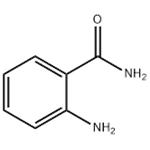
Anthranilamide (IUPAC system standard name: 2-Aminobenzamide) is an aromatic amide compound with a chemical formula of C₇H₈N₂O and a CAS number of 88-68-6. Its structural feature is that an amino group (-NH₂) and a carboxamide group (-CONH₂) are connected at the adjacent positions of the benzene ring. It is light brown to gray brown crystalline powder at room temperature, with a melting point of 111-114°C. It is slightly soluble in water, but easily soluble in ethanol.

Synthesis method
There are two main classic routes for the preparation of Anthranilamide:
Route 1: Hofmann rearrangement method - using phthalimide as raw material, reacting with sodium hypochlorite (or sodium hypobromite) under alkaline conditions, and obtaining Anthranilamide through Hofmann rearrangement. The product of this method has higher purity.
Route 2: Catalytic hydrogenation reduction method - produced from o-nitrobenzamide through catalytic hydrogenation reduction. Palladium/carbon (Pd/C) is commonly used as a catalyst and is suitable for large-scale production.
In addition, there is a ring-opening reaction route using isatoic anhydride as raw material. In medicinal chemistry research, Anthranilamide derivatives are often synthesized via a two-step method via benzoxazinone intermediates [2].
Wide range of applications
Medicinal chemistry
Anthranilamide is a "star molecule" in the field of medicinal chemistry. Anti-angiogenic drugs AAL993 (VEGFR inhibitor) and CI-1040 (the first MEK1/2 inhibitor to enter clinical practice) both contain the Anthranilamide structural unit [2]. Studies have shown that the intramolecular hydrogen bonds in the Anthranilamide structure can simulate the pharmacodynamic conformation of the phthalazine ring, thereby exerting anti-tumor activity [2].
Liu et al. [2] synthesized a series of novel Anthranilamide derivatives and evaluated their antiproliferative activity on HCT 116 (human colon cancer cells) and MDA-MB-231 (human breast cancer cells). Among them, compound 7c showed the most significant cytotoxicity, with IC₅₀ values of 14.60 and 13.86 μmol/L respectively [2]. Flow cytometry analysis showed that 7c inhibited cancer cell growth in a dose-dependent manner by inducing apoptosis [2].
In the field of anticoagulation, Xing et al. [1] discovered a series of Anthranilamide-like factor Xa inhibitors through fragment-based drug design (FBDD) strategy. Among them, compound 9b showed excellent activity, with an IC₅₀ value reaching 23 nM, and good selectivity for thrombin (IC₅₀ = 48 μM) [1]. In addition, this compound can significantly prolong the prothrombin time (2×PT = 8.7 μM), showing good in vitro anticoagulant activity [1].
In a metabolic study, Sutamihardja et al. [4] found that Anthranilamide could be detected in the urine of rats after injection of anthranilic acid, indicating that this compound is a new metabolite of anthranilic acid. Quantitative analysis shows that after injecting 100 mg of anthranilic acid, approximately 1.9% is excreted in the form of free Anthranilamide [4]. In addition, Anthranilamide also shows broad application prospects in the fields of Helicobacter pylori urease inhibition and P-glycoprotein/CYP3A4 dual inhibition.
Organic synthesis
Ihara et al. [3] discovered that Anthranilamide (AAM) can be used as a bifunctional modifier on arylboronic acids. On the one hand, it can keep the boronic acid group inert in the Suzuki-Miyaura coupling reaction (acting as a protecting group), and on the other hand, it can promote the ruthenium-catalyzed ortho-C-H silylation reaction (acting as a directing group) [3]. Using this strategy, the author successfully realized the tandem reaction of Suzuki coupling of bromophenylboronic acid and subsequent ortho-silylation, providing a new approach to the synthesis of complex multi-substituted arylboronic acids [3]. It is worth noting that AAM-modified boric acid shows good stability to both water and silica gel chromatography, which is better than the previously reported PZA system [3].
Materials Chemistry
Anthranilamide oligomers have intrinsic dipole moments and can serve as organic molecular electrets. Xia et al. [5] confirmed through dielectric constant measurement and NMR chemical shift analysis that the dipole direction points from the N-terminus to the C-terminus, and the dipole moment of each residue is approximately 3 Debye [5]. The study also found that even in the aggregated state, these dipoles still tend to align in the same direction, thereby enhancing the macroscopic polarization effect [5]. This property makes it potentially useful in energy conversion and electronic devices.
Things to note
Anthranilamide is a mild skin and eye irritant and may be harmful if swallowed. Protective gloves and masks should be worn during operation, and stored in a sealed, dry and cool place away from oxidants and strong acids.
Conclusion
From drug development to materials science, from organic synthesis to metabolic research, Anthranilamide demonstrates the ultimate versatility that a simple molecule can achieve. As Ihara et al. said, it is both an "ortho-directed modifier" and a "protecting group in cross-coupling reactions" [3].
References
[1] Xing J, Yang L, Li H, et al. Identification of anthranilamide derivatives as potential factor Xa inhibitors: Drug design, synthesis and biological evaluation. European Journal of Medicinal Chemistry, 2015, 95: 388-399. DOI: [10.1016/j.ejmech.2015.03.052](https://doi.org/10.1016/j.ejmech.2015.03.052)
[2] Liu J, Liang W, Wang Y, Zhao G. Synthesis and biological evaluation of novel anthranilamide derivatives as anticancer agents. Drug Discoveries & Therapeutics, 2013, 7(4): 144-152.
[3] Ihara H, Koyanagi M, Suginome M. Anthranilamide: A simple, removable ortho-directing modifier for arylboronic acids serving also as a protecting group in cross-coupling reactions. Organic Letters, 2011, 13(10): 2662-2665. DOI: [10.1021/ol200768e](https://doi.org/10.1021/ol200768e)
[4] Sutamihardja TM, Ishikura A, Naito J, Ishiguro I. Studies on the new metabolic pathway of anthranilic acid in the rat. I. Isolation and urinary excretion of anthranilamide as a new metabolite of anthranilic acid. Chemical & Pharmaceutical Bulletin, 1972, 20(12): 2694-2700.
[5] Xia B, Bao D, Upadhyayula S, Jones G, Vullev VI. Anthranilamides as bioinspired molecular electrets: Experimental evidence for a permanent ground-state electric dipole moment. The Journal of Organic Chemistry, 2013, 78(5): 1994-2004. DOI: [10.1021/jo301942g](https://doi.org/10.1021/jo301942g)
- Related articles
- Related Qustion

Aluminium nitrate nonahydrate exhibits good solubility in water, ethanol, acetone, and nitric acid, and its aqueous solution displays an acidic character.....
Aug 23,2026API
Anthranilamide
88-68-6You may like
- Research Progress on 1?Bromo?2,3?epoxypropane
Aug 21, 2026
- Research on Phthalonitrile-Based Resins
Aug 20, 2026
- (+)-Dipentene Solvent and Thiol-Ene Kinetics
Aug 15, 2026
- Anthranilamide
-

- 2026-08-23
- CAS:88-68-6
- Purity: 0.99
- Anthranilamide
-
- $10.00
- 2026-08-20
- CAS:88-68-6
- Min. Order: 1KG
- Purity: 99%
- Anthranilamide
-

- $9.00
- 2026-05-28
- CAS:88-68-6
- Min. Order: 1KG
- Purity: 99.8%
- Supply Ability: 100tons