


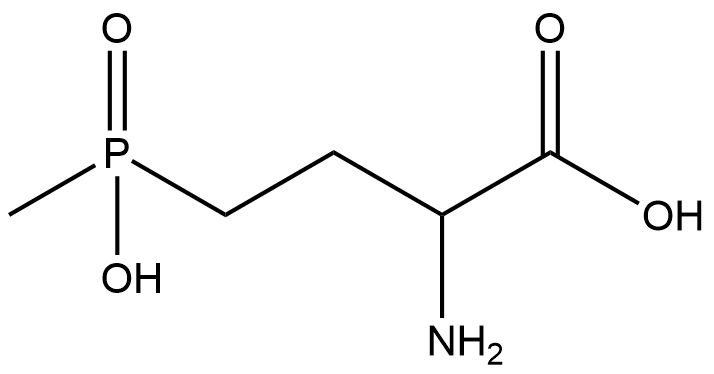
Glufosinate-P synthesis
- Product Name:Glufosinate-P
- CAS Number:35597-44-5
- Molecular formula:C5H12NO4P
- Molecular Weight:181.13

73777-49-8
3 suppliers
inquiry
35597-44-5
18 suppliers
inquiry
Yield:35597-44-5 93%
Reaction Conditions:
with ammonia in methanol;water at -5 - 60; for 3.66667 h;Solvent;Temperature;Reagent/catalyst;
Steps:
1-6 Example 2
First, the glufosinate hydrochloride (1 mol) was added to 100 ml of water and 300 ml of methanol, and thetemperature was raised to 60 ° C to dissolve it, and the temperature was lowered to 30 ° C, and 18.7 g ofammonia gas was introduced; then, the mixture was stirred at room temperature for 20 minutes. The temperaturewas lowered to -5 ° C, stirred for 3 hours, and the precipitated crystals were filtered, washed with methanol anddried to obtain 185.1 g of purified glufosinate monohydrate crystals, yield 93%, purity 97.9%.
References:
CN109369713,2019,A Location in patent:Paragraph 0037-0048

128574-46-9
0 suppliers
inquiry
35597-44-5
18 suppliers
inquiry
51276-47-2
48 suppliers
inquiry
35597-44-5
18 suppliers
inquiry

79778-02-2
17 suppliers
inquiry
35597-44-5
18 suppliers
inquiry