


Acetylacetone

- CAS No.
- 123-54-6
- Chemical Name:
- Acetylacetone
- Synonyms
- ACAC;2,4-PENTANEDIONE;acetyl;Pentanedione;ACETYLPROPIONYL;2,4-PENTADIONE;FEMA 2841;pentan-2,4-dione;Acetoacetone;Pentanedione-2,4
- CBNumber:
- CB2179401
- Molecular Formula:
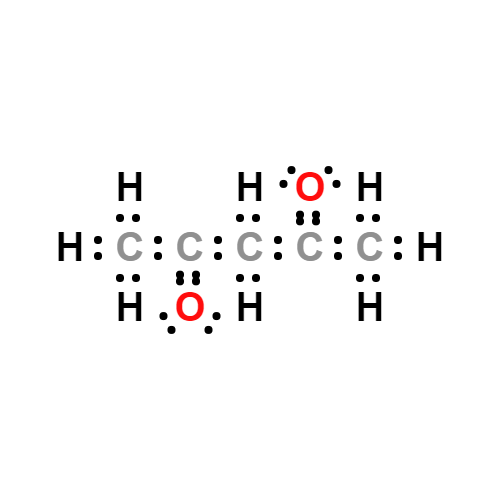
- C5H8O2
Lewis structure
- Molecular Weight:
- 100.12
- MDL Number:
- MFCD00008787
- MOL File:
- 123-54-6.mol
- MSDS File:
- SDS
- TDS File:
- TDS
| Melting point | -23 °C (lit.) |
|---|---|
| Boiling point | 140.4 °C (lit.) |
| Density | 0.975 g/mL at 25 °C (lit.) |
| vapor density | 3.5 (vs air) |
| vapor pressure | 6 mm Hg ( 20 °C) |
| refractive index |
n |
| Flash point | 66 °F |
| storage temp. | Store below +30°C. |
| solubility | H2O: soluble1 in 8 parts |
| pka | 8.9(at 25℃) |
| form | Liquid |
| color | very deep green-yellow |
| Relative polarity | 0.571 |
| PH | 6 (200g/l, H2O, 20℃) |
| Odor | pleasant odor |
| Evaporation Rate | 0.75 |
| Relative density, gas (air=1) | 3.5 |
| explosive limit | 2.4-11.4%(V) |
| Water Solubility | 16 g/100 mL (20 ºC) |
| Thermal Conductivity | 0.15 W/(m·K) at 25 ℃ |
| Merck | 14,81 |
| BRN | 741937 |
| Henry's Law Constant | 8.5×10⁻¹ mol/(m3Pa) at 25℃, Brockbank (2013) |
| Exposure limits | ACGIH TLV-TWA:25 ppm (102 mg/m3) |
| Dielectric constant | 23.1(20℃) |
| Major Application |
cleaning products cosmetics environmental flavors and fragrances food and beverages personal care |
| Cosmetics Ingredients Functions | ADHESIVE |
| InChI | 1S/C5H8O2/c1-4(6)3-5(2)7/h3H2,1-2H3 |
| InChIKey | YRKCREAYFQTBPV-UHFFFAOYSA-N |
| SMILES | CC(=O)CC(C)=O |
| LogP | 0.68 at 20℃ |
| CAS DataBase Reference | 123-54-6(CAS DataBase Reference) |
| FDA 21 CFR | 175.105 |
| Indirect Additives used in Food Contact Substances | 2,4-PENTANEDIONE |
| EWG's Food Scores | 2 |
| FDA UNII | 46R950BP4J |
| NIST Chemistry Reference | Acetylacetone(123-54-6) |
| EPA Substance Registry System | Acetylacetone (123-54-6) |
| UNSPSC Code | 41116107 |
| NACRES | NA.24 |
SAFETY
Risk and Safety Statements
| Symbol(GHS) |    GHS02,GHS06,GHS08 |
|||||||||
|---|---|---|---|---|---|---|---|---|---|---|
| Signal word | Danger | |||||||||
| Hazard statements | H311+H331-H302-H370-H335-H412-H226 | |||||||||
| Precautionary statements | P501-P273-P260-P270-P240-P210-P233-P243-P241-P242-P271-P264-P280-P370+P378-P308+P311-P361+P364-P303+P361+P353-P301+P312+P330-P304+P340+P311-P403+P233-P403+P235-P405 | |||||||||
| PPE | Eyeshields, Faceshields, Gloves, type ABEK (EN14387) respirator filter | |||||||||
| Hazard Codes | Xn,Xi | |||||||||
| Risk Statements | 11-36/37/38-22-10-R22-R10-20/21/22-2017/10/22 | |||||||||
| Safety Statements | 21-23-24/25-36-26-S24/25-S23-S21 | |||||||||
| RIDADR | UN 2310 (PENTANE-2,4-DIONE) | |||||||||
| WGK Germany | 1 | |||||||||
| RTECS | SA1925000 | |||||||||
| F | 9-23 | |||||||||
| Autoignition Temperature | 662 °F | |||||||||
| TSCA | TSCA listed | |||||||||
| HS Code | 2914 19 90 | |||||||||
| HazardClass | 3 | |||||||||
| PackingGroup | III | |||||||||
| Storage Class | 3 - Flammable liquids | |||||||||
| Hazard Classifications | Acute Tox. 3 Dermal Acute Tox. 3 Inhalation Acute Tox. 4 Oral Flam. Liq. 3 |
|||||||||
| Hazardous Substances Data | 123-54-6(Hazardous Substances Data) | |||||||||
| Toxicity | LC50 (4 hrs) in rats: 1000 ppm (Carpenter) | |||||||||
| REACH Registrations | Active | |||||||||
| Limited Quantities | 5.0 L (1.3 gallons) (liquid) | |||||||||
| Excepted Quantities | Max Inner Pack (30g or 30ml) and Max Outer Pack (1Kg or 1L) | |||||||||
| NFPA 704 |
|
Acetylacetone price More Price(65)
| Manufacturer | Product number | Product description | CAS number | Packaging | Price | Updated | Buy |
|---|---|---|---|---|---|---|---|
| Sigma-Aldrich | P7754 | Acetylacetone ReagentPlus?, ≥99% | 123-54-6 | 100mL | $58.1 | 2026-04-30 | Buy |
| Sigma-Aldrich | P7754 | Acetylacetone ReagentPlus?, ≥99% | 123-54-6 | 500mL | $96.4 | 2026-04-30 | Buy |
| Sigma-Aldrich | 8.00023 | Acetylacetone for synthesis | 123-54-6 | 5ml | $24.8 | 2026-04-30 | Buy |
| Sigma-Aldrich | P7754 | Acetylacetone ReagentPlus?, ≥99% | 123-54-6 | 1L | $125 | 2026-04-30 | Buy |
| Sigma-Aldrich | 8.00023 | Acetylacetone for synthesis | 123-54-6 | 250ML | $48.9 | 2026-04-30 | Buy |
Acetylacetone Chemical Properties, Uses, Production
Acetone derivatives
Acetylacetone is a derivative of acetone with the chemical formula CH₃COCH₂COCH₃. It is a colorless to pale yellow, transparent liquid that typically exists as a mixture of keto and enol tautomers in dynamic equilibrium. The enol isomer is stabilized by intramolecular hydrogen bonding. In the equilibrium mixture at room temperature, the keto form accounts for approximately 18%, while the enol form dominates at 82%. Cooling a petroleum ether solution of this mixture to -78 °C precipitates the enol form as a solid, allowing the two tautomers to be separated. However, once the isolated enol form warms back to room temperature, the original dynamic equilibrium is restored.
Acetylacetone has a pleasant odor. It is flammable and has a relative molecular mass of 100.13. Its relative density is 0.9721 at 25 °C. Its melting point is −23.5 °C, and its boiling point is 140.5 °C or 139 °C at 99.458 × 10³ Pa. Its flash point is 41 °C, and its refractive index is 1.4494. Its vapor pressure is 0.800 × 10³ Pa at 20 °C. Its water solubility is 16.9 g/100 mL at 20 °C and 34 g/100 mL at 80 °C. It is soluble in water, ethanol, benzene, chloroform, ether, acetone, ethyl acetate, and acetic acid.
Acetylacetone can undergo hydrolysis to form acetic acid and acetone. Its molecular structure is that of a β-diketone containing two carbonyl groups separated by a methylene group. Acetylacetone is one of the simplest β-diketones and is a derivative of acetone. It is chemically reactive and reacts with aqueous ferric chloride to produce a dark red color.
Acetylacetone reacts with hydroxides, carbonates, and acetates of many metals to form metal acetylacetonate complexes. These compounds are generally stable, and many are soluble in organic solvents. Acetylacetone can also react with chlorine in the presence of light, resulting in chlorination of the methyl groups. When reacted with sodium, acetylacetone releases hydrogen and forms sodium acetylacetonate.
Acetylacetone has a narcotic effect and can irritate the skin and mucous membranes. At high concentrations (100 × 10⁻⁶ or higher), exposure may cause symptoms such as nausea, headache, and dizziness. The oral LD₅₀ in rats is reported to be 970 mg/kg.
Intermediates of organic synthesis
Acetylacetone is an important intermediate for organic synthesis which is widely used in pharmaceutical, perfume, pesticides and other industries.
Acetylacetone is an important raw material in the pharmaceutical industry, such as for the synthesis of 4,6-dimethyl-pyrimidine derivatives. It can also be used as the solvents for cellulose acetate, the drying agent for paints and varnishes, etc., and are also important analytical reagents.
Due to the presence of enol, acetylacetone can form chelate with a variety of metals such as cobalt (II), Co (III), beryllium, aluminum, and chromium, iron (II), copper, nickel, palladium, zinc, indium, tin, zirconium, magnesium, manganese, scandium and thorium; it can also be used as fuel additives and lubricant additives.
Taking advantage of its chelation reaction with many kinds of metals, it can be used as a kind of metal cleaning agent for micropore; It can also used as a catalyst, a resin cross-linking agent, the resin curing accelerator; resins, rubber additives; for the hydroxylation reaction, hydrogenation reaction, isomerized reaction, and the synthesis of low molecular weight unsaturated ketone as well as polymerization and copolymerization of low-carbon olefins; it can also be used as an organic solvent for dissolving cellulose acetate, ink, and paint; it can also used as paint drying agent; it can also be used as the raw materials for preparation of insecticide, fungicide materials, and animals laxatives as well as feed additives; it can also be used as infrared reflective glass, a transparent conductive film (indium salt), a superconducting thin film (indium salt) forming agent; acetylacetone metal complexes has special colors (green copper salts, iron red, purple chromium salt) and is insoluble in water; it can also be used as pharmaceutical raw materials and raw materials for organic synthesis.
The above information is edited by the chemicalbook of Dai Xiongfeng.
Chemical Properties
This product is colorless or slightly yellow transparent liquid with an unpleasant odor, m.p.-23 °C, bp140.4 °C, n20D:1.4520, the relative density is 0.975, miscible with alcohol, ether, chloroform, acetone, acetic acid and some other organic solvents; it is also soluble in water; this product is flammable and corrosive.
Uses
Pentanedione, also known as Acetylacetone, is the intermediates of fungicides such as methyl mepanipyrim, mepanipyrim and herbicide pyrazosulfuron-methyl. It can be used as a analysis reagent and the aluminum extraction agent from tungsten, molybdenum. Acetylacetone is a kind of intermediate of organic synthesis which produces amino-4,6-dimethyl-pyrimidine with guanidine; it is an important pharmaceutical raw materials. It can be used as the solvent for cellulose acetate, as gasoline and lubricant additives, as desiccants of paints and varnishes, and as fungicides as well as insecticides. Acetylacetone can also serve as a catalyst for cracking petroleum, hydrogenation and hydroformylation reactions as well as being the oxidation promoting agent of oxygen. It can be used to remove the metal oxides in porous solid and used for processing polypropylene. In the United States and Europe, it is used for the antidiarrheal medicine and livestock feed additives in more than 50% of cases.
Toxicity
Moderate toxicity, can stimulate skin and mucous membrane. If the human body stays at 150 ~ 300mg/kg for a long time, it will have symptoms such as headache, nausea, vomiting, vertigo and sensory retardation.
Category
Flammable liquids
Toxicity grading
Poisoning
Stimulus data
Skin-rabbit 488 mg with mild effect; Eyes-rabbit 20 mg with mild effect;
Flammability and hazard characteristics
Easily flammable in case of fire, heat, and oxidants with burning producing irritating smoke irritation
Storage Characteristics
Treasury: ventilation, low-temperature and dry; store separately from oxidants
Description
Acetylacetone (2,4-pentanedione) is a clear or slightly yellowish liquid with a putrid odor. It is readily soluble in water and organic solvents, but is incompatible with light, ignition sources, excess heat, oxidizing agents, strong reducing agents, and strong bases. Upon decomposition, acetylacetone releases hazardous products such as carbon monoxide, carbon dioxide, and irritating, toxic fumes. Acetylacetone is used in the production of anticorrosion agents and its peroxide compounds, which serve as radical initiators for polymerization applications. It is also utilized as a chemical intermediate for pharmaceuticals (such as sulfamethazine, nicarbazine, vitamin B6, and vitamin K) and sulfonylurea herbicides. Furthermore, it serves as an indicator for the complexometric titration of Fe(III), for the modification of guanidino and amino groups in proteins, and in the preparation of metal acetylacetonates for catalytic applications.
Chemical Properties
Acetylacetone is a β-diketone derived from pentane in which the hydrogens at positions 2 and 4 are replaced by oxo groups. It is the conjugate acid of acetylacetonate.
Acetylacetone is a colorless to yellowish liquid with a sour, rancid odor. Its odor threshold is 0.01 ppm. It has an ethereal, minty odor with somewhat metallic or chemical notes. At high dilution in an aqueous medium, it has a sweet flavor remotely reminiscent of peppermint.
Acetylacetone is not very stable and readily exists as an equilibrium mixture of its keto and enol forms. It can be produced from acetone and ethyl acetate or from acetone and acetic anhydride in the presence of boron trifluoride.
Materials Uses
Acetylacetone was used in preparing Y203, La203 and La2CuO4 thin films and the titanate/anatase dual-phase photocatalyst.
Uses
Acetyl acetone is used as a reagent fororganic synthesis and as a transition metalchelating agent. Its organometallic complexes are used as additives for gasoline andlubricants, and in varnishes, color, ink, andfungicides.
Application
Acetylacetone, also known as 2,4-pentanedione, is an important commodity chemical and widely used as a fuel additive, as dyeing intermediate, in the fields of metal extraction, metal plating, and resin modification. Hantzsch reaction was used as a derivatizing agent for the assay of compounds having a primary amino group. The reagent was reacted with the primary amino group of the drugs to form a product having color and/or emit fluorescence. This condensation reaction was distinguished by its precision, reproducibility, and analytical cost reduction. FLX contains an aliphatic amino group, in the presence of formaldehyde solution, this amino group can condense with two equivalents of acetylacetone to form dihydropyridine derivative that emits yellow fluorescent product. (Figure1). Under optimized conditions of the reaction, FLX gave highly fluorescent product measured at λem 479 nm using 419 nm as excitation.
Production Methods
2,4-Pentanedione is produced by thermal or metal-catalyzed rearrangement of isopropenyl acetate(obtained from acetone and ketene):
Isopropenyl acetate vapor is fed at atmospheric pressure through a V2A steel tube with an inner temperature of 520℃. The hot reaction gases are quenched, condensed, and cooled to 20℃, whereby the gaseous byproducts carbon monoxide, carbon dioxide, methane, and ketene are separated. The product is purified by fractional distillation. Other industrially less important processes for the production of 2,4-pentanedione, include the Claisen ester condensation of ethyl acetate with acetone using sodium ethoxide as condensation agent and the acetylation of acetoacetic acid esters with acetic anhydride in the presence of magnesium salts.
Definition
ChEBI: A beta-diketone that is pentane in which the hydrogens at positions 2 and 4 are replaced by oxo groups.
Synthesis Reference(s)
Journal of the American Chemical Society, 102, p. 2095, 1980 DOI: 10.1021/ja00526a059
Organic Syntheses, Coll. Vol. 3, p. 17, 1955
General Description
A colorless or yellow colored liquid. Less dense than water. Flash point 105°F. Vapors are heavier than air. Used as a solvent in paints and varnishes.
Air & Water Reactions
Flammable. Soluble in water.
Reactivity Profile
Ketones, such as 2,4-Pentanedione, are reactive with many acids and bases liberating heat and flammable gases (e.g., H2). The amount of heat may be sufficient to start a fire in the unreacted portion of the ketone. Ketones react with reducing agents such as hydrides, alkali metals, and nitrides to produce flammable gas (H2) and heat. Ketones are incompatible with isocyanates, aldehydes, cyanides, peroxides, and anhydrides. They react violently with aldehydes, HNO3, HNO3 + H2O2, and HClO4. May dissolve plastics [USCG, 1999].
Health Hazard
Exposure to the vapors of acetyl acetone cancause irritation of the eyes, mucous membrane, and skin. In rabbits 4.76 mg producedsevere eye irritation; the effect on skin wasmild. Other than these, the health hazardsfrom this compound have not been reported.However, based on its structure and the factthat it has two reactive carbonyl groups inthe molecule, this compound should exhibitlow to moderate toxicity at high concentrations, which should be greater than that ofthe C5-monoketones.
LD50 value, intraperitoneal (mice): 750mg/kg
LD50 value, oral (rats): 1000 mg/kg
There is no report on its carcinogenicity inanimals or humans.
Fire Hazard
Behavior in Fire: Vapor is heavier than air and may travel to a source of ignition and flash back.
Safety Profile
Poison by ingestion and intraperitoneal routes. Moderately toxic by inhalation. A skin and severe eye irritant. Experimental reproductive effects. Mutation data reported. Flammable liquid when exposed to heat or flame. Incompatible with oxidning materials. To fight fire, use alcohol foam, CO2, dry chemical.
Potential Exposure
Acetoacetic acid derivative. 2,4-Pentanedione is used in gasoline and lubricant additives, fungicides, insecticides, and colors manufacture; as a chemical intermediate and in the manufacture of metal chelates
storage
Acetylacetone should be stored away from heat, sparks, flame, and from sources of ignition. It should be stored in a tightly sealed container, in a cool, dry, well-ventilated area, away from incompatible substances.
Purification Methods
Small amounts of acetic acid are removed by shaking with small portions of 2M NaOH until the aqueous phase remains faintly alkaline. The sample, after washing with water, is dried with anhydrous Na2SO4, and distilled through a modified Vigreux column (p 11) Cartledge J Am Chem Soc 73 4416 1951]. An additional purification step is fractional crystallisation from the liquid. Alternatively, there is less loss of acetylacetone if it is dissolved in four volumes of *benzene and the solution is shaken three times with an equal volume of distilled water (to extract acetic acid): the *benzene is then removed by distillation at 43-53o and 20-30mm through a helices-packed column. It is then refluxed over P2O5 (10g/L) and fractionally distilled under reduced pressure. The distillate (sp conductivity 4 x 10⁻⁸ ohm-1cm-1) is suitable for polarography [Fujinaga & Lee Talanta 24 395 1977]. To recover used acetylacetone, metal ions are stripped from the solution at pH 1 (using 100mL 0.1M H2SO4/L of acetylacetone). The acetylacetone is then washed with (1:10) ammonia solution (100mL/L) and with distilled water (100mL/L, twice), then treated as above. It complexes with Al, Be, Ca, Cd, Ce , Cu, Fe2+, Fe3+ , Mn, Mg, Ni, Pb and Zn. [Beilstein 1 H 777, 1 I 401, 1 II 831, 1 III 3113, 1 IV 3662.]
Incompatibilities
Vapors may form explosive mixture with air. Incompatible with oxidizers (chlorates, nitrates, peroxides, permanganates, perchlorates, chlorine, bromine, fluorine, etc.); contact may cause fires or explosions. Keep away from alkaline materials, strong bases, strong acids, oxoacids, epoxides. reducing agents; halogens, aliphatic amines; alkanolamines, organic acids; isocyanates. Strong light may cause polymerization.
Toxics Screening Level
The Initial Threshold Screening Level (ITSL) for 2,4-pentanedione is 25 μg/m3 with annual averaging time.
Waste Disposal
Dissolve or mix the material with a combustible solvent and burn in a chemical incinerator equipped with an afterburner and scrubber. All federal, state, and local environmental regulations must be observed.
Precautions
Occupational workers should only use/handle acetyl acetone in a well-ventilated area, with spark-proof tools and explosion-proof equipment. Workers should not cut, weld, braze, solder, drill, grind, pressurize, or expose empty containers to heat, sparks, or flames.


Acetylacetone Preparation Products And Raw materials
Raw materials
1of3
Preparation Products
1of8
| Supplier | Tel | Country | ProdList | Advantage | |
|---|---|---|---|---|---|
| Shandong Jinyueyuan New Material Co. Ltd | 18615187817; 18615187817 | 2793152786@qq.com | China | 394 | 58 |
| Shanghai Aladdin Bio-Chem Technology Co.,LTD | 400-6206333 13167063860 | anhua.mao@aladdin-e.com | China | 29985 | 65 |
| Anhui Royal Chemical Co., Ltd. | +86-02586655873 +86-13962173137 | marketing@royal-chem.com | China | 137 | 60 |
| Yancheng Green Chemicals Co.,Ltd. | 25-86639215 18852541892 | marketing@royal-chem.com | China | 73 | 58 |
| Jinan Aoxiang Chemical Industry Co. , Ltd. | 18354135979 | 970731907@qq.com | China | 87 | 58 |
| Shandong Zhengxing New Material Co. LTD | 15805316389; 15805316389 | 195615660@qq.com | China | 627 | 58 |
| shandongyukanghuagongyouxiangongsi | 0531-0531-053187106227 15588839549 | chifenghansen11@163.com | China | 475 | 58 |
| Ji' nan century Tongda chemical co., ltd | 13075318675; 13075318675 | 2256668363@qq.com | China | 385 | 58 |
| Jinan Chuangshi Chemical Co., LTD | 0531-18854143038 18854143038 | 3686420496@qq.com | China | 765 | 58 |
| Tianjin Zhongxin Chemtech Co., Ltd. | 022-66880623 | sales@tjzxchem.com | China | 612 | 60 |
Related articles
- How to synthesize Acetylacetone?
- Acetylacetone is a commercial chemical with significant commercial value as a critical additive for aircraft fuel, metal extra....
- Jul 25,2024
- Introduction of Acetylacetone
- Acetylacetone is a beta-diketone that is pentane in which the hydrogens at positions 2 and 4 are replaced by oxo groups.
- Jan 19,2022
View Latest Price from Acetylacetone manufacturers
| Image | Update time | Product | Price | Min. Order | Purity | Supply Ability | Manufacturer | |
|---|---|---|---|---|---|---|---|---|
 |
2026-05-28 | Acetylacetone
123-54-6
|
$9.00 | 1KG | 99.8% | 100tons | Hebei Chuanghai Biotechnology Co,.LTD | |
 |
2026-03-20 | Acetyl Acetone
123-54-6
|
$1.00 | 1kg | 99% | 10 mt | Hebei Chuanghai Biotechnology Co., Ltd | |
 |
2025-12-24 | Acetylacetone
123-54-6
|
$996.00 | 1KG | 98% | 1T | Shaanxi Dideu Medichem Co. Ltd |
-
- Acetylacetone
123-54-6
- $9.00
- 99.8%
- Hebei Chuanghai Biotechnology Co,.LTD
-
- Acetyl Acetone
123-54-6
- $1.00
- 99%
- Hebei Chuanghai Biotechnology Co., Ltd
-
- Acetylacetone
123-54-6
- $996.00
- 98%
- Shaanxi Dideu Medichem Co. Ltd
