


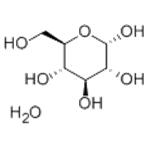
D-Glucose monohydrate

- CAS No.
- 5996-10-1
- Chemical Name:
- D-Glucose monohydrate
- Synonyms
- Dextrose monohydrate;Dextrose 1-hydrate;Corn sugar;C6H12O6.H2O;Glucose monohydrate CRS;DEXTROSE USP MONOHYDRATE;DEXTROSE 1HYD PWD;One water glucose;Dextrose, granular;Detrose Monohydrate
- CBNumber:
- CB3211706
- Molecular Formula:
- C6H14O7
- Molecular Weight:
- 198.17
- MDL Number:
- MFCD00150744
- MOL File:
- 5996-10-1.mol
- MSDS File:
- SDS
- TDS File:
- TDS
| Melting point | 83°C |
|---|---|
| Density | 1.54 |
| solubility | Freely soluble in water, sparingly soluble in ethanol (96 per cent). |
| form | Solid |
| color | Colorless crystals |
| Odor | Odorless |
| PH Range | 5.9 |
| Water Solubility | 1 g/1.1 ml water @ 250C |
| Cosmetic Ingredient Review (CIR) | D-Glucose monohydrate (5996-10-1) |
| InChI | InChI=1/C6H12O6.H2O/c7-1-2-3(8)4(9)5(10)6(11)12-2;/h2-11H,1H2;1H2/t2-,3-,4+,5-,6+;/s3 |
| InChIKey | OSNSWKAZFASRNG-YDLLFKKHNA-N |
| SMILES | [C@H]1(CO)O[C@@H]([C@H](O)[C@@H](O)[C@@H]1O)O.O |&1:0,4,5,7,9,r| |
| CAS DataBase Reference | 5996-10-1(CAS DataBase Reference) |
| FDA 21 CFR | 168.111; 184.1857 |
| EWG's Food Scores | 1 |
| FDA UNII | LX22YL083G |
| NCI Dictionary of Cancer Terms | glucose |
| ATC code | B05CX01,C05BB56,V04CA02,V06DC01 |
D-Glucose monohydrate price More Price(12)
| Manufacturer | Product number | Product description | CAS number | Packaging | Price | Updated | Buy |
|---|---|---|---|---|---|---|---|
| aablocks | AA01FZ31 | α-D-Glucose monohydrate 98% | 5996-10-1 | 250g | $29 | 2026-05-30 | Buy |
| aablocks | AA01FZ31 | α-D-Glucose monohydrate 98%;RG | 5996-10-1 | 500g | $34 | 2026-05-30 | Buy |
| aablocks | AA01FZ31 | α-D-Glucose monohydrate 98% | 5996-10-1 | 1kg | $43 | 2026-05-30 | Buy |
| aablocks | AA01FZ31 | α-D-Glucose monohydrate 98% | 5996-10-1 | 2.5kg | $72 | 2026-05-30 | Buy |
| aablocks | AA01FZ31 | α-D-Glucose monohydrate 98% | 5996-10-1 | 10kg | $173 | 2026-05-30 | Buy |
D-Glucose monohydrate Chemical Properties, Uses, Production
Description
D-(+)-Glucose monohydrate, commonly known as glucose or dextrose, has several microbiological applications. It is used as a carbon source in microbial culture media to promote the growth and propagation of various microorganisms. Glucose is a simple sugar and a primary energy source for bacterial cell metabolism. It is a common natural sugar involved in processes such as energy production, glycosylation, and formation of glycans that provide structure to cells. It is involved in a detrimental process in cells called glycation.
Chemical Properties
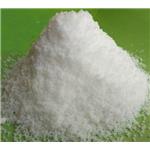
D-Glucose monohydrate is white or almost white, crystalline powder.
Chemical Properties
Dextrose occurs as odorless, sweet-tasting, colorless crystals or as a white crystalline or granular powder. The JP XV describes dextrose as dextrose anhydrous; the PhEur 6.3 specifies dextrose as either dextrose anhydrous or dextrose monohydrate; and the USP 32 specifies dextrose as dextrose monohydrate.
Uses
Replenisher (fluid and nutrient).
Production Methods
Dextrose, a monosaccharide sugar, occurs widely in plants and is manufactured on a large scale by the acid or enzymatic hydrolysis of starch, usually maize (corn) starch. Below 50°C a-D-dextrose monohydrate is the stable crystalline form produced; above 50°C the anhydrous form is obtained; and at still higher temperatures b-D-dextrose is formed, which has a melting point of 148–155°C.
Definition
A monosaccharide occurring widely in nature as D-glucose. It occurs as glucose units in sucrose, starch, and cellulose. It is important to metabolism because it participates in energy-storage and energy-release systems.
brand name
Cartose (Sterling Winthrop) Dextrose.
Agricultural Uses
Glucose is a monosaccharide sugar found in honey and fruits. It is the primary product of plant photosynthesis, which is optically active and dextrorotatory.
Glucose and its derivatives are critically important in the energy metabolism of living organisms. It is transported around the animal body through blood, and by lymph and cerebrospinal fluid, to cells where the energy is released during glycolysis.
Fructose, the stereoisomer of glucose, occurs in green plants, fruits and honey. It is sweeter than sucrose.
Yeasts readily ferment glucose to produce ethyl alcohol and carbon dioxide. It is also metabolized by bacteria into acetic and butyric acids, lactic acid, butyl alcohol, acetone, hydrogen, carbon dioxide and many other compounds.
Plants and animals convert complex carbohydrates (like starch and glycogen) into glucose to meet their energy needs. Glucose is produced commercially by hydrolysing corn starch with dilute mineral acid. Commercial glucose is mostly used in the manufacture of confections and in the canning industry.
Pharmaceutical Applications
Dextrose is widely used in solutions to adjust tonicity and as a sweetening agent.Dextrose is also used as a wet granulation diluent and binder, primarily in chewable tablets.Although dextrose is comparable as a tablet diluent to lactose, tablets produced with dextrose monohydrate require more lubrication, are less friable, and have a tendency to harden. The mildly reducing properties of dextrose may be used when tableting to improve the stability of active materials that are sensitive to oxidation.
Dextrose is also used therapeutically and is the preferred source of carbohydrate in parenteral nutrition regimens.
Safety
D-Glucose monohydrate is rapidly absorbed from the gastrointestinal tract. It is metabolized to carbondioxide and water with therelease ofenergy.
Concentrated D-Glucose monohydrate solutions given by mouth may cause nausea and vomiting. D-Glucose monohydrate solutions of concentration greater than 5% w/v are hyperosmotic and are liable to cause local vein irritation following intravenous administration. Thrombophlebitis has been observed following the intravenous infusion of isoosmotic D-Glucose monohydrate solution with low pH, probably owing to the presence of degradation products formed by overheating during sterilization. The incidence of phlebitis may be reduced by adding sufficient sodium bicarbonate to raise the pH of the infusion above pH 7.
LD50 (mouse, IV): 9g/kg
LD50 (rat, oral): 25.8g/kg
Physiological effects
Dextrose Monohydrate is the monohydrate form of D-glucose, it restore blood glucose levels, provide calories, may aid in minimizing liver glycogen depletion and exerts a protein-sparing action.Dextrose Monohydratealso plays a role in the production of proteins and in lipid metabolism.
storage
D-Glucose monohydrate has good stability under dry storage conditions. Aqueous solutions may be sterilized by autoclaving. However, excessive heating can cause a reduction in pH and caramelization of solutions.
Thebulkmaterialshouldbestoredinawell-closedcontainerina cool, dry place.
Incompatibilities
Dextrose solutions are incompatible with a number of drugs such as cyanocobalamin, kanamycin sulfate, novobiocin sodium, and warfarin sodium. Erythromycin gluceptate isunstable indextrose solutions at a pH less than 5.05. Decomposition of B-complex vitamins may occur if they are warmed with dextrose.
In the aldehyde form, dextrose can react with amines, amides, amino acids, peptides, and proteins. Brown coloration and decomposition occur with strong alkalis.
Dextrose may cause browning of tablets containing amines (Maillard reaction).
Regulatory Status
Included in the FDA Inactive Ingredients Database (capsules; inhalations; IM, IV, and SC injections; tablets, oral solutions, and syrups). Included in nonparenteral and parenteral medicines licensed in the UK. Included in the Canadian List of Acceptable Non-medicinal Ingredients.
D-Glucose monohydrate Preparation Products And Raw materials
| Supplier | Tel | Country | ProdList | Advantage | |
|---|---|---|---|---|---|
| Shandong Mantanghong New Materials Co., Ltd | 15508636828 | 3804604985@qq.com | China | 569 | 58 |
| JYS | 13545274181 | 3870253201@qq.com | China | 2214 | 58 |
| Shandong Xintu Chemical Co., Ltd | 13345114926; 13345114926 | 1305574003@qq.com | China | 40 | 58 |
| 15063339523 15063339523 | 2359472372@qq.com | China | 232 | 58 | |
| Tianjin Jinhui Taiya Chemical Reagent Co., Ltd | 022-59582624 18622766592 | 2163746375@qq.com | China | 271 | 58 |
| J & K SCIENTIFIC LTD. | 18210857532 18210857532 | jkinfo@jkchemical.com | China | 96815 | 76 |
| Beijing HwrkChemical Technology Co., Ltd | 89508211 18501085097 | sales.bj@hwrkchemical.com | China | 9407 | 55 |
| Beijing Ouhe Technology Co., Ltd | 13552068683 13522913783 | 2355560935@qq.com | China | 11777 | 60 |
| LGM Pharma | 1-(800)-881-8210 | inquiries@lgmpharma.com | United States | 2110 | 70 |
| Sinopharm Chemical Reagent Co,Ltd. | 86-21-63210123 | sj_scrc@sinopharm.com | China | 9791 | 79 |
Related articles
- What are the pathways for glucose synthesis?
- Glucose is a fundamental substance sustaining human life activities. Its synthesis pathways differ across organisms. In plants....
- Dec 17,2025
- D-Glucose Monohydrate: A Comprehensive Overview
- D-glucose monohydrate is a common natural sugar involved in processes such as energy production, glycosylation, and formation ....
- Oct 21,2024
View Latest Price from D-Glucose monohydrate manufacturers
| Image | Update time | Product | Price | Min. Order | Purity | Supply Ability | Manufacturer | |
|---|---|---|---|---|---|---|---|---|
 |
2026-09-15 | D-Glucose Monohydrate
5996-10-1
|
1KG | 99.7% | 1000kg | WUHAN FORTUNA CHEMICAL CO., LTD | ||
 |
2026-09-15 | D-Glucose monohydrate
5996-10-1
|
0.99 | RongNa Biotechnology Co.,Ltd | ||||
 |
2026-09-15 | D-Glucose monohydrate
5996-10-1
|
$70.00-100.00 | 1kg | 99% | 5000 | HEBEI SHENGSUAN CHEMICAL INDUSTRY CO.,LTD |
-
- D-Glucose Monohydrate
5996-10-1
- 99.7%
- WUHAN FORTUNA CHEMICAL CO., LTD
-
- D-Glucose monohydrate
5996-10-1
- 0.99
- RongNa Biotechnology Co.,Ltd
-
- D-Glucose monohydrate
5996-10-1
- $70.00-100.00
- 99%
- HEBEI SHENGSUAN CHEMICAL INDUSTRY CO.,LTD
