


Phosazetim
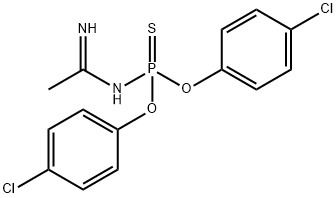
- CAS No.
- 4104-14-7
- Chemical Name:
- Phosazetim
- Synonyms
- B-38819;Gophacide;HOSAZETIN;BAY 38819;phosazetin;phosacetim;BAYER38819;Phosazetim;XIBXUAZIZXDFTG-UHFFFAOYSA-N;O,O-di-4-Chlorophenyl-N-acetimidoyl phosphoramidothioate
- CBNumber:
- CB4851633
- Molecular Formula:
- C14H13Cl2N2O2PS
- Molecular Weight:
- 375.21
- MDL Number:
- MOL File:
- 4104-14-7.mol
- MSDS File:
- SDS
- TDS File:
- TDS
| Melting point | 104-106 °C |
|---|---|
| Boiling point | 441.9±55.0 °C(Predicted) |
| Density | 1.43±0.1 g/cm3(Predicted) |
| solubility | Chloroform (Slightly), Methanol (Slightly) |
| form | Solid |
| pka | 2.67±0.50(Predicted) |
| color | Off-White |
| Henry's Law Constant | 2.1×10³ mol/(m3Pa) at 25℃, HSDB (2015) |
| EWG's Food Scores | 1-2 |
| FDA UNII | 7B08Z34L7O |
| EPA Substance Registry System | Phosacetim (4104-14-7) |
SAFETY
Risk and Safety Statements
| Symbol(GHS) |   GHS06,GHS09 |
|---|---|
| Signal word | Danger |
| Hazard statements | H300-H310-H410 |
| Precautionary statements | P264-P270-P301+P310-P321-P330-P405-P501-P262-P264-P270-P280-P302+P350-P310-P322-P361-P363-P405-P501-P273-P391-P501 |
| Hazard Codes | T+,N |
| Risk Statements | 27/28-50/53 |
| Safety Statements | 28-36/37-45-60-61 |
| RIDADR | 2783 |
| HazardClass | 6.1(a) |
| PackingGroup | I |
| Hazardous Substances Data | 4104-14-7(Hazardous Substances Data) |
| Toxicity | LD50 orl-rat: 3700 mg/kg FMCHA2 -,C117,83 |
Phosazetim price
| Manufacturer | Product number | Product description | CAS number | Packaging | Price | Updated | Buy |
|---|---|---|---|---|---|---|---|
| TRC | TRC-P353605-250MG | Phosacetim | 4104-14-7 | 250mg | $260 | 2026-06-03 | Buy |
| TRC | TRC-P353605-2.5G | Phosacetim | 4104-14-7 | 2.5g | $1967 | 2026-06-03 | Buy |
| TRC | P353605 | Phosacetim | 4104-14-7 | 2.5g | $1455 | 2021-12-16 | Buy |
| Medical Isotopes, Inc. | 48301 | Phosacetim | 4104-14-7 | 250mg | $650 | 2021-12-16 | Buy |
Phosazetim Chemical Properties, Uses, Production
Description
Phosacetim is a white crystalline powder in appearance. It is a toxic organophosphate compound used as a rodenticide and acts as an inhibitor of acetylcholinesterase enzyme. On heating, phosacetim undergoes decomposition to emit toxic fumes, primarily chlorides and oxides of nitrogen, sulphur, and phosphorus. Phosacetim is susceptible to formation of highly toxic and flammable phosphine gas in the presence of strong reducing agents such as hydrides. Partial oxidation by oxidising agents may result in the release of toxic phosphorus oxides.
Chemical Properties
Phosacetim is a crystalline solid
Uses
Phosacetim is a toxic organophosphate compound which acts as an acetylcholinesterase inhibitor and is used as a rodenticide.
Production Methods
Phosacetim is commercially synthesised by reacting O,O-bis(4-chlorophenyl)phosphorothioic acid chloride with acetimidamide derivatives. The production process begins with the preparation of O,O-bis(4-chlorophenyl)phosphorothioic acid chloride, which is then condensed with acetimidamide or its analogs under controlled conditions to form the active compound. This reaction typically occurs in an organic solvent such as chloroform or methanol, using a base to neutralise by-products and ensure high yield.
General Description
Solid.
Reactivity Profile
Organothiophosphates, such as Phosazetim, are susceptible to formation of highly toxic and flammable phosphine gas in the presence of strong reducing agents such as hydrides. Partial oxidation by oxidizing agents may result in the release of toxic phosphorus oxides.
Health Hazard
Highly toxic by mouth and skin exposure.
Fire Hazard
When heated to decomposition, emits toxic fumes, primarily chlorides and oxides of nitrogen, sulfur and phosphorus. Avoid extreme heat.
Mechanism of action
Stomach action. Acetylcholinesterase (AchE) inhibitor.
Safety Profile
Poison by ingestion, skin contact,and intraperitoneal routes. A pesticide. When heated todecomposition it emits very toxic fumes of SOx, POx, Cl-,and NOx.
Potential Exposure
Used as a rodenticide.
Shipping
UN2783 Organophosphorus pesticides, solid, toxic, Hazard Class: 6.1; Labels: 6.1-Poisonous materials.
Incompatibilities
Incompatible with oxidizers (chlorates, nitrates, peroxides, permanganates, perchlorates, chlorine, bromine, fluorine, etc.); contact may cause fires or explosions. Keep away from alkaline materials, strong bases, strong acids, oxoacids, epoxides, nitrates. May hydrolyze on contact with moisture
Waste Disposal
Consult with environmental regulatory agencies for guidance on acceptable disposal practices. Generators of waste containing this contaminant (≥100 kg/mo) must conform with EPA regulations governing storage, transportation, treatment, and waste disposal. In accordance with 40CFR165, follow recommendations for the disposal of pesticides and pesticide containers. Must be disposed properly by following package label directions or by contacting your local or federal environmental control agency, or by contacting your regional EPA office.
Pesticide Type
Rodenticide
Phosazetim Preparation Products And Raw materials
Raw materials
1of2
