- Allyl bromide
-
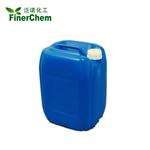
- $5.00
-
2026-10-13
- CAS:106-95-6
- Min. Order: 1KG
- Purity: 99%
- Supply Ability: 500mt/year
- Allyl bromide
-

- $100.00
-
2026-09-02
- CAS:106-95-6
- Min. Order: 1KG
- Purity: 99%
Related articles - Application of Allyl bromide
- Allyl bromide is used as an alkylating agent in the synthesis of pharmaceuticals, polymers, adhesives, perfumes, biochemicals ....
- Nov 6,2019
|
| | Allyl bromide Basic information |
| | Allyl bromide Chemical Properties |
| Melting point | -119 °C | | Boiling point | 70-71 °C(lit.) | | density | 1.398 g/mL at 25 °C(lit.) | | vapor density | 4.2 (vs air) | | vapor pressure | 18.66kPa at 25℃ | | refractive index | n20/D 1.469(lit.) | | Fp | 28 °F | | storage temp. | 2-8°C | | solubility | Chloroform (Soluble) | | form | Liquid | | color | Clear colorless to slightly colored | | Specific Gravity | 1.398 | | Odor | unpleasant | | explosive limit | 4.3-7.3%(V) | | Water Solubility | insoluble | | Sensitive | Light Sensitive | | Merck | 14,288 | | BRN | 605308 | | Henry's Law Constant | 1.7×10⁻³ mol/(m3Pa) at 25℃, Yaws (2003) | | Exposure limits | ACGIH: TWA 0.1 ppm; STEL 0.2 ppm (Skin) | | Dielectric constant | 7.0 | | Stability: | Stable. Flammable. Incompatible with strong oxidizing agents. | | InChI | 1S/C3H5Br/c1-2-3-4/h2H,1,3H2 | | InChIKey | BHELZAPQIKSEDF-UHFFFAOYSA-N | | SMILES | BrCC=C | | LogP | 1.79 | | CAS DataBase Reference | 106-95-6(CAS DataBase Reference) | | NIST Chemistry Reference | 1-Propene, 3-bromo-(106-95-6) | | EPA Substance Registry System | 3-Bromopropene (106-95-6) |
| Hazard Codes | F,T,N | | Risk Statements | 11-23/25-34-50-25-46-45 | | Safety Statements | 16-26-36/37/39-45-60-61-53 | | RIDADR | UN 1099 | | WGK Germany | 2 | | RTECS | UC7090000 | | F | 8-19 | | Autoignition Temperature | 554 °F | | TSCA | TSCA listed | | HazardClass | 3 | | PackingGroup | I | | HS Code | 29033036 | | Storage Class | 3 - Flammable liquids | | Hazard Classifications | Acute Tox. 3 Inhalation
Acute Tox. 3 Oral
Aquatic Acute 1
Carc. 1B
Eye Dam. 1
Flam. Liq. 2
Muta. 1B
Skin Corr. 1B | | Hazardous Substances Data | 106-95-6(Hazardous Substances Data) | | Toxicity | LD50 orally in Rabbit: 120 mg/kg |
| | Allyl bromide Usage And Synthesis |
| Chemical Properties | Allyl bromide is a flammable liquid with an intense, acrid, persistent smell. It is insoluble in water but in alcohol, aether, acetone, carbon tetrachloride, and chloroform. Allyl bromide is used to synthesize other allyl compounds, to synthesize dyestuff and spice, and as a curative in the medicine industry. Allyl bromide has a very high mobility in soil. It is also used as a soil fumigant and as a contact poison. Allyl bromide induces unscheduled DNA synthesis in HeLa cells. | | Uses | Allyl bromide is used as an alkylating agent in the synthesis of pharmaceuticals, polymers, adhesives, perfumes, biochemicals and other allylic compounds. It is used as precursor for the preparation of allyliczinc bromide by reacting it with zinc. It is also used in the preparation of allylethers like allyl decyl ether, allyl benzyl ether and allyl geranyl ether. It is also used in the preparation of R enantiomer of allyl phenyl carbinol (APC) such as 1-phenyl-3-butene, which is a valuable intermediate for drugs and agro-chemicals. | | Application | Allyl bromide can be used as a reagent to prepare:
Allyl ketones by Barbier-type allylation of various nitriles in the presence of Lewis acid.
Homoallylic alcohols by reacting with aldehydes or ketones using zinc dust as a catalyst.
1,5-hexadiene by reductive C-C bond coupling using silver hydride cluster. | | General Description | Allyl bromide appears as a clear colorless to light yellow liquid with an irritating unpleasant odor. Flash point 30 °F. Irritates eyes, skin, and respiratory system. Toxic by skin absorption. Denser than water and slightly soluble in water. | | Air & Water Reactions | Highly flammable. Slightly soluble in water. | | Reactivity Profile | Allyl bromide decomposes upon heating and exposure to light, forming HBr (a strong reducing agent). Reacts violently with oxidizing agents. Can react exothermically with reducing agents to release hydrogen gas. In the presence of various catalysts (such as acids) or initiators, may undergo exothermic addition polymerization reactions. | | Hazard | Strong irritant to skin and eyes, flammable,
high fire risk. Upper respiratory tract irritant. Ques-
tionable carcinogen. | | Health Hazard | Exposures to allyl bromide cause severe eye and skin burns, irritation to the eyes, skin,
and respiratory system. It is harmful when absorbed through the skin or inhaled in the
workplace. Laboratory rats exposed for a prolonged period of time developed symptoms
of poisoning, such as excessive salivation in a small number of animals, and severe gastric
irritation. Vapors of allyl bromide may cause dizziness or suffocation, headache, coughing,
and distressed breathing. | | Safety Profile | Poison by ingestion and intraperitoneal routes. Mdly toxic by inhalation. Human mutation data reported. See also ALLYL CHLORIDE and ALLYL COMPOUNDS. Dangerous fire and explosion hazard when exposed to heat, flame, or oxidizers. When heated to decomposition it emits toxic fumes of Br-. To fight fire, use alcohol foam, water spray or mist, CO2, dry chemical | | Synthesis | Allyl alcohol was synthesized from glycerol and formic acid under inert atmosphere, hydrolysed with NaOH and fractionally distilled to yield the 73% allyl alcohol water azeotrope. This was then reacted with 48% hydrobromic acid and sulfuric acid and the allyl bromide distilled as per the conventional method. It was then redistilled with 3A molecular sieves drying agent to yield the final product which is stored over additional 3A molecular sieves. | | storage | Allyl bromide should be stored separate from oxidizing materials and alkalis in a cool,
dry, well-ventilated location in tightly closed containers. | | Shipping | UN1099 Allyl bromide, Hazard Class: 3; Labels: 3-Flammable liquid, 6.1-Poisonous materials | | Purification Methods | Wash the bromide with NaHCO3 solution then distilled water, dry (CaCl2 or MgSO4), and fractionally distil. Protect it from strong light. | | Incompatibilities | Vapor may form explosive mixture with air. Incompatible with oxidizers (chlorates, nitrates, peroxides, permanganates, perchlorates, chlorine, bromine, fluorine, etc.); contact may cause fires or explosions. Keep away from alkaline materials, strong bases, strong acids, oxoacids, epoxides. Heat or light exposure may cause decomposition and corrosive vapors. | | Waste Disposal | In accordance with 40CFR 165 recommendations for the disposal of pesticides and pesticide containers. Must be disposed properly by following package label directions or by contacting your local or federal environmental control agency, or by contacting your regional EPA office. | | Precautions | Workers should wear positive pressure self-contained breathing apparatus (SCBA), goggles
and a face shield, protective clothing for high concentrations of vapor, chemical protective
clothing that is specifi cally recommended by the manufacturer to avoid poisoning.
Workers should be careful as allyl bromide reacts with oxidizing materials and alkalis. | | References | [1] BRINDABAN C. RANU Asish R D Adinath Majee. Facile and efficient synthesis of homoallylic alcohols using allyl bromide and commercial zinc dust[J]. Tetrahedron Letters, 1995, 36 27: Pages 4885-4888. DOI:10.1016/0040-4039(95)00877-F.
[2] GEORGE N. KHAIRALLAH DR. Richard A J O Prof. Gas-Phase Synthesis of [Ag4H]+ and Its Mediation of the CC Coupling of Allyl Bromide[J]. Angewandte Chemie International Edition, 2005, 44 5: 728-731. DOI:10.1002/anie.200461328.
[3] JAKUB WRCZYCKI. Anionic Copolymerization of Styrene Sulfide with Elemental Sulfur (S8).[C]//13 11. 2020. DOI:10.3390/ma13112597.
[4] KAZUHIKO TAKAI Yoshito I. Indium-Catalyzed Reduction of Allyl Bromide with Gallium or Aluminum. Formation of Allylgallium and Allylaluminum Sesquibromides[J]. Organic Letters, 2002, 4 10: 1727-1729. DOI:10.1021/ol025784v. |
| | Allyl bromide Preparation Products And Raw materials |
|