


Tegoprazan: Uses and Side Effects
Sep 21,2026
Tegoprazan, a second-generation potassium-competitive acid blocker, was first approved in South Korea in 2019 and has subsequently received regulatory approval in several countries across Asia and Latin America, including China and select Southeast Asian markets. Tegoprazan is indicated for erosive gastroesophageal reflux disease (GERD), non-erosive reflux disease (NERD), gastric ulcer, H. pylori eradication and the maintenance of healed GERD.

Uses
Across studies, Tegoprazan demonstrated rapid acid suppression, durable pH maintenance, and consistent symptom relief, together with a safety profile comparable to PPIs.
Tegoprazan, a potassium-competitive acid blocker (PCAB), differs mechanistically from proton-pump inhibitors (PPIs) through acid stability, direct H+/K+-ATPase inhibition, and CYP2C19-independent metabolism, leading to a faster and more predictable onset. These properties align well with the primary therapeutic objective in GERD management, achievement of rapid symptom relief, sustained mucosal healing, and restoration of quality of life. The characteristics of the pharmacological design explain the consistently observed faster rise in intragastric pH and earlier symptom response compared with PPIs. In erosive esophagitis, Tegoprazan achieved mucosal healing rates exceeding 90% and comparable to Esomeprazole or Lansoprazole.
Nocturnal acid breakthrough (NAB) remains a persistent limitation of conventional PPI therapy, leading to nighttime heartburn and poor sleep quality. Pharmacodynamic crossover studies demonstrated that Tegoprazan produced a faster and more sustained nocturnal pH elevation than Esomeprazole or Dexlansoprazole. Tegoprazan achieved pH ≥ 4 within 30–60 min and maintained that level for most of the 12-h observation period, showing clear dose-dependent improvement and CYP2C19 independence.
Side Effects
Across all trials, adverse events were mild and transient, most commonly dysgeusia, diarrhea, or abdominal discomfort, with no serious treatment-related events. Treatment discontinuations were rare (< 2%). There were no significant differences in the occurrence of major adverse events between the comparator groups. Collectively, these data show that Tegoprazan-based eradication regimens provide show favorable eradication outcomes, supporting its clinical use as an alternative to conventional PPI-based therapy.
Reference
[1] Bandyopadhyay, S., Goenka, M., Routh, D., Ramesh, G. N., & Lawate, P. (2026). Tegoprazan in Gastroesophageal Reflux Disease and Related Acid-Mediated Conditions: A Systematic Review and Meta-Analysis. JGH Open, 10 4, e70406. https://doi.org/10.1002/jgh3.70406
- Related articles
- Related Questions
- How to synthesize Tegoprazan? Dec 25,2023
Tegoprazan is a novel orally active P-CAB. Key challenges in the drug preparation are the construction of the tetrasubstituted aryl core and the efficient introduction of the enantiomerically pure chromanol side chain.
- What is Tegoprazan? Feb 24,2020
Tegoprazan was approved by the Ministry of Food and Drug Safety (MFDS) for marketing in July 2018 for the treatment of gastroesophageal reflux disease and erosive esophagitis. Tegoprazan was originally developed by Pfizer.

Cetilistat is an medication used to treat obesity by blocking the body from absorbing dietary fat. This article introduces its clinical trials and side effects.....
Sep 21,2026Drugs
Baicalin is a flavonoid glycoside and one of the major bioactive compounds found in the roots of Scutellaria baicalensis Georgi, also known as Chinese skullcap.....
Sep 21,2026API
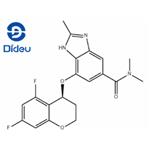
Tegoprazan
942195-55-3You may like
Tegoprazan manufacturers
- Tegoprazan
-

- 2026-10-13
- CAS:942195-55-3
- Min. Order: 1g
- Purity: More Than 99%
- Supply Ability: 100kg/Month
- Tegoprazan
-

- $2.00
- 2026-08-25
- CAS:942195-55-3
- Min. Order: 1kg
- Purity: 99%
- Supply Ability: 100kg
- Tegoprazan
-
- 2026-06-30
- CAS:942195-55-3
- Min. Order: 1kg
- Purity: 99%
- Supply Ability: 10000KGS