|
|
| | Diethylene glycol monomethyl ether Basic information |
| | Diethylene glycol monomethyl ether Chemical Properties |
| Melting point | −70 °C(lit.) | | Boiling point | 194 °C(lit.) | | density | 1.023 g/mL at 25 °C(lit.) | | vapor density | 4.14 (vs air) | | vapor pressure | 0.2 mm Hg ( 20 °C) | | refractive index | n20/D 1.426 | | Fp | 183 °F | | storage temp. | Store below +30°C. | | form | Liquid | | pka | 14.37±0.10(Predicted) | | color | Clear | | PH | 4-7 (200g/l, H2O, 20℃) | | Odor | Faint pleasant odor | | explosive limit | 1.38-22.7% | | Water Solubility | Miscible | | Thermal Conductivity | 0.19 W/(m·K) at 25 ℃ | | Specific Heat Capacity | Cp(liquid): 2.26 J/(g·K), at 25℃ | | Sensitive | Hygroscopic | | Merck | 14,6037 | | BRN | 1697812 | | Henry's Law Constant | 6.2×10⁵ mol/(m3Pa) at 25℃, HSDB (2015) | | Exposure limits | EU LTEL: 10 ppm(50.1 mg/m3) | | Stability: | Stable. Incompatible with strong oxidizing agents. Hygroscopic. Store under nitrogen. | | Cosmetics Ingredients Functions | SOLVENT
PERFUMING
FRAGRANCE
VISCOSITY CONTROLLING | | InChI | 1S/C5H12O3/c1-7-4-5-8-3-2-6/h6H,2-5H2,1H3 | | InChIKey | SBASXUCJHJRPEV-UHFFFAOYSA-N | | SMILES | COCCOCCO | | LogP | -0.47 at 20℃ | | CAS DataBase Reference | 111-77-3(CAS DataBase Reference) | | NIST Chemistry Reference | Ethanol, 2-(2-methoxyethoxy)-(111-77-3) | | EPA Substance Registry System | Diethylene glycol monomethyl ether (111-77-3) |
| Hazard Codes | Xn | | Risk Statements | 63 | | Safety Statements | 36/37 | | WGK Germany | 1 | | RTECS | KL6125000 | | Autoignition Temperature | 221 °C | | TSCA | TSCA listed | | HS Code | 29094200 | | Storage Class | 6.1C - Combustible acute toxic Cat.3
toxic compounds or compounds which causing chronic effects | | Hazard Classifications | Repr. 1B | | Hazardous Substances Data | 111-77-3(Hazardous Substances Data) | | Toxicity | LD50 orally in rats: 9.21 g/kg (Smyth) |
| | Diethylene glycol monomethyl ether Usage And Synthesis |
| Chemical Properties | Diethylene glycol monomethyl ether (DEGME) is a type of glycol ether and is a colorless, stable hygroscopic liquid with an agreeable odor. It is completely miscible with water, ketones, alcohol, ethers, aromatic hydrocarbons and halogenated hydrocarbons. More specifically, it is miscible with acetone, benzene, carbon tetrachloride, ethyl ether, methanol and water. Exposure to diEGBE is unlikely to occur via inhalation unless it is heated.
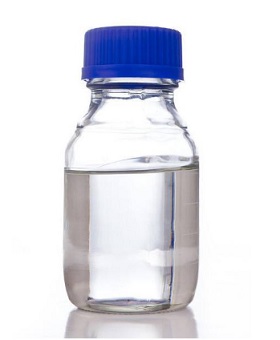
Diethylene glycol monomethyl ether is a solvent for dyes, oils, fats, waxes, many natural and synthetic resins, nitrocellulose and cellulose acetate. It is used as a high-boiling solvent in such formulations as printing inks ond pastes, stamp pad inks, textile dye pastes, lacquers, and synthetic resin coatings. Its presence in lacquers eases brushability and flow-out, and minimizes lifting of undercoats.
DEGME is an ethylene-series or E-series glycol ether and is sold by Dow under the tradename Methyl CARBITOL™ solvent. DEGME has a high dilution ratio and a low evaporation rate.It is stable under recommended storage conditions and readily biodegradable. | | Occurrence | Has apparently not been reported to occur in nature. | | Uses | Diethylene glycol monomethyl ether(DGME) is used as a thermally stable solvent for many substances, such as nitrocellulose, lacquers, varnishes, and dyes. | | Uses | Diethylene glycol monomethyl ether is an industrial solvent and is also commonly used as a Fuel System Icing Inhibitor (FSII) in jet fuels. | | Uses | Diethylene glycol monomethyl ether is used in textile dye pastes, in lacquer industrial for thinners and quick drying varnishes; solvent for wood stains, hydraulic brake fluid diluent, and as a coupling agent for miscible organic aqueous systems.
Diethylene glycol monoethyl ether is used as a solvent in lacquer, varnishes, and enamels. It is also used in cosmetic products and dermatological preparations and as a solvent in some medicine products. It enhances the percutaneous absorption through the skin and mucosal barriers. It is used in some drugs to enhance absorption.
Diethylene glycol monobutyl ether is used as a solvent in paints, dyes, inks detergents, and cleaners.
Used in the same way as 2-ethoxyethanol where a solvent with a higher boiling point is required. | | Definition | ChEBI: A hydroxypolyether that is the monomethyl ether derivative of diethylene glycol. | | Preparation | A by-product in the manufacture of ethylene glycol monomethyl ether (Arctander, 1969). | | General Description | Colorless liquid with a sweet odor. Floats and mixes with water. | | Air & Water Reactions | Oxidizes readily in air to form unstable peroxides that may explode spontaneously [Bretherick 1979 p.151-154, 164]. Water soluble. | | Reactivity Profile | 2-(2-Methoxyethoxy)ethanol is a ether-alcohol derivative. The ether being relatively unreactive. Flammable and/or toxic gases are generated by the combination of alcohols with alkali metals, nitrides, and strong reducing agents. They react with oxoacids and carboxylic acids to form esters plus water. Oxidizing agents convert alcohols to aldehydes or ketones. Alcohols exhibit both weak acid and weak base behavior. They may initiate the polymerization of isocyanates and epoxides. | | Health Hazard | DGME is a mild to moderate toxicant via ingestion or absorption through the skin. High doses produced lowering of hemoglobin levels and increased relative kidney weight. Renaldamagemay occurnear the lethal dose. Eye contact of the liquid can result in mild to moderate irritation
LD50 value, oral (guinea pigs): 4160 mg/kg
Preliminary developmental toxicity test in pregnant mice dosed with DGME indicated teratogenicity of this compound (Hardin et al. 1987; Cheever et al. 1988). Earlier, Doe (1984) reported no teratogenic property of DGME when administered subcutaneously in rats up to 100 mL/kg. In comparison, EGME produced effects at 40 mL/kg.. | | Fire Hazard | 2-(2-Methoxyethoxy)ethanol is combustible. | | Flammability and Explosibility | Non flammable | | Safety Profile | Moderately toxic by
skin contact and intraperitoneal routes.
Mildly toxic by ingestion. An experimental
teratogen. Other experimental reproductive
effects. An eye irritant. Combustible when
exposed to heat or flame; can react with
oxidzing materials. Reacts violently with
Ca(OCl)2, chlorosulfonic acid, and oleum.
To fight fire, use dry chemical, alcohol
foam, water spray or mist, CO2. When
heated to decomposition it emits acrid
smoke and irritating fumes. See also
GLYCOL ETHERS. | | Synthesis | Sodium hydride (60% dispersion, 21.0 g) and tetrahydrofuran (THF, 200 ml) were added to a reaction vessel equipped with a stirrer and thermometer under nitrogen protection. The mixture was stirred under cooling in an ice bath and additional THF (100 ml) was added. A THF solution of 2-methoxyethanol (20.0 g) was added slowly dropwise. After dropwise addition, stirring was continued for 1 hour. Subsequently, 2-chloroethanol (23.3 g) was added slowly dropwise under the cooling of an ice bath and gradually warmed up to room temperature and stirring was continued for 1 hour. After completion of the reaction, water (200 ml) was added to quench the reaction and the organic layer was separated. The aqueous layer was extracted four times with THF (100 ml) and all organic layers were combined. The organic layer was washed sequentially with 5% aqueous sodium hydroxide (400 ml) and saturated brine (400 ml), followed by drying with anhydrous sodium sulfate. The solvent was removed by concentration under reduced pressure and the residue was purified by distillation under reduced pressure to give diethylene glycol monomethyl ether (31.2 g). | | Purification Methods | Purify as for diethylene glycol mono-n-butyl ether. [Beilstein 1 IV 2392.] | | Toxics Screening Level | The initial threshold screening level (ITSL) for diethylene glycol monomethyl ether (DGME) is 190 μg/m3 based on a 24-hour averaging time. | | Waste Disposal | DGME is mixed with a combustible solvent and burned in a chemical incinerator. | | References | [1] Patent: US2018/230094, 2018, A1. Location in patent: Paragraph 0094; 0095 |
| | Diethylene glycol monomethyl ether Preparation Products And Raw materials |
| Raw materials | Ethanol-->Methanol-->1-Butanol-->ETHYLENE OXIDE-->2-Methoxyethanol-->2-Chloroethanol-->Mineral oil-->Tetrahydrofuran-->Sodium hydride-->TRIETHYLENE GLYCOL MONOMETHYL ETHER | | Preparation Products | Diglyme-->(4-PHENYL-PIPERAZIN-1-YL)-ACETIC ACID-->3-(4-PHENYL-PIPERAZIN-1-YL)-PROPIONIC ACID-->N-(3-Trifluoromethylphenyl)piperazine-->1-(3,5-DICHLOROPHENYL)PIPERAZINE-->1-(3-FLUOROPHENYL)PIPERAZINE-->1-(3,4-Dichlorophenyl)piperazine-->1-(4-Methoxyphenyl)piperazine-->1-(4-Methoxyphenyl)piperazine dihydrochloride-->1-[2-(MORPHOLIN-4-YL)-ETHYL]-PIPERAZINE-->1-(3-METHYLPHENYL)PIPERAZINE-->1-(3-Methoxyphenyl)piperazine-->1-(4-METHYLPHENYL)PIPERAZINE-->1-(4-Chlorophenyl)piperazine-->1-(2-Methylphenyl)piperazine-->Disperse Red 53-->bis[2-(2-methoxyethoxy)ethyl]amine-->3,6,9,12,15,18,21,24,27,30,33,36-dodecaoxaoctatriacontane-1,38-diol |
|