| Company Name: |
INTATRADE GmbH |
| Tel: |
+49 3493/605464 |
| Email: |
sales@intatrade.de |
- N-Acetyl-L-methionine
-
-
2026-10-29
- CAS:65-82-7
- Min. Order: 1KG
- Purity: 99%-100.5% AJI
- Supply Ability: 1000kg
|
| | N-Acetyl-L-methionine Chemical Properties |
| Melting point | 103-106 °C(lit.) | | alpha | -20 º (c=4 H2O) | | Boiling point | 235 °C(Press: 12 Torr) | | density | 1.2684 (rough estimate) | | refractive index | -21 ° (C=1, H2O) | | storage temp. | Sealed in dry,Room Temperature | | solubility | methanol: soluble100mg/mL, clear, colorless | | pka | 3.50±0.10(Predicted) | | form | Solid | | color | White to Off-White | | Optical Rotation | [α]20/D -21.0±1.0°, c = 1% in H2O | | Merck | 14,96 | | BRN | 1725552 | | Stability: | Stable. Incompatible with strong oxidizing agents. | | Major Application | peptide synthesis | | Cosmetics Ingredients Functions | SKIN CONDITIONING | | Cosmetic Ingredient Review (CIR) | N-Acetyl-L-methionine (65-82-7) | | InChI | 1S/C7H13NO3S/c1-5(9)8-6(7(10)11)3-4-12-2/h6H,3-4H2,1-2H3,(H,8,9)(H,10,11)/t6-/m0/s1 | | InChIKey | XUYPXLNMDZIRQH-LURJTMIESA-N | | SMILES | CSCC[C@H](NC(C)=O)C(O)=O | | LogP | -0.885 (est) | | CAS DataBase Reference | 65-82-7(CAS DataBase Reference) | | NIST Chemistry Reference | N-acetylmethionine(65-82-7) | | EPA Substance Registry System | L-Methionine, N-acetyl- (65-82-7) |
| Hazard Codes | Xi | | Risk Statements | 36/37/38 | | Safety Statements | 24/25-36-26 | | WGK Germany | 3 | | RTECS | PD0480000 | | TSCA | TSCA listed | | HazardClass | IRRITANT | | HS Code | 29309070 | | Storage Class | 11 - Combustible Solids |
| | N-Acetyl-L-methionine Usage And Synthesis |
| Identification Test | Take a sample of 250mg, get it dissolved it in 2.5ml isopropyl alcohol and get it diluted with water to 25ml. Take this liquid of 10ml and get it diluted with water to 100m1. Then take the liquid of 0.5,30 and 50μ1 after two dilutions. Drop it at the place with a distance of 2cm from the bottom edge of the thin-layer chromatographic plate. The plate is coated with silica gel (Namely, 20cm * 20cm Brinkman silica gel of 60.250nm, or the equivalent). In a sealed and balanced thin-layered chromatography expansion tank, The chromatography was splayed out by 10cm, and the developer was composed of n-butanol and the mixture of acetic acid and water in the proportion 75:20=20.
Dry the plate overnight. Then spray the chromatography plate with a new iodoplatinate solution mixed with 10 percent chloroplatinic acid of 3ml, water of 97ml and 6 percent potassium iodide solution of 100ml. The sample shall be formed - a separate color spot with a Rf value of 0.67~0.1
| | Content Analysis | Weigh accurately about 250mg sample and put it in a flask with glass stopper. Add 100ml water, 5g dipotassium hydrogen phosphate, 2g potassium dihydrogen phosphate and 2g potassium iodide. Get it fully mixed and dissolved, plus 0. 1mol/L iodine solution of 50.0m1. Then stopper it and blend it. Leave it stand for 30 minutes and titrate excess iodine with 0.1mol / L sodium thiosulfate. Meanwhile conduct blank titration experiment. Iodine solution per Ml 0.1mol/L equals to this product (C7H13NO3S) 9.563mg.
| | Toxicity Grade | Safe for food(FDA,§172.372,2000).
| | Acute Toxicity | Vein - mouse LD50: 435 mg / kg | | Use Quantity | Account for 3.1% of the total protein content in food (Calculated by free L- methionine).
It shall not be used for infant food and food containing adding nitrite / nitrate (FDA, 172.3722000).
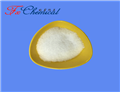
| | Chemical Properties | white crystals | | Uses | N-Acetyl-L-methionine (CAS# 65-82-7) has been useful in the study of metabolic phenotypes of standard and cold-stored platelets. | | Definition | ChEBI: An L-methionine derivative that is L-methionine in which one of the amine hydrogens is substituted by an acetyl group. | | reaction suitability | reaction type: solution phase peptide synthesis | | Safety Profile | Poison by intravenous route. When heated to decomposition emits toxic fumes of NOX,. | | Synthesis | Example 1: To a stainless steel reactor equipped with a thermocouple, a stirrer, a gas supply line and a liquid supply line, 5.40 g (0.016 mol) of octacarbonyldicobalt(0) [Co2(CO)8] and 39.86 g of 1,4-dioxane (38.7 wt% of the total 1,4-dioxane) were added and stirred. Subsequently, a mixture of carbon monoxide and hydrogen [CO/H2 = 2.3/1 (molar ratio)] was introduced into the reactor to bring the pressure in the reactor to 13 MPa (gauge pressure). The temperature of the reactor was increased to 68-72 °C while maintaining stirring, at which time the pressure in the reactor was maintained at 13 MPa (gauge pressure). Next, 31.57 g (0.30 mol) of 3-(methylthio)propionaldehyde [compound shown in formula (2), wherein R1 is 2-methylthioethyl], 18.08 g (0.30 mol) of acetamide [compound shown in formula (3), wherein R2 is a methyl group and R3 is a hydrogen atom], 63.14 g of 1 ,4-dioxane (as a proportion of the total amount of 1,4-dioxane 61.3 wt%) and 5.40 g of water in a mixed solution with a titration time of 1.5 hours. After the dropwise addition, the reaction was continued with stirring at 68-72 °C for 4 h. Subsequent cooling to 5-35 °C gave 158.3 g of 1,4-dioxane solution containing N-acetyl-L-methionine. The yield of N-acetyl-L-methionine in this solution was analyzed by liquid chromatography to be 85.5% relative to 3-(methylthio)propionaldehyde. | | Purification Methods | Crystallise N-acetyl-L-methionine from Me2CO, H2O or EtOAc. Dry it in a vacuum over P2O5. Its solubility at 25o in H2O is 30.7%, and in Me2CO it is 29.5%. [Mitzi & Schueter Biochim Biophys Acta 27 168 1958, Birnbaum et al. J Biol Chem 194 455 1952, Beilstein 4 IV 3206.] | | References | [1] Patent: US2013/116469, 2013, A1. Location in patent: Paragraph 0030 |
| | N-Acetyl-L-methionine Preparation Products And Raw materials |
|