- Triazol-3-amine
-

- $5.00
-
2026-08-21
- CAS:61-82-5
- Min. Order: 1KG
- Purity: 99%
- Supply Ability: 500mt/year
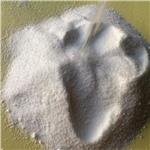
- Triazol-3-Amine
-
- $19.00
-
2026-05-28
- CAS:61-82-5
- Min. Order: 1KG
- Purity: 99.%
- Supply Ability: 50 ton
|
| | 3-Amino-1,2,4-Triazole Basic information |
| Product Name: | 3-Amino-1,2,4-Triazole | | Synonyms: | Amino-s-triazole;AMIZOLE;AMIZOL(R);AMITROLE(R);amino-1,2,4-triazole;AMIGOL(R);AKOS MSC-0735;5-Amino-1H-1,2,4-triazole | | CAS: | 61-82-5 | | MF: | C2H4N4 | | MW: | 84.08 | | EINECS: | 200-521-5 | | Product Categories: | ATA;3-Amino-1,2,4-Triazole;Organic chemical, pesticide;AM to AQ;A;Alphabetic;Agro-Products;Estradiol, etc. (Environmental Endocrine Disruptors);Analytical Chemistry;Environmental Endocrine Disruptors;Heterocycles;Organics | | Mol File: | 61-82-5.mol | 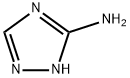 |
| | 3-Amino-1,2,4-Triazole Chemical Properties |
| Melting point | 150-153 °C(lit.) | | Boiling point | 144.35°C (rough estimate) | | density | 1.138 | | bulk density | 650kg/m3 | | vapor pressure | <0.1 hPa (20 °C) | | refractive index | 1.6260 (estimate) | | storage temp. | Store below +30°C. | | solubility | 280g/l | | form | Powder or Flakes | | pka | 11.14±0.20(Predicted) | | color | White to off-white or yellow | | PH | 6.4-7.4 (100g/l, H2O, 20℃) | | biological source | synthetic (organic) | | Water Solubility | 280 g/L (20 ºC) | | Merck | 14,489 | | BRN | 107687 | | Specific Activity | 37-49nmol/min·mg | | Henry's Law Constant | 4.5×10⁷ mol/(m3Pa) at 25℃, Duchowicz et al. (2020) | | Exposure limits | EU LTEL:0.2 mg/m3 | | Stability: | Stable. Incompatible with iron, copper, aluminium, acids, alkalies, strong oxidizing agents, acid chlorides, acid anhydrides. Forms chelates with some metals. Moisture sensitive. | | InChI | 1S/C2H4N4/c3-2-4-1-5-6-2/h1H,(H3,3,4,5,6) | | InChIKey | KLSJWNVTNUYHDU-UHFFFAOYSA-N | | SMILES | Nc1nc[nH]n1 | | LogP | -0.860 | | CAS DataBase Reference | 61-82-5(CAS DataBase Reference) | | NIST Chemistry Reference | 3-Amino-s-triazole(61-82-5) | | IARC | 3 (Vol. 79, Sup 7) 2001 | | EPA Substance Registry System | Amitrole (61-82-5) |
| Hazard Codes | Xn,N,T | | Risk Statements | 48/22-51/53-63-40-61 | | Safety Statements | 13-36/37-61-45-53 | | RIDADR | UN 3077 9/PG 3 | | OEB | C | | OEL | TWA: 0.2 mg/m3 | | WGK Germany | 2 | | RTECS | XZ3850000 | | Autoignition Temperature | >225 °C | | TSCA | TSCA listed | | HazardClass | 9 | | PackingGroup | III | | HS Code | 29339990 | | Storage Class | 11 - Combustible Solids | | Hazard Classifications | Aquatic Chronic 2
Repr. 2
STOT RE 2 | | Hazardous Substances Data | 61-82-5(Hazardous Substances Data) | | Toxicity | LD50 in mice, rats (g/kg): 14.7, 25.0 orally (Krller) |
| | 3-Amino-1,2,4-Triazole Usage And Synthesis |
| Description | Amitrole is a triazole herbicide that is used to control a wide range of perennial grasses and broadleaved weeds. It is volatile, highly soluble in water and, based on its chemical properties, is moderately mobile with some potential for leaching to groundwater. It is not persistent in soil systems, degradation being very rapid but may be expected to persistent in surface water under normal conditions. Amitrole has a low mammalian toxicity and is not expected to bioaccumulate. It has a moderate toxicity to most terrestrial and aquatic species. | | Chemical Properties | 3-Amino-1,2,4-triazole, also known as amitrole, is a colorless to off-white crystalline solid or white powder. It is odorless when pure and is soluble in water, methanol, ethanol, and chloroform, but insoluble in diethyl ether and acetone. | | Uses | catalase inhibitor | | Uses | Nonselective, foliage-applied, systemic, triazole herbicide used in uncropped land
and orchards to control certain grasses and to kill annual and perennial grasses and weeds.
It is also effective on poison ivy, poison oak and aquatic weeds | | Production Methods | 3-Amino-1,2,4-Triazole(Amitrole) is synthesized by condensing formic acid with
aminoguanidine and can be purified by recrystallization
from methanol. | | Definition | A powerful plant growth
suppressant and cotton defoliant that is readily
absorbed by leaves and roots. 3-Amino-1,2,4-Triazole inhibits many
aspects of growth and differentiation including cell
division in the primary root meristems in some
plants. | | General Description | Odorless white crystals or white powder. Bitter taste. Melting point 147-159°C. Sublimes undecomposed at reduced pressure. Used as a post-emergence herbicide. | | Air & Water Reactions | Water soluble. Aqueous solutions are neutral. Dust may form an explosive mixture in air. | | Reactivity Profile | 3-Amino-1,2,4-Triazole is a triazole derivative. The triazoles are a group that contain several derivatives that are highly explosive materials. They are sensitive to heat, friction, and impact. Sensitivity varies with the type substitution to the triazole ring. Metal chelated and halogen substitution of the triazol ring make for a particularly heat sensitive material. Azido and nitro derivatives have been employed as high explosives. No matter the derivative these materials should be treated as explosives. It forms chelates with some metals. 3-Amino-1,2,4-Triazole is corrosive to iron, copper and aluminum. Forms salts with most acids and alkalis. It is incompatible with strong oxidizers, strong acids, acid chlorides and acid anhydrides . | | Hazard | Toxic; carcinogen. | | Health Hazard | Amitrole (3-Amino-1,2,4-Triazole) has low acute toxicity;
in experimental animal studies subchronic
exposures were associated with changes in the
thyroid and chronic exposures were
carcinogenic.
Intentional ingestion of a mixture that contained
20 mg/kg amitrole did not cause any
signs of intoxication.1 In one reported case
study, inhalation of a large amount of amitrolecontaining
herbicide was associated with acute
toxic reaction of the lungs.2 Lung injury was
thought to be secondary to direct toxic damage
to the alveolar lining cells. The remarkable lack
of any other reports describing pulmonary toxicity
of this herbicide was noted, in addition to
the presence of other chemicals in the herbicide
solution. | | Fire Hazard | Literature sources indicate that Triazol-3-amine is non-combustible. | | Agricultural Uses | 3-Amino-1,2,4-triazole is a non-food use herbicide for control of grasses, woody plants and broad-leaf weeds on hard surface and in areas where crops are not normally grown. It enters plant circulation through roots and is majorly present in the meristem. 3-Amino-1,2,4-triazole inhibits chlorophyll synthesis resulting in chlorotic leaves and albino plants. In addition, it also affects the growth of the plants. It is exploited to destroy unwanted weeds. | | Trade name | AMITRIL®; ATLAZIN®; ATLAZINE®
FLOWABLE; AT®; 3-AT®; AT-90®; ATRAFLOW PLUS®;
AZAPLANT®; AZAPLANT KOMBI®; AZOLAN®;
AZOLE®; BOROFLOW® A/ATA; CAMPAPRIM® A
1544; CDA SIMFLOW PLUS®; CHIPMAN® PATH;
CYTROLE®; DIUROL® AMITROLE; DOMATOL®;
ELMASIL®; EMISOL®; FARMCO®; HERBAZIN PLUS
SC®; HERBICIDE® TOTAL; MASCOT HIGHWAY®;
MSS AMINOTRIAZOLE®; MSS SIMAZINE®;
ORGA-414®; RADOXONE® TL; RAMIZOL®;
RASSAPRON®; SIMAZOL®; SIMFLOW PLUS®;
SOLUTION CNCENTREE T271®; SYNCHEMICALS®
TOTAL WEED KILLER; SYNTOX®; TORAPRON®;
VOROX®; WEEDAR®; WEEDAZIN®; WEEDAZOL TL
®; WEEDOCLOR® | | Biochem/physiol Actions | BTK (also known as Bruton tyrosine kinase) plays a crucial role in B-lymphocyte differentiation and activation. BTK interacts with SRC homology 3 domains of FYN, LYN and HCK that are activated upon stimulation of B- and T-cell receptors.Defects in the BTK gene cause Agammaglobulinemia, an X-linked immunodeficiency characterized by failure to produce mature B lymphocyte cells and associated with a failure of Ig heavy chain rearrangement. The unique role of BTK makes it a desirable target for potential anti-cancer, anti-inflammatory and anti-viral agents as well as other treatments. | | Mechanism of action | Translocated, foliar-acting, non-selective action. Inhibition of lycopene cyclase. | | Safety Profile | Confirmed carcinogen with experimental carcinogenic, tumorigenic, and neoplastigenic data. Poison by intraperitoneal route. Moderately toxic by ingestion. An experimental teratogen. Other experimental reproductive effects. Mutation data reported. When heated to decomposition it emits toxic fumes of NOx,. An herbicide and plant growth regulator | | Potential Exposure | A potential danger to those involved
in the manufacture, formulation, and application of this
postemergence herbicide, which is now limited to noncrop
applications as a herbicide and plant growth regulator.
Some triazoles have been used as rubber components. | | Carcinogenicity | Amitrole is reasonably anticipated to be a human carcinogen based on sufficient evidence of carcinogenicity from studies in experimental animals. | | Environmental Fate | Soil. When radiolabeled amitrole-5-14C was incubated in a Hagerstown silty clay loam,
50 and 70% of the applied amount evolved as 14CO2 after 3 and 20 days, respectively. In
autoclaved soil, however, no 14CO2 was detected. The chemical degradation in soil was
probably via hydroxyl radicals (Kaufman et al., 1968). The average persistence in soils is
2–4 weeks (Hartley and Kidd, 1987)
Plant.Amitrole is transformed in plants to form the conjugate β-(3-amino-1,2,4-triazol-
1-yl)-α-alanine (Humburg et al., 1989) and/or 3-(3-amino-s-triazole-1-yl)-2-aminopropionic acid (Duke et al., 1991). Amitrole is metabolized in Canada thistl
Surface Water. In pond water, adsorption to suspended sediments was an important
process. The initial half-life was reported to be no more than 68 days. After 120 days,
20% of the applied amount remained (Grzenda et al., 1966). The biodegradation
Photolytic. Direct photolysis of amitrole is not expected to occur since the herbicide
shows little or no absorption greater than 295 nm (Gore et al., 1971)
Chemical/Physical. Reacts with acids and bases forming soluble salts (Hartley and
Kidd, 1987). Emits toxic fumes of nitrogen oxides when heated to decomposition (Sax
and Lewis, 1987); however, incineration with polyethylene results in more than 9 | | Shipping | UN2588 Pesticides, solid, toxic, Hazard Class:
6.1; Labels: 6.1-Poisonous materials, Technical Name
Required. UN3077 Environmentally hazardous substances,
solid, n.o.s., Hazard class: 9; Labels: 9-Miscellaneous hazardous
material, Technical Name Required. | | Purification Methods | It crystallises from EtOH (charcoal), then three times from dioxane [Williams et al. J Phys Chem 61 261 1957]. [Beilstein 26 H 137.] Possible carcinogen. [Beilstein 26 H 137, Temple & Montgomery 1,2,4-Triazoles —The Chemistry of Heterocyclic Compounds Vol 37 (Weissberger & Taylor eds.). Wiley & Sons NY 1981, ISBN 0-471-0656-6.] | | Incompatibilities | Dust may be explosive in air. Keep
away from strong oxidizers; strong acids; light and heat
(decomposes). Corrosive to iron, aluminum, and copper.
Sublimes undecomposed at reduced pressure. | | Waste Disposal | Consult with environmental
regulatory agencies for guidance on acceptable disposal
practices. Generators of waste containing this contaminant
(≥100 kg/mo) must conform with EPA regulations governing
storage, transportation, treatment, and waste disposal.
Amitrol is resistant to hydrolysis and the action of oxidizing
agents. Burning the compound with polyethylene is
reported to result in .99% decomposition. | | References | [1] SERGEY M. DESENKO. Cyclecondensation of 3-amino-1,2,4-triazole with substituted methyl cinnamates[J]. Journal of Heterocyclic Chemistry, 2009, 36 1: 205-208. DOI:10.1002/jhet.5570360131.
[2] XIAOTAO LIU . 3-Amino-1,2,4-triazole-derived graphitic carbon nitride for photodynamic therapy[J]. Spectrochimica Acta Part A: Molecular and Biomolecular Spectroscopy, 2021, 250: Article 119363. DOI:10.1016/j.saa.2020.119363. | | Pesticide Type | Herbicide |
| | 3-Amino-1,2,4-Triazole Preparation Products And Raw materials |
| Raw materials | Guanidine nitrate-->Cyanamide-->Aminoguanidine bicarbonate-->Aminoguanidine Sulfate | | Preparation Products | 7-(DIETHYLAMINO)-5-METHYL-S-TRIAZOLO[1,5-A]PYRIMIDINE-->Salicyloylaminotriazole-->3-Chloro-1,2,4-triazole-->1-(TERT-BUTYL)-1H-1,2,4-TRIAZOL-3-AMINE-->4H-1,2,4-Triazol-3-amine, 4-[(4-chlorophenyl)methyl]--->7-amino[1,2,4]triazolo[1,5-a]pyrimidine-6-carbonitrile(SALTDATA: FREE)-->1-(7-METHYL[1,2,4]TRIAZOLO[1,5-A]PYRIMIDIN-6-YL)-1-ETHANONE-->1H-1,2,4-Triazole-1-carboxamide,2-amino-N-methyl-(9CI)-->7-phenyl-4H,5H-[1,2,4]triazolo[1,5-a]pyrimidin-5-one |
|