


Diethylaminoethanol

- CAS No.
- 100-37-8
- Chemical Name:
- Diethylaminoethanol
- Synonyms
- DEAE;DEEA;DIETHYLETHANOLAMINE;2-DIETHYLAMINOETHANOL;N,N-DIETHYLETHANOLAMINE;N,N-Diethyl-2-aminoethanol;1-(diethylamino)ethanol;N,N-Diethylaminoethanol;Dehydasal;Rotec A.O.
- CBNumber:
- CB5752557
- Molecular Formula:
- C6H15NO
- Molecular Weight:
- 117.19
- MDL Number:
- MFCD00002850
- MOL File:
- 100-37-8.mol
- MSDS File:
- SDS
| Melting point | -70 °C |
|---|---|
| Boiling point | 161 °C (lit.) |
| Density | 0.884 g/mL at 25 °C (lit.) |
| vapor density | 4.04 (vs air) |
| vapor pressure | 1 mm Hg ( 20 °C) |
| refractive index |
n |
| Flash point | 120 °F |
| storage temp. | Store below +30°C. |
| solubility | soluble |
| form | Crystalline Powder |
| pka | 14.74±0.10(Predicted) |
| color | White to pale yellow |
| PH Range | 10 |
| Odor | Characteristic ammoniacal odor |
| PH | 11.5 (100g/l, H2O, 20℃) |
| explosive limit | 0.7%(V) |
| Water Solubility | soluble |
| FreezingPoint | -70℃ |
| Merck | 14,3112 |
| BRN | 741863 |
| Henry's Law Constant | 5.9×100 mol/(m3Pa) at 25℃, Du et al. (2017) |
| Exposure limits |
ACGIH:TLV-TWA 2 ppm (9.6 mg/m3) OSHA:PEL-TWA 10 ppm (50 mg/m3) NIOSH:REL-TWA 10 ppm |
| Stability | Stable. Flammable. Incompatible with strong oxidizing agents, acids. Moisture sensitive. Hygroscopic. |
| Cosmetics Ingredients Functions | BUFFERING |
| InChI | 1S/C6H15NO/c1-3-7(4-2)5-6-8/h8H,3-6H2,1-2H3 |
| InChIKey | BFSVOASYOCHEOV-UHFFFAOYSA-N |
| SMILES | N(CCO)(CC)CC |
| LogP | 0.21 at 23℃ |
| Surface tension | 27.99mN/m at 293.15K |
| CAS DataBase Reference | 100-37-8(CAS DataBase Reference) |
| Substances Added to Food (formerly EAFUS) | DIETHYLAMINOETHANOL |
| FDA 21 CFR | 173.310 |
| FDA UNII | S6DL4M053U |
| NIST Chemistry Reference | Ethanol, 2-(diethylamino)-(100-37-8) |
| EPA Substance Registry System | Diethylaminoethanol (100-37-8) |
| UNSPSC Code | 12352104 |
| NACRES | NA.22 |
SAFETY
Risk and Safety Statements
| Symbol(GHS) |     GHS02,GHS05,GHS06,GHS08 |
|||||||||
|---|---|---|---|---|---|---|---|---|---|---|
| Signal word | Danger | |||||||||
| Hazard statements | H331-H302+H312-H314-H370-H373-H335-H226 | |||||||||
| Precautionary statements | P501-P270-P240-P260-P210-P233-P243-P241-P242-P271-P264-P280-P370+P378-P308+P311-P362+P364-P303+P361+P353-P301+P330+P331-P301+P312+P330-P304+P340+P310-P305+P351+P338+P310-P403+P233-P403+P235-P405 | |||||||||
| Hazard Codes | C | |||||||||
| Risk Statements | 10-20/21/22-34 | |||||||||
| Safety Statements | 25-26-36/37/39-45 | |||||||||
| OEB | A | |||||||||
| OEL | TWA: 10 ppm (50 mg/m3) [skin] | |||||||||
| RIDADR | UN 2686 | |||||||||
| WGK Germany | 1 | |||||||||
| RTECS | KK5075000 | |||||||||
| Autoignition Temperature | 270 °C | |||||||||
| TSCA | TSCA listed | |||||||||
| HazardClass | 8 | |||||||||
| PackingGroup | II | |||||||||
| HS Code | 29221985 | |||||||||
| Storage Class | 3 - Flammable liquids | |||||||||
| Hazard Classifications | Acute Tox. 3 Dermal Acute Tox. 3 Inhalation Acute Tox. 4 Oral Flam. Liq. 3 Skin Corr. 1B |
|||||||||
| Hazardous Substances Data | 100-37-8(Hazardous Substances Data) | |||||||||
| Toxicity | LD50 orally in Rabbit: 1300 mg/kg LD50 dermal Rabbit 1109 mg/kg | |||||||||
| IDLA | 100 ppm | |||||||||
| REACH Registrations | Active | |||||||||
| Limited Quantities | 1 Kg (2.2 lbs) (solid) | |||||||||
| Excepted Quantities | Max Inner Pack (30g or 30ml) and Max Outer Pack (500g or 500ml) | |||||||||
| NFPA 704 |
|
Diethylaminoethanol price More Price(25)
| Manufacturer | Product number | Product description | CAS number | Packaging | Price | Updated | Buy |
|---|---|---|---|---|---|---|---|
| Sigma-Aldrich | 8.03273 | 2-(Diethylamino)-ethanol for synthesis | 100-37-8 | 1L | $54.2 | 2026-04-30 | Buy |
| Sigma-Aldrich | 8.03273 | 2-(Diethylamino)-ethanol for synthesis | 100-37-8 | 25L | $512 | 2026-04-30 | Buy |
| Sigma-Aldrich | 471321 | 2-(Diethylamino)ethanol ≥99.5% | 100-37-8 | 2l | $155 | 2026-04-30 | Buy |
| Sigma-Aldrich | 471321 | 2-(Diethylamino)ethanol ≥99.5% | 100-37-8 | 18l | $641 | 2026-04-30 | Buy |
| Sigma-Aldrich | 8.03273 | 2-(Diethylamino)-ethanol for synthesis | 100-37-8 | 100mL | $35.8 | 2024-03-01 | Buy |
Diethylaminoethanol Chemical Properties, Uses, Production
Description
DEAE, an aminoethanol compound, is a colorless liquid with a weak ammoniacal odor. The odor perception limit in air is 0.011 ppm; the odor recognition level is0.04 ppm. Molecular weight=117.22; Specific gravity(H2O:1)=0.89; Boiling point=162.8℃; Freezing/Meltingpoint=270℃; Vapor pressure=1 mmHg at 20℃; Flashpoint=52.2℃; Autoignition temperature=250℃.Explosive limits: LEL=6.7; UEL=11.7. HazardIdentification (based on NFPA-704 M Rating System):Health 3, Flammability 2, Reactivity 0. Soluble in water.
Chemical Properties
Colorless liquid with a nauseating, weak, ammonia odor; hygroscopic; very soluble in water; soluble in alcohol, ether acetone, benzene, and petroleum ether.
Physical properties
Colorless, hygroscopic liquid with a nauseating, ammonia-like odor. Experimentally determined detection and recognition odor threshold concentrations were 50 μg/m3 (11 ppbv) and 190 μg/m3 (40 ppbv), respectively (Hellman and Small, 1974).
Uses
Water-soluble salts; textile softeners; antirust formulations; fatty acid derivatives; pharmaceuticals; curing agent for resins; emulsifying agents in acid media; organic synthesis.
Uses
Diethylethanolamine can be used as a precursor chemical to procaine. It is used as a corrosion inhibitor in steam and condensate lines by neutralizing carbonic acid and scavenging oxygen. it is used for the synthesis of drugs in the pharmaceutical industry and as a catalyst for the synthesis of polymers in the chemical industry. It is also used as a pH stabilizer.
Application
Diethylethanolamine is used as a corrosion inhibitor in steam and condensate lines by neutralizing carbonic acid and scavenging oxygen. It use as a chemical intermediate for production of emulsifiers, detergents, and solubilizers. DEAE is also an intermediate for manufacturing cosmetics; textile finishing agents, fabric softeners, and dyes; drugs and pharmaceuticals, and fatty acid. It is also used in antirust compositions, and acts as a curing agent for resins.
Definition
ChEBI: 2-diethylaminoethanol is a member of the class of ethanolamines that is aminoethanol in which the hydrogens of the amino group are replaced by ethyl groups. It is a member of ethanolamines, a tertiary amino compound and a primary alcohol. It derives from an ethanolamine. It derives from a hydride of a triethylamine.
Production Methods
2-Diethylaminoethanol (DEAE) is a tertiary amine produced by reaction of ethylene oxide or ethylene chlorhydrin and diethylamine (RTECS 1988). Itokazu (1987) has modified this process for manufacture of DEAE without eventual discoloration. Production in this country exceeds 2866 pounds per year (HSDB 1988).
General Description
A colorless liquid. Flash point 103-140°F. Less dense than water . Vapors heavier than air. Produces toxic oxides of nitrogen during combustion. Causes burns to the skin, eyes and mucous membranes.
Air & Water Reactions
Flammable. Soluble in water. Diethylaminoethanol is sensitive to moisture. Slowly hydrolyzes.
Reactivity Profile
Diethylaminoethanol is an aminoalcohol. Amines are chemical bases. They neutralize acids to form salts plus water. These acid-base reactions are exothermic. The amount of heat that is evolved per mole of amine in a neutralization is largely independent of the strength of the amine as a base. Amines may be incompatible with isocyanates, halogenated organics, peroxides, phenols (acidic), epoxides, anhydrides, and acid halides. Flammable gaseous hydrogen is generated by amines in combination with strong reducing agents, such as hydrides. Diethylaminoethanol can react with strong oxidizers and acids.
Health Hazard
INHALATION: Irritation of mucous membranes.
EYES: Corrosive, causes intense pain.
SKIN: Severe irritation. May cause allergic skin reaction.
INGESTION: Gastrointestinal irritation.
Breathing Diethylaminoethanol can irritate the nose, throat and lungs causing coughing, wheezing and/or shortness of breath.
Flammability and Explosibility
Flammable
Industrial uses
Diethylaminoethanol(DEAE) is used in the pharmaceutical industry for the manufacture of the local anesthetics procaine and chloroquine; and in the chemical industry for the manufacture of water-soluble salts, fatty-acid derivatives, derivatives containing tertiary amine groups, emulsifiers, special soaps, cosmetics and textiles and fibers (HSDB 1988). It also is used in chromatography in chemistry and biochemistry laboratories (DEAE is useful as an ion-exchange matrix; DEAE-cellulose columns are used for purification of proteins and DNA, and DEAE-silica for phospholipid separations). In other industries DEAE is used in some antirust compositions and in textile softeners (Hawley 1977; HSDB 1988). It is also used widely as a steam additive in large buildings requiring humidifiers.
Safety
There is a lack of data regarding human toxicity of Diethylaminoethanol. The greatest industrial hazard however, is thought to be to the eyes from contact with the fluid, which is comparable in severity to ammonium hydroxide as an eye irritant (ACGIH 1980).
Diethylaminoethanol(DEAE) is permitted by the U.S. Food and Drug Administration for some applications as a food additive. Applications include protective coatings for fresh fruits and vegetables, and as an additive in steam which directly contacts food products (excluding milk products). The National Research Council Committee on Toxicology (NRC 1983) has concluded that data on long-term, low-level airborne exposures of animals to DEAE for extrapolation to human health risks are severely lacking. This, combined with the lack of data concerning the concentrations of DEAE in humidified buildings did not allow sufficient information to set guidelines for long-term exposures or estimate the health risks from such exposures. The NRC was able to make some general recommendations based on the assumption that the nitrosation reactions (below) may occur, and that the amine should be considered as hazardous as the nitroso compound formed from it.
Potential Exposure
Human Data;Primary Irritant. This compound is used as an anticorrosiveadditive; as a chemical intermediate for the production ofemulsifiers, detergents, solubilizers, cosmetics, and textilefinishing agents. It is also used in drug manufacture.
First aid
If this chemical gets into the eyes, remove anycontact lenses at once and irrigate immediately for at least15 min, occasionally lifting upper and lower lids. Seek medical attention immediately. If this chemical contacts theskin, remove contaminated clothing and wash immediatelywith soap and water. Seek medical attention immediately. Ifthis chemical has been inhaled, remove from exposure,begin rescue breathing (using universal precautions, including resuscitation mask) if breathing has stopped and CPR ifheart action has stopped. Transfer promptly to a medicalfacility. When this chemical has been swallowed, get medical attention. Give large quantities of water and induce vomiting. Do not make an unconscious person vomit.Medical observation is recommended for 24-48 h afterbreathing overexposure, as pulmonary edema may bedelayed. As first aid for pulmonary edema, a doctor orauthorized paramedic may consider administering a corticosteroid spray.
Carcinogenicity
DEAE was not mutagenic or clastogenic in
a variety of in vitro and in vivo assays.
The 2003 ACGIH threshold limit valuetime-
weighted average (TLV-TWA) for 2-
diethylaminoethanol is 2 ppm (9.6mg/m3) with
a notation for skin absorption.
Environmental Fate
DEAE, when compared with other amino alcohols, was observed to be biologically undecomposable in an experiment using activated sludge (HSDB 1988).
Metabolism
The absorption of DEAE (administered orally as DEAE acid malate or 'Cerebrol') in healthy adult rats is very rapid, reaching a peak plasma level in 30 min (Bismut et al 1986). The biological half-life is 3.5 h with 39% of the excreted product appearing in the urine after 48 h (Bismut et al 1986). In an earlier study, Schulte et al (1972) demonstrated that in rats, following a single oral dose, excretion occurs mainly through the kidneys with 37-59% being eliminated in the first 24 h. After 48 h, elimination was independent of dose. The brain and spinal cord showed the highest concentration after 7 d. Metabolites produced were observed to be diethylaminoethanol N-oxide, diethylaminoacetic acid, and ethylaminoethanol.
storage
Color Code—White: Corrosive or Contact Hazard;Store separately in a corrosion-resistant location. Prior toworking with DEAE you should be trained on its properhandling and storage. Before entering confined space wherethis chemical may be present, check to make sure thatan explosive concentration does not exist.Diethylaminoethanol must be stored to avoid contact withstrong acids (such as hydrochloric, sulfuric, and nitric);strong oxidizers (such as chlorine, bromine, and fluorine)because violent reactions occur. Store in tightly closed containers in a cool, well-ventilated area away from heat.Sources of ignition, such as smoking and open flames, areprohibited where diethylaminoethanol is used, handled, orstored in a manner that could create a potential fire orexplosion hazard.
Shipping
Diethylaminoethanol must carry a“CORROSIVE, FLAMMABLE LIQUID” label. It falls inHazard Class 8 and Packing Group II.
Incompatibilities
Forms explosive mixture with air.Violent reaction with oxidizers, strong acids, acid chlorides,and isocyanates. Attacks light metals and copper. Attackssome plastics and rubber.
Toxics Screening Level
The initial threshold screening level (ITSL) for 2-diethylaminoethanol is 4 μg/m3 based on an annual averaging time.
Diethylaminoethanol Preparation Products And Raw materials
Raw materials
Preparation Products
1of4
| Supplier | Tel | Country | ProdList | Advantage | |
|---|---|---|---|---|---|
| Shanghai Ronghe Chemical Co. , Ltd. | 13589555680 13475517679 | 276744338@qq.com | China | 127 | 58 |
| Ji' nan century Tongda chemical co., ltd | 13075318675; 13075318675 | 2256668363@qq.com | China | 385 | 58 |
| JINAN SJIJITONGDA CHEMICAL CO.,LTD | 15153132128 15153132128 | sjtd6688@163.com | China | 355 | 58 |
| Shanghai YuanYe Biotechnology Co., Ltd. | 15026964105 | 2881489226@qq.com | China | 89667 | 60 |
| Shanghai Jizhi Biochemical Technology Co. Ltd. | 021-4009004166/18616739031 18616739031 | 3007523370@qq.com | China | 40000 | 58 |
| Beijing Minruida Technology Co., Ltd. | 010-82387566 | sales@mreda.com.cn | China | 19323 | 58 |
| Hubei Zhonglong Kangsheng Fine Chemical Co., Ltd. | 15926260361 | 1930063008@qq.com | China | 997 | 58 |
| Dideu Industries Group Limited | +8617392712697 | 1022@dideu.com | China | 29089 | 58 |
| CD Chemical Group Limited | +86-13651442114 | info@codchem.com | China | 17253 | 58 |
| Wuhan xinyangruihe Chemical Technology Co., Ltd. | 027-18120580375 18120580375 | 669797270@qq.com | China | 5966 | 58 |
View Latest Price from Diethylaminoethanol manufacturers
| Image | Update time | Product | Price | Min. Order | Purity | Supply Ability | Manufacturer | |
|---|---|---|---|---|---|---|---|---|
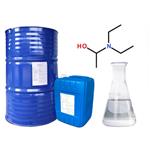 |
2026-09-02 | N,N-Diethylethanolamine DEAE
100-37-8
|
20kg | 99.5% | 10 tons | Qingdao RENAS Polymer Material Co., Ltd.
|
-
- N,N-Diethylethanolamine DEAE
100-37-8
- $0.00
- 99.5%
- Qingdao RENAS Polymer Material Co., Ltd.
