- D( )Malic acid
-

-
2026-10-14
- CAS:636-61-3
- Min. Order: 5KG
- Purity: 99%
- Supply Ability: 500kg
- D(+)-Malic acid
-
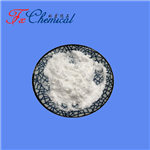
-
2026-10-14
- CAS:636-61-3
- Min. Order: 1KG
- Purity: 98.0%
- Supply Ability: 1000kg/month
- D(+)-Malic acid
-
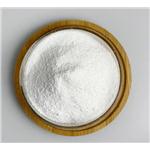
-
2026-09-01
- CAS:636-61-3
- Min. Order: 1kg
- Purity: 99%
- Supply Ability: 20tons
|
| | D(+)-Malic acid Basic information |
| | D(+)-Malic acid Chemical Properties |
| Melting point | 98-102 °C (lit.) | | alpha | 2.2 º (c=3, H2O) | | Boiling point | 167.16°C (rough estimate) | | density | 1.60 | | bulk density | 600kg/m3 | | refractive index | 6.5 ° (C=10, Acetone) | | storage temp. | Store below +30°C. | | solubility | Soluble in methanol, ethanol, acetone, ether. | | pka | 3.61±0.23(Predicted) | | form | Crystalline Powder | | color | White | | PH | 2.2 (10g/l, H2O, 20℃) | | Optical Rotation | [α]20/D +28.0±2°, c = 5.5% in pyridine | | Water Solubility | soluble | | Merck | 14,5707 | | BRN | 1723540 | | InChI | 1S/C4H6O5/c5-2(4(8)9)1-3(6)7/h2,5H,1H2,(H,6,7)(H,8,9)/t2-/m1/s1 | | InChIKey | BJEPYKJPYRNKOW-UWTATZPHSA-N | | SMILES | O[C@H](CC(O)=O)C(O)=O | | LogP | -1.370 (est) | | CAS DataBase Reference | 636-61-3(CAS DataBase Reference) | | NIST Chemistry Reference | (r)-Hydroxybutanedioic acid(636-61-3) |
| Hazard Codes | Xi | | Risk Statements | 37/38-41-36/37/38 | | Safety Statements | 26-36-37/39 | | WGK Germany | 3 | | RTECS | ON7260000 | | HS Code | 29181980 | | Storage Class | 11 - Combustible Solids | | Hazard Classifications | Eye Dam. 1
Skin Irrit. 2
STOT SE 3 |
| | D(+)-Malic acid Usage And Synthesis |
| Chemical Properties | white to light yellow crystal powde | | Uses | The naturally occuring isomer is the L-form which has been found in apples and many other fruits and plants. Selective α-amino protecting reagent for amino acid derivatives. Versatile synthon for the preparation of chiral compounds including κ-opioid rece | | Uses | D-(+)-Malic acid used as an acidulant and flavoring agent, food additive. And it is also used in the place of the less sour citric acid in sour sweets. | | Uses | D-(+)-Malic acid can be used:
- As a starting material for the enantioselective total synthesis of ()-erinapyrone B.
- As a chiral organocatalyst in the synthesis of α-aminophosphonates from various aldehydes, aniline, and diethyl phosphite.
| | Definition | ChEBI: An optically active form of malic acid having (R)-configuration. | | Biological Activity | D-(+)-Malic acid, an active isomer of Malic acid, is a competitive inhibitor of L(--)malic acid transport. | | Synthesis | Malic acid is isolated from immature apples; industrially prepared is obtained by catalytic oxidation of benzene, then reacting with water at high temperature and high pressure to generate maleic anhydride. | | in vitro | Some bacteria belonging to Arthrobacter, Brevibacterium, Corynebacterium, Pseudomonas, Bacillus, and Acinetobacter produced D-(+)-Malic acid (D-Malic acid) from Maleic acid when the cells grown in a medium containing citraconic acid are reacted aerobically with Maleic acid in the pH 7.0 phosphate buffer containing 0.1% sodium chloride. | | Research | Functional studies demonstrated that D(+)-Malic acid significantly improved intestinal barrier integrity and alleviated intestinal damage[1]. | | References | [1] Gong, T., Lu, X., Zhang, H., Su, W., Jin, Y., He, H., Yao, B., Jin, M., Wang, Y., & Cheng, Y. (2025). Intestinal microbiota-derived d-(+)-malic acid promotes pBD1 expression via p-p38/ATF1 signaling pathway to maintain porcine intestinal health. International Immunopharmacology, 154, Article 114552. https://doi.org/10.1016/j.intimp.2025.114552
|
| | D(+)-Malic acid Preparation Products And Raw materials |
|