| Company Name: |
shandongxinheng Gold |
| Tel: |
1526-9161022 15269161022 |
| Email: |
15269161022@163.com |
- Triisopropyl Borate
-

-
2026-08-28
- CAS:5419-55-6
- Min. Order: 160KG
- Purity: 99.0%
- Supply Ability: 20 T
- Triisopropyl borate
-
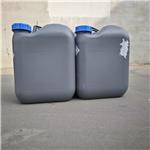
- $1.00
-
2026-03-20
- CAS:5419-55-6
- Min. Order: 1kg
- Purity: 99%
- Supply Ability: 10 mt
|
| | Triisopropyl borate Basic information |
| | Triisopropyl borate Chemical Properties |
| Melting point | -59 °C | | Boiling point | 139-141 °C (lit.) | | density | 0.815 g/mL at 25 °C (lit.) | | vapor pressure | 76 mm Hg ( 75 °C) | | refractive index | n20/D 1.376(lit.) | | Fp | 62.6 °F | | storage temp. | Store below +30°C. | | solubility | Miscible with ether, ethanol, isopropanol and benzene. | | form | Liquid | | Specific Gravity | 0.815 | | color | Clear colorless | | Water Solubility | decomposes | | Sensitive | Moisture Sensitive | | Hydrolytic Sensitivity | 7: reacts slowly with moisture/water | | BRN | 1701469 | | InChI | 1S/C9H21BO3/c1-7(2)11-10(12-8(3)4)13-9(5)6/h7-9H,1-6H3 | | InChIKey | NHDIQVFFNDKAQU-UHFFFAOYSA-N | | SMILES | CC(C)OB(OC(C)C)OC(C)C | | CAS DataBase Reference | 5419-55-6(CAS DataBase Reference) | | NIST Chemistry Reference | Boric acid (h3bo3), tris(1-methylethyl) ester(5419-55-6) | | EPA Substance Registry System | Triisopropyl orthoborate (5419-55-6) |
| Hazard Codes | F,Xi | | Risk Statements | 11 | | Safety Statements | 7-16-23-24/25-33-9 | | RIDADR | UN 2616 3/PG II/III (TRIISOPROPYL BORATE) | | WGK Germany | 2 | | RTECS | ED5950000 | | F | 10-21 | | TSCA | TSCA listed | | HazardClass | 3 | | PackingGroup | II | | HS Code | 29209085 | | Storage Class | 3 - Flammable liquids | | Hazard Classifications | Flam. Liq. 2 |
| | Triisopropyl borate Usage And Synthesis |
| Chemical Properties | clear colourless liquid | | Uses | Triisopropyl borate is used as reagent in Pd-catalyzed coupling reaction with aryl halides such as Suzuki reaction. It is used as a reagent for the preparation of the boronic acids and esters; as a Lewis acid catalyst and involved in the ortho-borylation of 1-substituted naphthalenes. Furthermore, it plays an important role as a catalyst for the production of resins, waxes, paints and varnishes. | | General Description | A colorless liquid. Flash point 93°F. Less dense than water and insoluble in water. Vapors heavier than air. Used to make other chemicals. | | Air & Water Reactions | Highly flammable. Insoluble in water. | | Reactivity Profile | Borates, such as Triisopropyl borate, behave similarly to esters in that they react with acids to liberate heat along with alcohols and acids. Strong oxidizing acids may cause a vigorous reaction that is sufficiently exothermic to ignite the reaction products. Heat is also generated by the interaction of esters with caustic solutions. Flammable hydrogen is generated by mixing esters/borates with alkali metals and hydrides. | | Health Hazard | May cause toxic effects if inhaled or absorbed through skin. Inhalation or contact with material may irritate or burn skin and eyes. Fire will produce irritating, corrosive and/or toxic gases. Vapors may cause dizziness or suffocation. Runoff from fire control or dilution water may cause pollution. | | Fire Hazard | HIGHLY FLAMMABLE: Will be easily ignited by heat, sparks or flames. Vapors may form explosive mixtures with air. Vapors may travel to source of ignition and flash back. Most vapors are heavier than air. They will spread along ground and collect in low or confined areas (sewers, basements, tanks). Vapor explosion hazard indoors, outdoors or in sewers. Runoff to sewer may create fire or explosion hazard. Containers may explode when heated. Many liquids are lighter than water. | | Synthesis | Triisopropyl borate is produced by reacting sodium borohydride and isopropyl alcohol with carbon dioxide in a trickle-bed reactor, followed by distillation to obtain a pure product stream[1]. | | References | [1]Geranios, K., Everett, P., Mei, P., Roll, M., & Bernards, M. (2022). Carbon Dioxide Conversion to Sodium Formate and Valuable Byproduct. 2022 Waste-management Education Research Conference (WERC), 3, 1–11. https://doi.org/10.1109/werc54916.2022.9851364
|
| | Triisopropyl borate Preparation Products And Raw materials |
|